
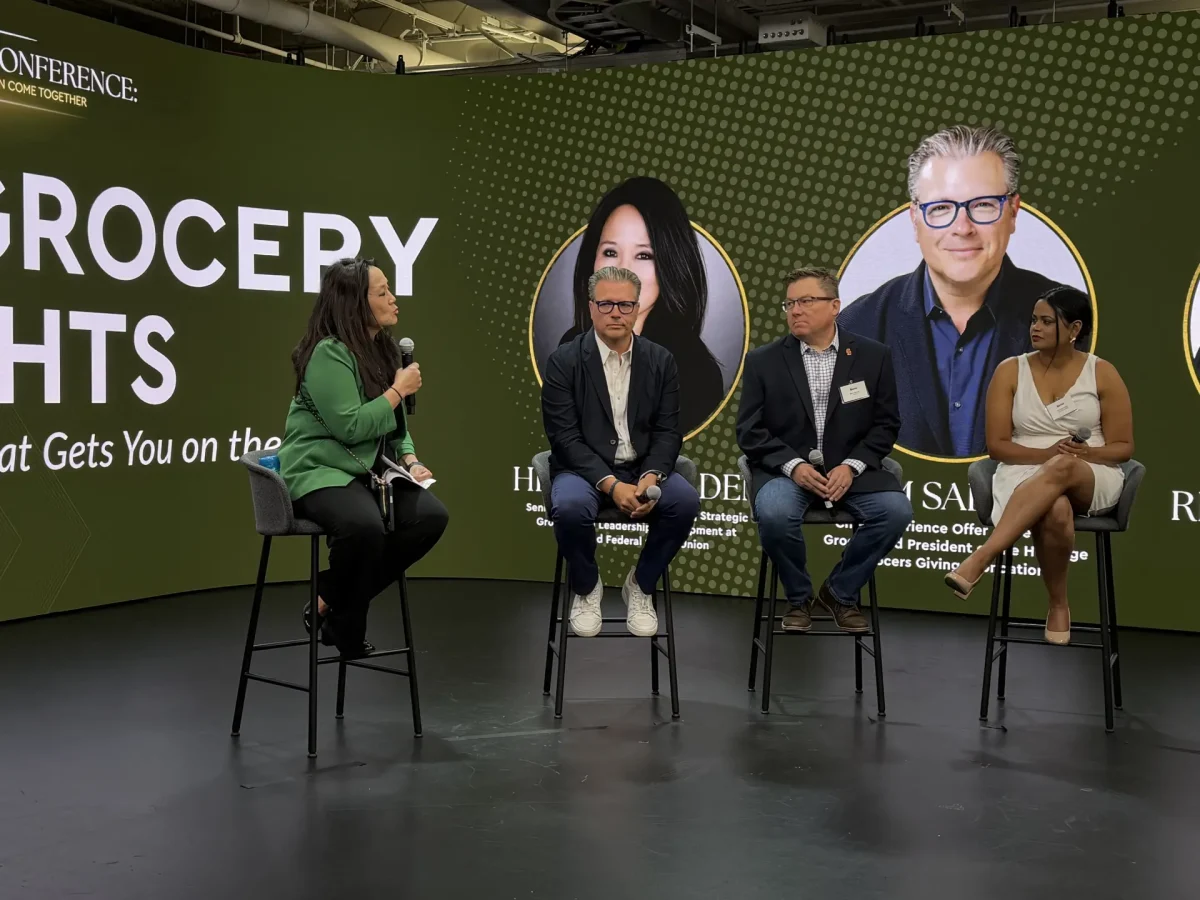
Two panels, two very different rooms, but one message.
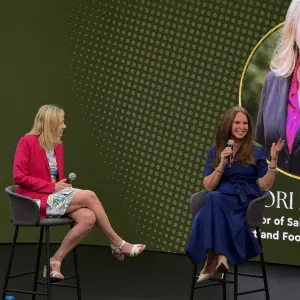
At the CPG Convergence Conference, hosted June 25 by the Navigator Lighthouse Foundation and Mission Matters at Verizon’s 5G Labs in Playa Vista, California, a panel of brand strategists and a panel of investors took the stage hours apart. They never coordinated, but they arrived at the same conclusion for emerging brands: Know exactly who you are, and tell a story authentic enough that consumers and capital both believe it.
The growth playbook: clarity first
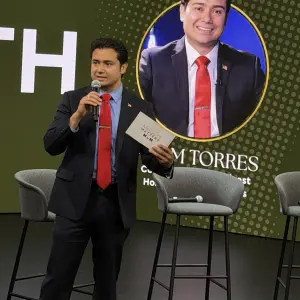
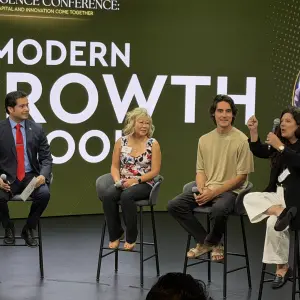
Adam Torres, co-founder of Mission Matters, moderated The Modern CPG Growth Playbook, a panel featuring Pam Negoro, founder of Touch; Martin Forde, who works in retail brokerage and strategy for disruptive brands; and Cynthia Ferngren, founder of Brandsol Agency.
Negoro returned again and again to a single discipline she learned at Coca-Cola: Speak with one voice. The message to a distributor, a buyer and a shopper should be the same story, she said, tailored to each audience but never contradictory. That clarity now carries a new stakes, she added, because of how customers search. Negoro noted that AI-driven results increasingly answer in a single summary rather than a list of links and that a brand whose website does not clearly state its point of difference may never surface.
“If AI is not showing up, then you’re not even in the consideration set,” she said.
Forde offered what he called a hot take: AI will not disrupt consumer packaged goods, precisely because the business runs on people. He described AI as a tool to automate routine work and free brands to connect more authentically, not a replacement for the human relationships that move product.
Ferngren urged founders to find the intersection of a market gap and a cultural gap. Brands that break through, she said, tap into something cultural, the way Liquid Death turned canned water into a rebel statement against plastic.
“We don’t want to be the next. We want to be the first,” she said.
She also pressed brands to identify their distinctive assets, citing the barbell shape of a Listerine bottle as the cue a shopper grabs without reading a label.
Retail as discovery, not the finish line
The strategists pushed back on the assumption that growth has to be direct-to-consumer and viral. Forde said retail is now the No. 1 discovery channel for brands, which is part of why Dr. Squatch, where he was an early employee, eventually launched in retail through Kroger after maximizing what direct-to-consumer could do. Omnichannel, he said, is not a question of how much a brand spends on social but how well its digital and physical channels reinforce each other.
Social still matters as a testing ground and a storytelling engine, the panel agreed. Ferngren recalled Poppi’s rise from a farmers market to a multibillion-dollar sale, and Forde traced the Dr. Squatch story to a single provocative YouTube ad in 2018 that drew more than 100 million organic views. The lesson, Ferngren said, is to walk into a buyer meeting offering partnership rather than a pitch.
“We don’t want to get on your shelf. We want to get off your shelf,” she said, describing how she starts brands with direct-to-consumer data and smaller, partnership-friendly retailers before approaching national chains.
The investors: a story that resonates, and room to grow
Later, a panel on how investors evaluate CPG brands brought a harder-nosed lens to the same themes. It featured Josh Resnick, co-founder and general partner of OpenSky Ventures; Dayton Miller, managing partner of BFG Partners; and Anthony Zanontian, managing director of Crumble Capital.
The conversation opened on valuation, where founders and investors often arrive miles apart. Resnick said he regularly meets founders doing $10 million in revenue and $1 million in EBITDA who want a $50 million valuation.
“I’m glad you think that way. That’s what makes you a founder,” he tells them, before walking away from a number he cannot invest behind.
Zanontian, who runs a family office, counseled founders to leave room rather than chase a top valuation because the cardinal rule is never running out of cash. Miller added that a higher valuation only raises the bar.
“The greater the valuation, the greater the expectations,” he said, noting that headline revenue multiples are an output of a deal, not the input.
Where the investors fully echoed the brand strategists was on story. Resnick said a narrative only matters if it is authentic and resonates with the consumer, as shoppers have grown quick to see through anything that feels manufactured. He pointed to Liquid Death, the same brand the strategists praised, as proof that emotion sells. Zanontian was blunter still: If he does not like and trust the founder, the numbers do not matter.
Miller offered Olipop as a portfolio example, recalling that the founders first pitched a probiotic soda that failed before returning with a simple story – that Americans get too much sugar and too little fiber and that one soda addresses both. The brand had less than $100,000 in revenue at the time. He also described investing in the sun care brand Vacation before it had a product. He made the decision based on the strength of a brand identity so distinctive it was impossible to ignore.
You do not have to be a unicorn
The investors also offered a reality check on raising at all. Zanontian said his first piece of advice to most founders is not to raise, because equity is the most valuable thing an entrepreneur owns. He also reminded the room that not every brand needs to chase a billion-dollar exit.
“There’s nothing wrong with running a $20 million business that makes money,” he said.
Resnick’s closing checklist tied the day together. Come prepared, he said, with a clear use of funds, a competitive landscape and a go-to-market plan, and be honest about what you do not know. Above all, he said, a founder has to answer one question: Why should this brand exist at all? It is the same question the buyers down the hall were asking, in different words, all day.
Navigator Lighthouse Foundation (NLF) The CPG Convergence Conference


About the Navigator Lighthouse Foundation is a nonprofit that expands access for underrepresented and emerging entrepreneurs in the consumer packaged goods industry, connecting founders with education, mentorship and retail opportunities to help more women- and minority-owned brands reach store shelves.
About Mission Matters: Co-founded by Adam Torres and Chirag Sagar, Mission Matters is a media platform that shares the stories of entrepreneurs, executives and experts through podcasts, interviews and live events. It co-hosted the CPG Convergence Conference with the Navigator Lighthouse Foundation.