
The dairy aisle remains one of the most essential and operationally complex areas of the store. As consumer expectations evolve and retailers grapple with labor constraints, shrink, and frequent resets, merchandising strategies have become more critical than ever.

Noah Allen, VP of Retail Operations for Henschel-Steinau, INC (HS) shares what’s driving change in dairy and how smarter design can support store teams and shoppers alike.
What are the biggest operational challenges facing dairy at retail today?
Spoilage, or shrink, along with disorganization are the main challenges we see and hear in dairy. With busy lives we want to reduce errands, including multiple weekly trips to the store. So, when we shop, we try to find the farthest expiration date on perishable items. Consumers have done this – dug through products to pick the milk, creamer, or yogurt with the expiration date. While understandable, this behavior quickly leads to messy shelves and product handling issues.
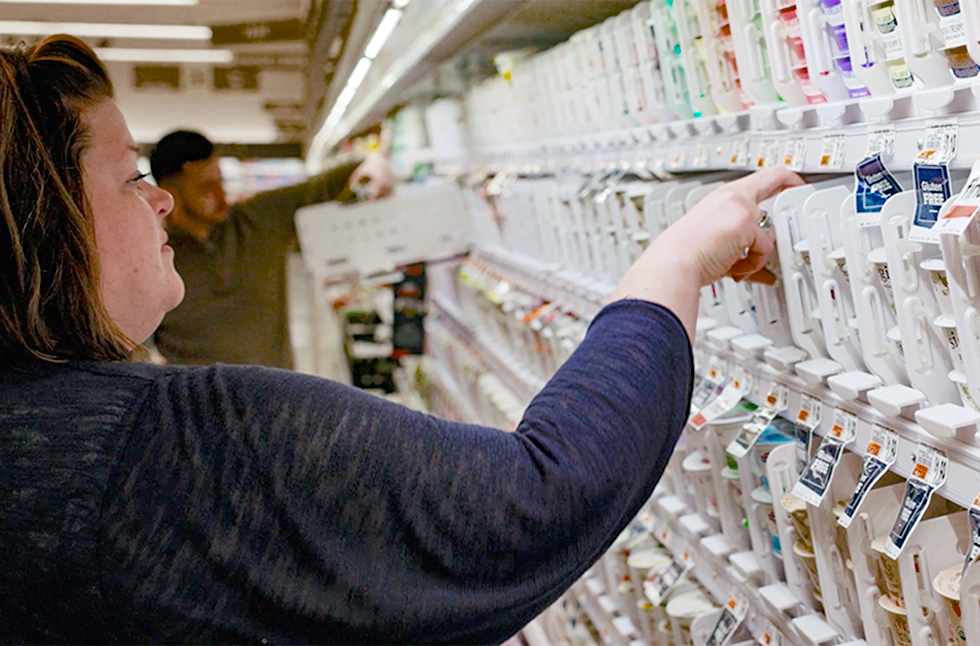
This natural human behavior causes real pain for the grocers. It results in messy shelves because the customers are rifling through to get the coldest and farthest to expire product from the back and it produces shrink issues. For retailers, maintaining proper rotation and fronting is labor-intensive and difficult to execute perfectly, especially overnight.
With Henschel’s 60 plus years of industry experience, what key trends are shaping the dairy category today?
Dairy continues to be a staple for consumers, but how it’s merchandised has changed significantly. Two major growth drivers stand out: private label expansion and protein-focused offerings.
Private label has become a dominant force. One retail banner we work with shared that private label cheese (sliced and shredded) now represents more than half of the SKUs in their dairy cooler. Retailers are increasingly using private label not only as a value play, but to differentiate and innovate within the category. Kroger added 24 products to its Simple Truth Protein private label brand, including cottage cheese in Q1 of 2026 alone.
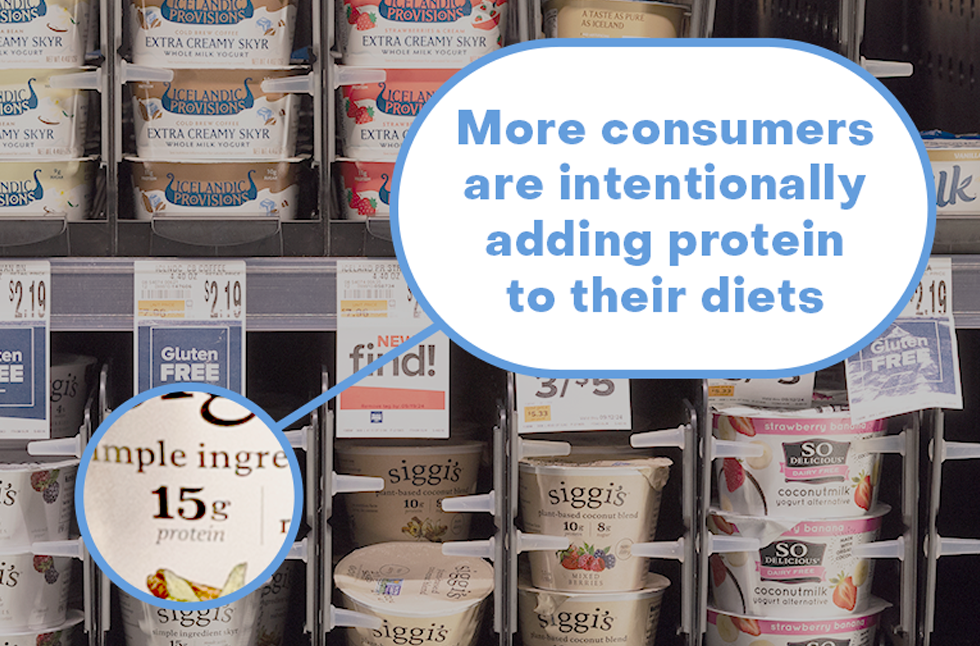
Protein is also front and center. More consumers are actively seeking higher-protein options, and dairy is uniquely positioned to deliver protein without compromising taste or texture.
From yogurt to cottage cheese, the category is benefiting from this nutritional focus in a very real way. According to a report by the Hartman Group – 64% of consumers are intentionally adding protein to their diets. I am personally one of those in that category.
How does HS evaluate these pain points when designing solutions?
Everything starts in the field. Our entire team – designers, production managers, and sales – spends time in stores observing the reality of the environment. From there, we focus on three guiding questions:
- Is the solution modular and adaptable?
- Does it solve a real, recurring problem?
- Will it be embraced by the people who use it every day?
When it comes to the dairy aisle, we found a crucial issue when it comes to cooler variances. Two cases may both measure 48” shelves, but shelf bracket placement differs by manufacturer. Those nuances matter when you’re designing solutions meant to work across multiple store formats.
That’s why we study the physical constraints, shopper behavior, and day-to-day realities that don’t always show up in a planogram.
What HS solutions are helping retailers specifically within the yogurt category?
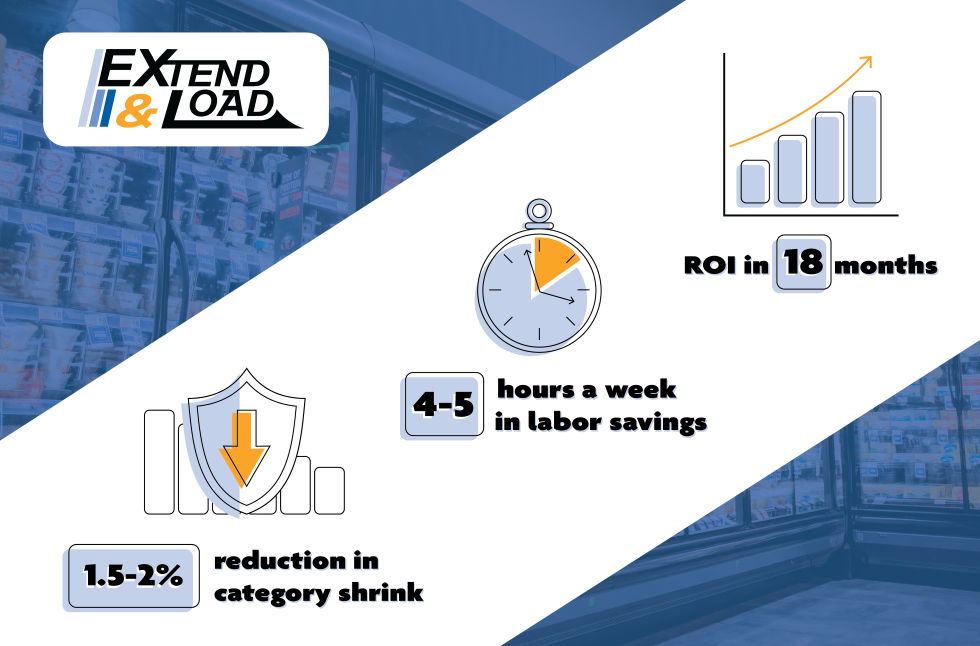
Extend & Load™ is one of our latest innovations which was developed to directly address product rotation, labor, and organization challenges common in yogurt.
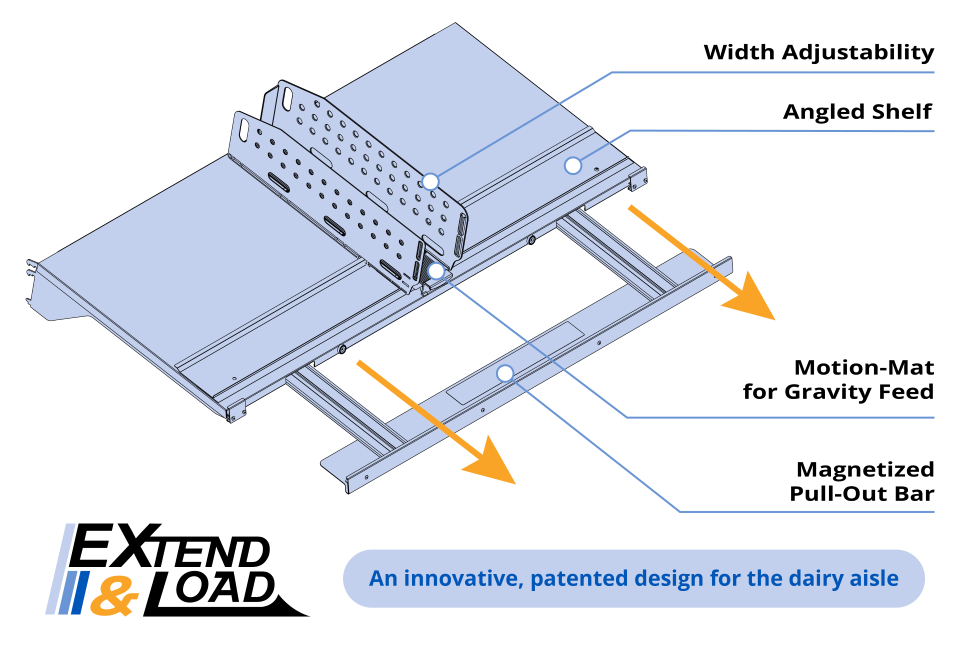
The system includes three modular components:
- Shelf: A patented pull-out extension allowing product to be loaded from the back. Adjustable brackets ensure compatibility across most cooler brands.
- Modules: Each module holds a single facing and expands or contracts to fit different package widths, then locks into place.
- Motion Mat: Enables gravity feeding so products always remain front facing.
Here is what one client shared:
“At GIANT, we’re all about creating a seamless shopping experience and reducing friction for our customers. Collaborating with Henschel-Steinau to develop a solution for our yogurt case challenges was a big win for us,” said Nick Meyer, manager of innovation and implementation, The GIANT Company. “Extend & Load helps us maintain freshness standards, reduce shrink, effectively manage department labor, and enhance product presentation to customers, ensuring the category is consistently easy to shop. We’ve been pleased by the results so far and have introduced it to 62 stores across our footprint.”
How does modularity help retailers manage frequent resets and assortment changes?
Yogurt is one of the most frequently reset categories in the store, often changing twice a year. Modularity allows retailers to adapt quickly without starting from scratch.
When planograms shift, modules can be adjusted or reconfigured rather than replaced. One retailer’s SAS team recently shared that a reset using our system was faster and easier than any prior reset they’d completed – saving time and reducing frustration.
How does HS support long-term results beyond installation?
Our work doesn’t stop once the system is in place. We stay engaged by visiting stores, checking in with retail teams, and actively listening to feedback from the field.
That ongoing collaboration helps us refine our designs and ensures we’re delivering merchandising solutions that perform in real-world conditions. Long-term category success comes from partnership, not just a product.