

ORLANDO, Fla. – The IFPA Global Produce & Floral Show ran Oct. 14-16 at the Orange County Convention Center. The Shelby Report put the same five questions to suppliers and to the association that runs the show: what they brought, what retailers are asking for now, the one thing retailers could do to sell more, where they are using AI and what worries them about the year ahead. The answers kept landing in the same place.
“If I could ask retailers to do one thing, it would be to make fresh the easy choice,” said Cathy Burns, CEO of the International Fresh Produce Association. “That means thinking beyond simply having fruits and vegetables available and looking at how we merchandise them, how we talk about them and how we connect them to the occasions that matter to consumers. We have an incredible health story to tell, but we also have to sell taste, convenience, enjoyment and value.”
The ask has changed
A year ago the booth conversation was about supply. This year it was about what moves.
“A year ago, many conversations focused on supply and value,” said Diana Salsa, VP of marketing for Wonderful Pistachios. “Today, we’re hearing more interest in products that can generate buzz, attract new shoppers and create new consumption occasions.” Wonderful brought a Dubai Chocolate pistachio to Orlando, along with Chocolate Toffee, Chocolate Sea Salt and a Dill Pickle No Shells variety.
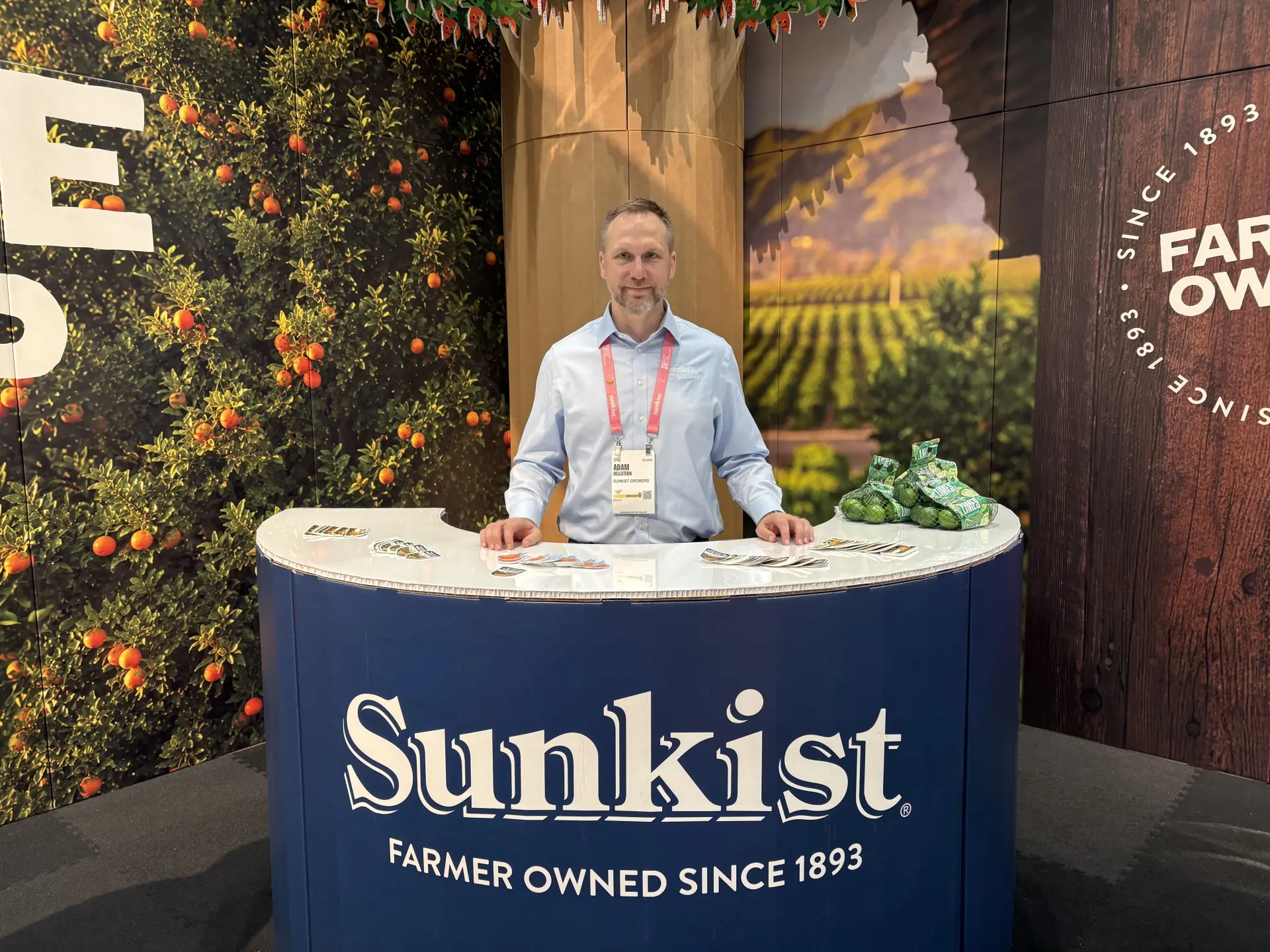
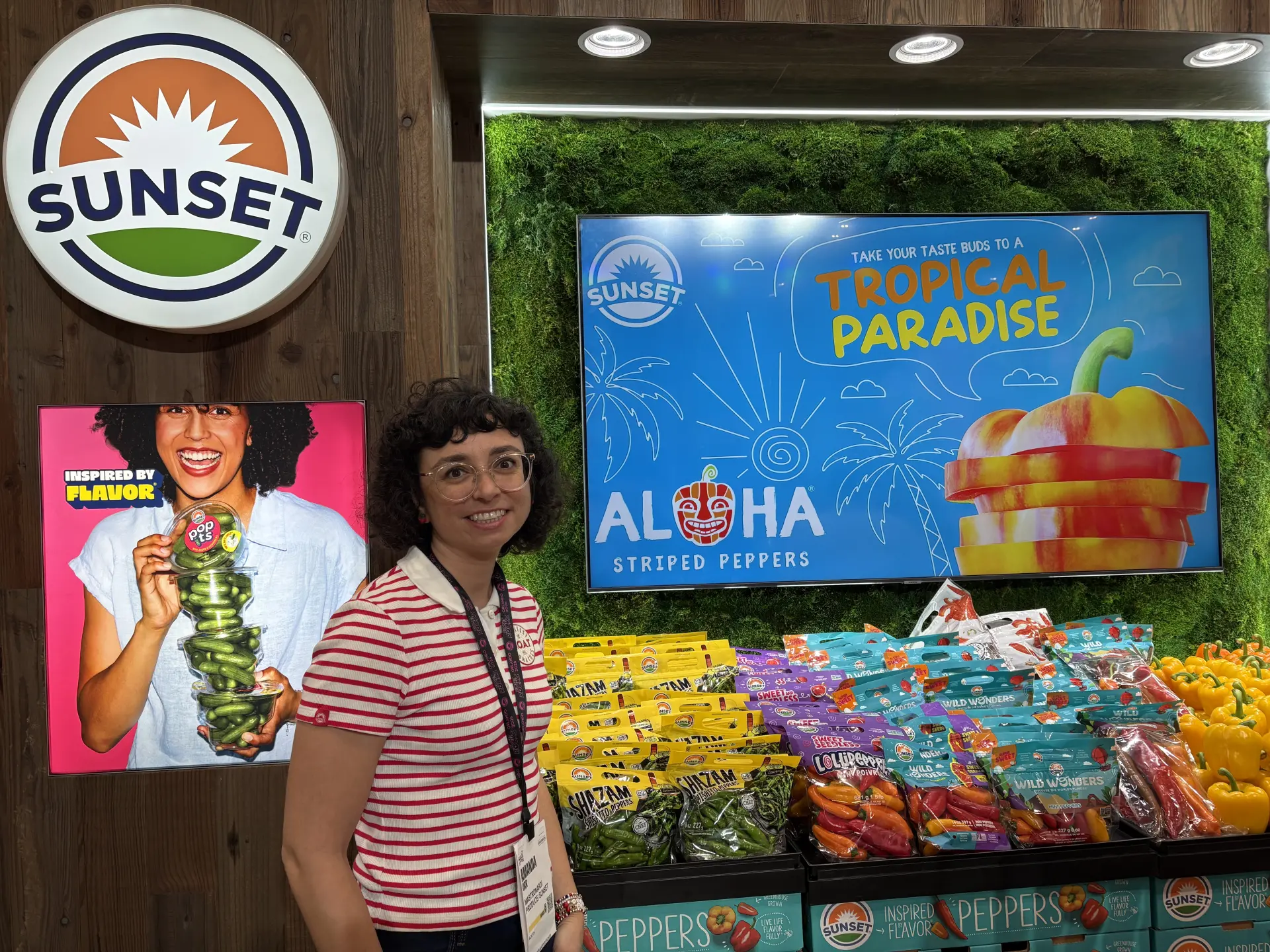
At Sunset, the Mastronardi Produce brand, the ask is for items that earn their space. Retailers want “snacking formats that need no prep, packaging that looks and feels premium, and organic options that extend a brand shoppers already trust,” said Amanda Orr, communications manager.
Sunkist’s Adam Hellstern, director of brand strategy and marketing operations, said retailers now want “more than individual products or in-out promotions. They want partners who can bring together reliable supply, category insights, flexible packaging and programs that connect with shoppers at the shelf.” Sunkist launched Sunkist Produce Academy at the show, an online training platform built for departments with high turnover and little time to train.

The ask reaches the distribution center too. Retailers are “looking for new ways to mitigate differences in ripening outcomes from DC to DC and from store to store,” said Shannon Rutherford of Thermal Technologies, which builds commercial ripening rooms. The company showed RipeScan, a new dual-gas analyzer for ripening rooms, along with multi-fruit rooms that handle bananas, pears, avocados and stone fruit.
Burns put the shift in one line. The question from retailers used to be “What’s happening?” Now it is “What does this mean for my business, and what do I do next?”
Snacking, and nothing to prep
Convenience showed up in nearly every booth, usually as a smaller package.
Sunset brought Angel Sweet tomatoes and Pop Its cucumbers in a container built to fit a cupholder, plus its Tomato Branch in a triangular on-the-vine pack now sold in two sizes. Wonderful’s No Shells line is pitched for summer grab-and-go sets next to beverages. Wholly Guacamole showed 2-ounce Minis, 8-ounce bowls and a squeeze pouch collection.
The pouch answers a complaint every produce manager hears. “Whole avocados suffer from high shrinkage and short shelf-life due to product browning,” said Chris Monahan, brand manager of Wholly products. The high-pressure-processed pouches “keep guacamole green for up to 10 days after opening.”
Robert Schueller of Melissa’s listed snacking, bite-size and ready-to-eat among his 2027 trend factors, alongside taste, price, quality and nutrition.
Protein and fiber move into the produce case
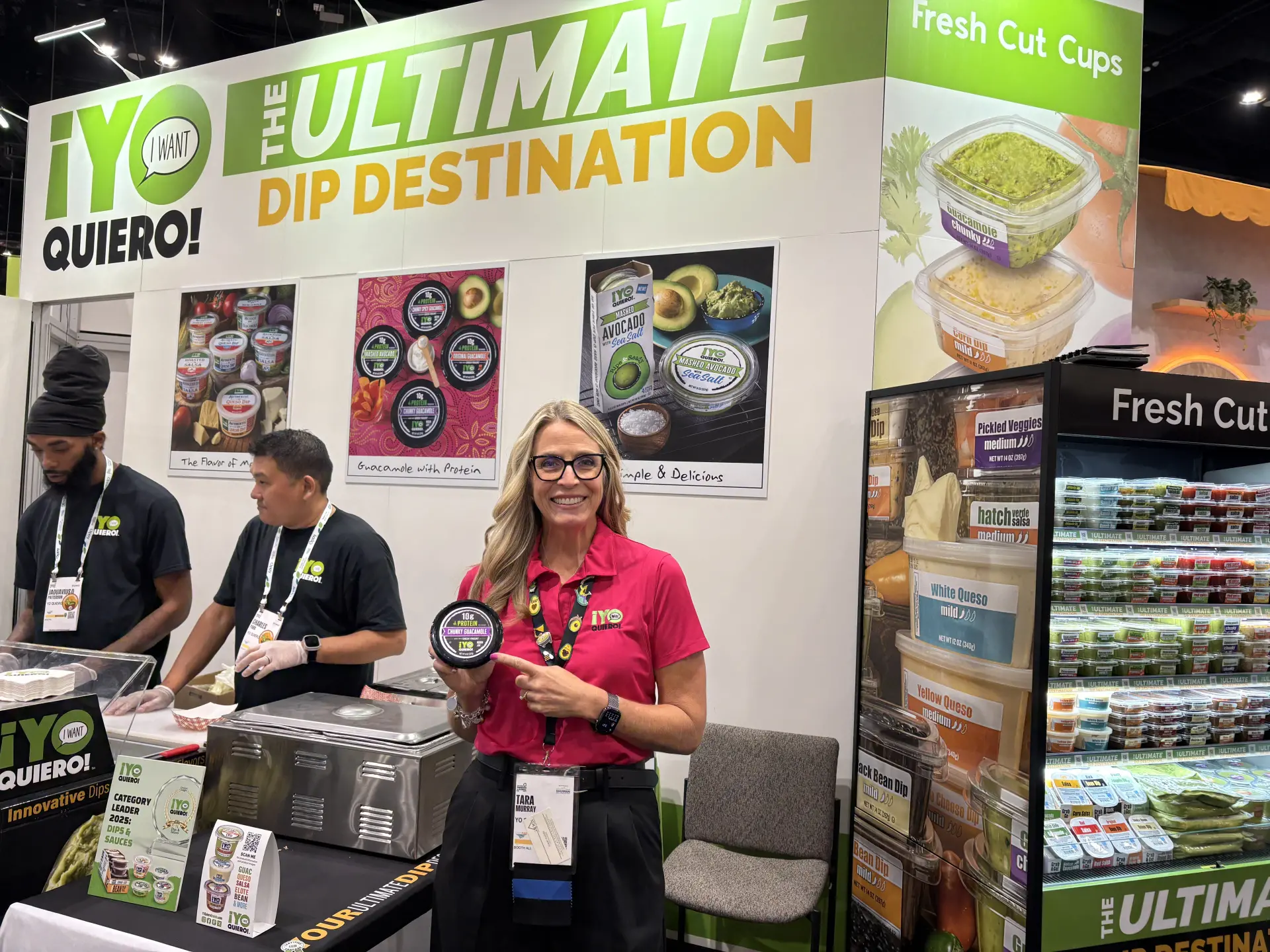
Two guacamole makers arrived with nutrition callouts usually seen in the dairy aisle.
Fresh Innovations introduced a protein line under its Yo Quiero! brand that blends guacamole with nonfat Greek yogurt. “Each 8 oz container contains at least 10 grams of protein, fewer calories than regular guacamole and all the flavor consumers have grown to know and trust,” said Tara Murray, VP of marketing. “Retailers loved it.”
Wholly is leaning on fiber. Monahan said retailers are asking for grab-and-go items “that highlight clear, functional health benefits on-pack,” and pointed to the Minis at 3 grams of fiber per serving, 11 percent of the daily value.
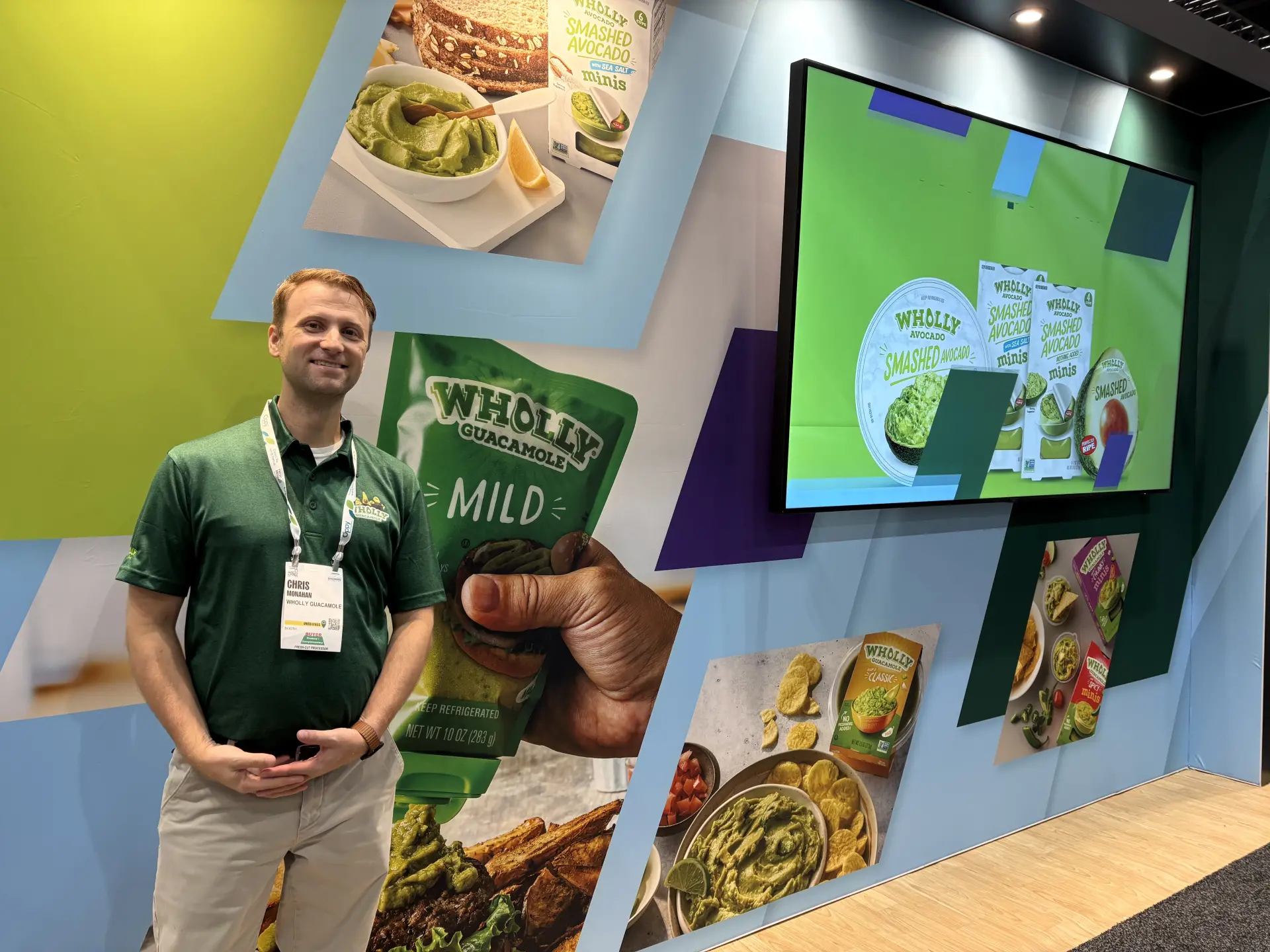
He cited Technomic research putting the share of consumers actively seeking more fiber above 27 percent.
Schueller tied the demand to GLP-1 medications. His presentation put the share of consumers on the drugs at 11 percent as of September 2026, up from 3 percent in 2024, and called it “good news for the produce industry.”
Sell the occasion, not the category
Asked what one thing retailers could do differently, almost everyone answered with a display location.
“One of the biggest opportunities is merchandising around occasions rather than categories,” Salsa said. Her examples: chocolate pistachios next to wine and flowers for Valentine’s Day and the holidays, in-shell varieties beside beer and game-day displays, and both near charcuterie and specialty cheese.
Orr’s answer was the same idea with tomatoes. “Merchandise beyond the produce aisle. Pair the Sunset Tomato Branch with charcuterie and entertaining items, and put snacking containers in grab-and-go sets.”
Monahan wants secondary placement. Put Minis next to salad kits, squeeze pouches near the deli and meat case for burger building, and smashed avocado right beside whole avocados. “When retailers place our products exclusively in the produce section, they may miss out on other use cases.”
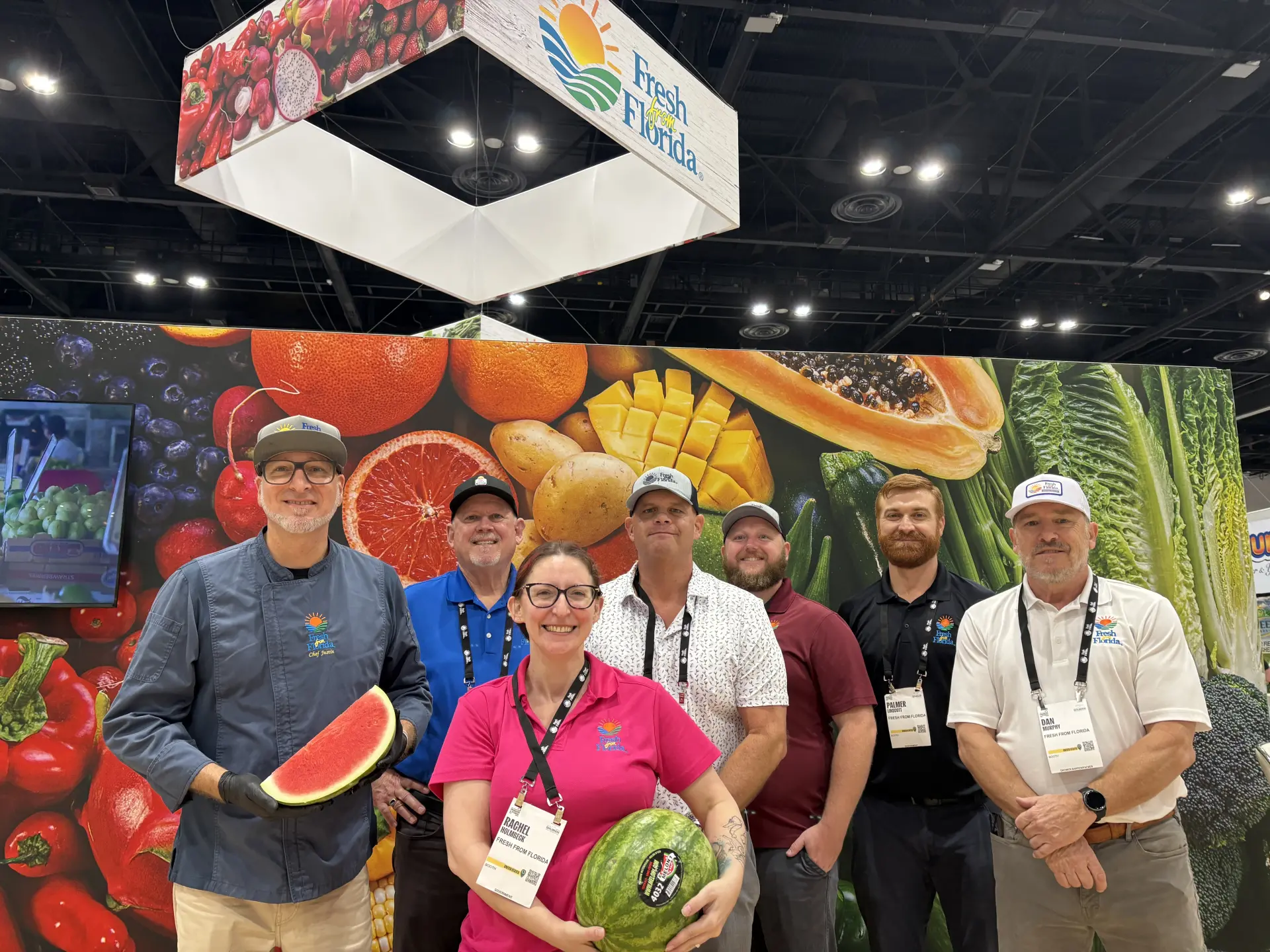
Hellstern asked retailers to stop treating citrus as “one large, interchangeable set” and to use signage, sampling and seasonal displays to show the differences between varieties. Fresh From Florida’s Yolanda Roundtree, bureau chief of seafood and agriculture marketing at the Florida Department of Agriculture and Consumer Services, suggested a farmers-market feel that makes the department “experiential rather than routine.” Her pavilion held 20 Florida companies, with 15 more around its perimeter.
AI as a tool, not a replacement
Nobody claimed AI was running the business. Several said it was running the sorting line, the ripening room or the research desk.
Sunkist’s i3 program uses optical sorting with AI imaging that checks each piece of fruit for size, color and blemishes, “including things the eye can miss,” Hellstern said. The payoff for retailers is more consistent sizing in the box. For packinghouse crews, less manual grading.
Thermal Technologies sees the ripening room going the same way. Strella Biotech’s AI ripening platform is running in the distribution centers of several major retailers, integrated with Thermal Tech’s TarpLess rooms, Rutherford said. The company is “looking towards a day where the ripening process itself becomes fully automated using AI.”
IFPA’s Global Intelligence Engine lets members start with a business question instead of a spreadsheet. “The real opportunity with AI isn’t about replacing expertise,” Burns said. “It’s allowing us to get to insight faster.”
Murray drew the line most sharply. “We look at AI as a tool, not a solution. Our company is based on true, face-to-face relationships.” Yo Quiero! uses it for data compilation, analytics and trend tracking. Wholly uses analytics to watch search growth for terms like “convenient” and “easy,” which Monahan said pushed the move to 8-ounce smashed avocado bowls and the pouches. Wonderful said it is still evaluating where AI fits.
The year ahead
The worry list is long and familiar. Costs, weather, trade and a consumer who counts every dollar.
Roundtree named rising operational and production costs “and doing so without passing those increases on to consumers.” Murray was blunter. “The biggest challenge facing produce is still the economy. We continue to encourage consumers to add fruits and veggies to their plates when their food dollars are limited, and it’s tough.”
Hellstern is watching El Niño. Heavy winter storms can stall harvest and packing, so Sunkist is picking ahead of rain events and balancing packing across districts. Salsa made the same point about pistachios. “Agriculture has always experienced on and off years, and success often comes down to planning ahead, remaining flexible and building resilience throughout the supply chain.”
Monahan framed it as food waste. An avocado that browns overnight “drives shoppers away from the produce aisle.” Orr framed it as attention. “Keeping fresh produce top of mind when shoppers have more convenient snack and meal options than ever.”
Burns called it trust and resilience, and tied the year’s food safety, trade, labor and sustainability pressures together. “None of those issues stand alone. Our challenge is building a food system resilient enough to navigate disruption while continuing to earn the trust of consumers and keep fresh products accessible and appealing.”
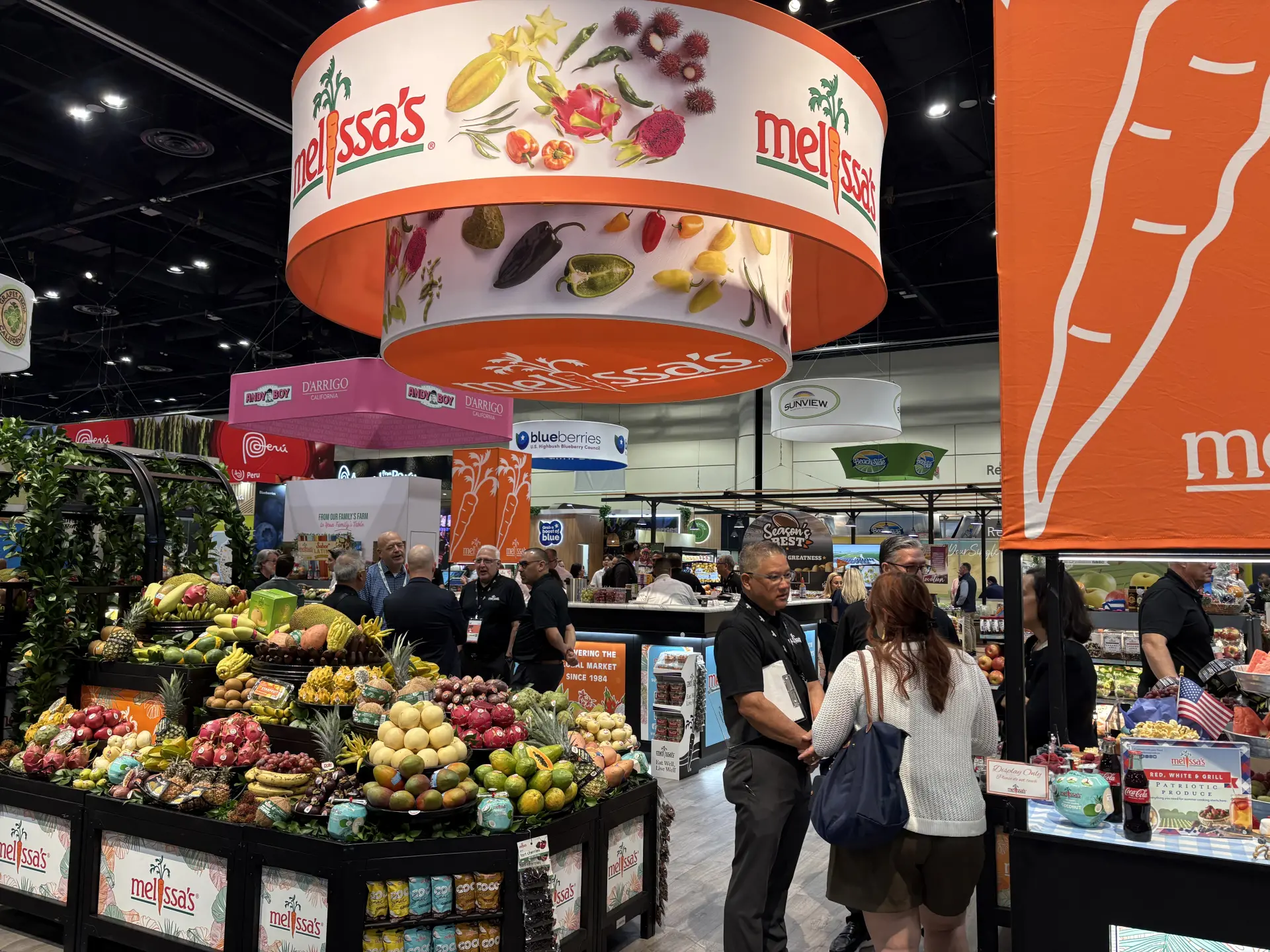
What Melissa’s expects to sell in 2027
Robert Schueller of Melissa’s gave his annual trends and new products briefing at the show on Oct. 15. His 2027 list leans on convenience and function, with a push from GLP-1 users, who Melissa’s puts at 11 percent of consumers as of September 2026, up from 3 percent in 2024.
The trend factors. Taste and experience, price, quality, nutrition and function, and convenience. Shoppers want produce that tastes good, fits the budget and makes a weeknight meal easier.
What is growing
- Fiber and protein, including plant-based sources such as soy, beans and lentils, for gut health and illness prevention.
- Snacking and bite-size. Anything that goes straight from the counter or the fridge to the mouth.
- Global and regional flavor discovery, from country-specific to fusion.
- Tang. Tart citrus, vinegar and bright flavors in sauces, dressings and drinks.
- Dietary diversity. A wider rotation of fruits and vegetables through the week instead of chasing one nutrient.
- Pre-shopping. Social media hacks and online recipes that let shoppers copy a restaurant dish at home.
- Value beyond price. Shoppers weigh taste, freshness and how many ways they can use what they buy.
Specialty items to watch. Dragon fruit in yellow, white and red. Variety pineapples including Pinkglow, Colada Royal and HoneyGlow. Baby potatoes in Dutch, gemstone and fingerling. Coconuts, including EZ and Sweet Young. Mango varieties such as Sapurano, tree-ripened, green Keitt and the new Australian Palmer. Yellow, orange, baby and organic watermelon. Thai, habanero, serrano and Hatch chiles. Butterscotch and sand Asian pears. Garnet, Japanese Murasaki, Jewel and Charleston sweet potatoes.
New from Melissa’s. Balsamic glaze. Three barbecue sauces in peach Hatch, Hatch and cherry chipotle. Four Korean sweet potatoes in chestnut, honey, pumpkin and purple. Three hot honeys in lemon creamed, orange blossom and lemon. Three veggie seasonings in dill, lemon and Hatch. Palmer mango.
Schueller also pulled from IFPA’s August 2026 report, The State of the U.S. Produce Consumer. Its read is that shoppers treat fresh produce as a staple they protect even while cutting elsewhere, and that organic preference is rising. The advice to retailers is to lead with health, freshness and visual quality rather than race to the bottom on discounts.
Sources cited in the presentation: Mintel, Innova Market Insights, Datassential, Whole Foods Market Trends, IFIC, NielsenIQ, FMI and SEPC research via AndNowUKnow.