
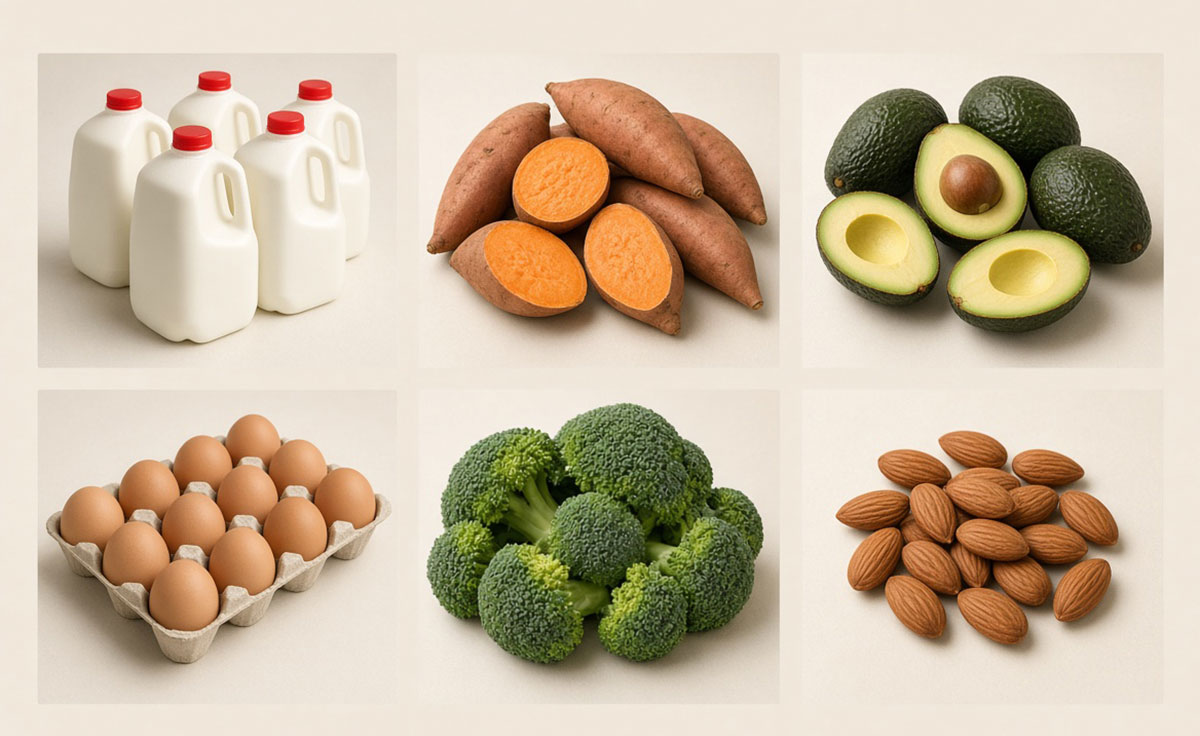
Protein and fiber have moved from niche to norm in American grocery baskets, according to a new report from Instacart analyzing purchases on its platform in the first half of 2026 compared with the same period last year.
The share of Instacart searches containing the word “protein” rose 12.7 percent year over year, while searches for “fiber” grew 26.4 percent from a smaller base. Of the 10 categories that gained the most share of items sold on the platform, eight are high in protein or fiber. The company used nutrition guidance from the Mayo Clinic, Harvard’s Nutrition Source and the Cleveland Clinic to determine which categories qualify.
The report ties the shift in part to the rise of GLP-1 medications, whose users are widely advised to prioritize protein intake and digestive health, alongside broader health-conscious shopping habits.
Key findings
- Greek and Icelandic yogurt (up 8 percent) and whole eggs (up 7 percent) led all categories in share gains, with chicken breast up 6 percent and cottage cheese up 10 percent
- Canned sardines posted the largest year-over-year growth of any high-protein or high-fiber category, up 51 percent as part of the tinned fish movement led by brands such as Patagonia Provisions, Sea Castle, Sea Tales and Fishwife
- Grab-and-go protein kept climbing, with protein drinks up 15 percent and protein bars up 9 percent
- On the fiber side, sweet potatoes rose 28 percent, frozen edamame 25 percent, dried prunes 23 percent and yams 20 percent
All category figures reflect growth in each category’s share of items sold on the Instacart platform, rather than raw sales growth.
Protein moves to center store
The report points to the “protein-ification” of the center aisle as evidence the trend has gone mainstream. Cheerios Protein grew 157 percent year over year in its share of the cereal category, comparing June 2026 to June 2025, while Eggo Protein Waffles climbed 101 percent and Protein Pints ice cream rose 85 percent.
Among products launched in late 2025, Pop-Tarts Protein grew 542 percent and Idahoan Protein Instant Potatoes 87 percent in share of category over just six months, comparing June 2026 to December 2025. New 2026 arrivals on the platform include protein versions of Doritos tortilla chips, Starbucks bottled coffee, Babybel snack cheese, Nature Valley granola and Blue Bell frozen dairy dessert.
Regional patterns
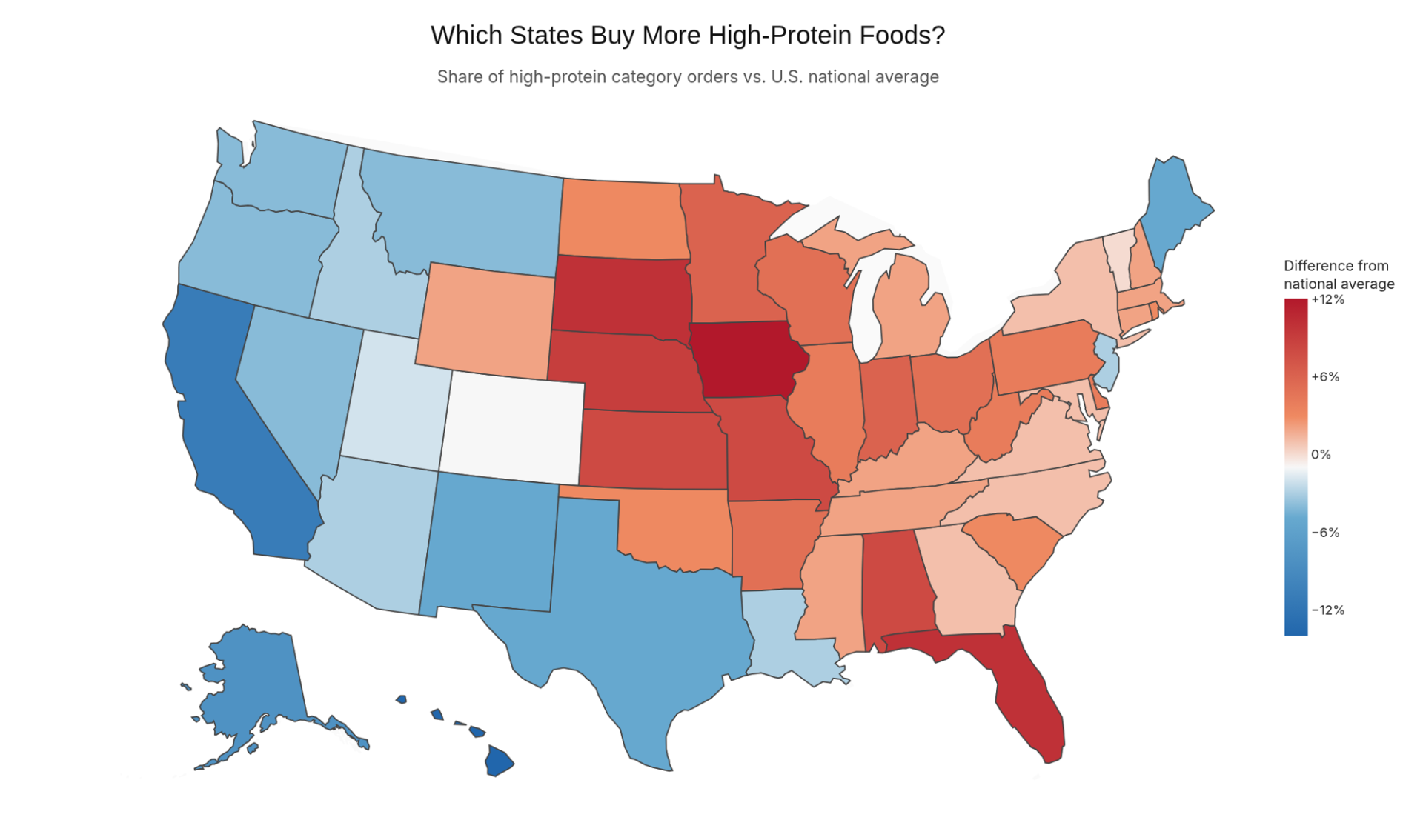
Florida embraces the trend more than any other state, ranking No. 1 nationally for fiber and No. 2 for protein. Fiber-rich baskets index 17 percent above the national average there, with Colorado at 14 percent and Washington, D.C., at 13 percent. Protein skews toward the Midwest, with Iowa indexing 12 percent above average, South Dakota 10 percent and Nebraska 9 percent, while Hawaii, California and Alaska trail the national average.
At the city level, Austin, Texas, is the country’s fiber capital, buying 39 percent more fiber than the nation as a whole, while Lakeland, Florida, leads on protein at 19 percent above average. All 10 of the lowest-indexing cities for protein are in California.
As GLP-1 adoption grows, the report concludes, the trend is likely to deepen across more categories, cities and baskets.