
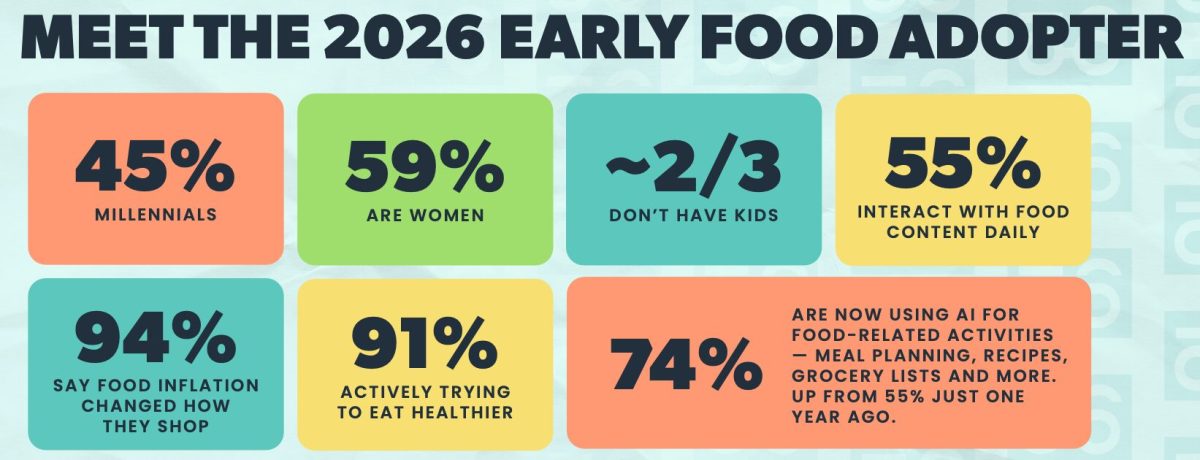
Nearly three-quarters of early food adopters now use AI for food-related decisions, up from 55 percent a year earlier, the largest single-year jump recorded in the four years of Curious Plot‘s Consumer Curiosity Report.
The Minneapolis-based food, agriculture and animal nutrition marketing agency released its fourth annual report July 29. It tracks early food adopters, defined as highly engaged consumers who interact with food content online at least weekly and value trying new things, a group the agency says tends to lead the broader market.
“Food has become personal infrastructure, a daily system people use to manage energy, emotion, cognition and cost, all at once,” said Mitch Van Kampen, president and CEO of Curious Plot.
Key findings
- 74 percent of early adopters use AI for food-related decisions, up from 55 percent a year ago, and 49 percent research products via AI before reaching a shelf or package.
- 94 percent say food inflation has changed how they shop, yet more than half will pay more for certain foods: 54 percent for locally grown, 52 percent for functional health benefits.
- 91 percent are actively trying to eat healthier.
- 87 percent of millennials and Gen Z are seeking baking tips, the single most common food curiosity in the dataset. The agency links the interest to baking’s stress-reducing effects.
- 31 percent of GLP-1 non-users say simply hearing about the medications has changed how they eat.
- Consumers ranked YouTube as their top source of credible food information, ahead of doctors, registered dietitians and food brands.
The agency framed the findings around five themes it calls convergences: the depleted consumer, the GLP-1 watershed moment, the credibility vacuum, the informed appetite and the inflation paradox. It said the report is meant to raise questions for food brands rather than prescribe answers.
The 2026 survey was conducted in April among 1,147 U.S. consumers, with a margin of error of plus or minus 2.9 percentage points. The full report covers more than 50 food topics across culinary behavior, nutrition, purchasing, GLP-1 impact, AI usage and food transparency.