
The Shelby Report of the Midwest recently caught up with Jon McCormick of the Retail Grocers Association of Greater Kansas City and the Midwest Retail and Grocery Alliance for an update on the grocery industry in the Sunflower State.
How is the state’s economy affecting grocers and their shoppers? Are customers still trading down to private label, and have you seen other changes in how they shop?
Kansas’ economy is steady rather than strong. Unemployment has come back down to about 3.8 percent, and state sales tax collections are running ahead of estimates, which tells us people are still spending. But shoppers are careful. Food prices are still rising, close to 3 percent this year, and our customers feel every dollar.
Yes, private label is still winning. Store brands are at a record share of units nationally, and our members see the same thing. Shoppers buy store brand on staples and save their splurges for the items that matter to them.
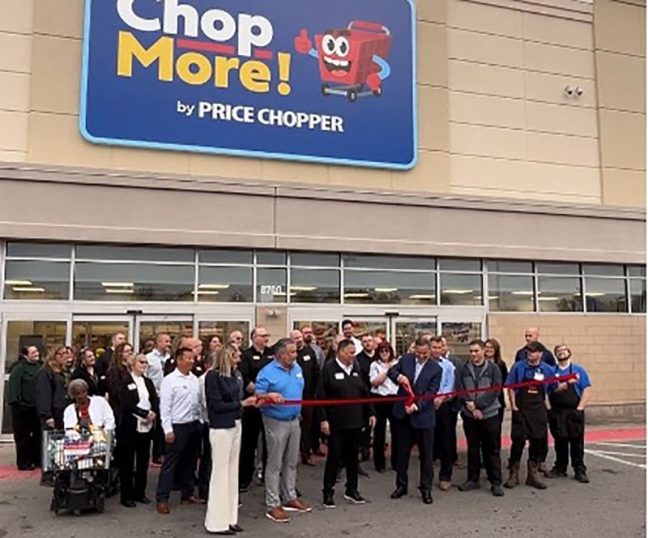
We’re also seeing more trips with smaller baskets, more attention to weekly ads and digital coupons, and growing interest in value formats; Cosentino’s new ChopMore! store is a good example of an independent responding to that.
The other change we’re watching is SNAP. More than 30,000 Kansans have come off the program in the past year. In a lot of our neighborhood and small-town stores, those benefits are a meaningful share of sales. One of our local retailers stated their SNAP dollars were down 18.04 percent on average.
The state sales tax on food has been zero since Jan. 1, 2025. Nearly two years in, what effect has it had on members’ sales, basket size and shopping across the Missouri and Oklahoma state lines? Local sales taxes still apply to groceries. Is reducing those a goal for the association?
Eliminating the state food tax was one of the best things Kansas has done for families, and for the stores that feed them. A family of four saves well over $500 a year. In a store, that shows up as a slightly bigger basket and a customer who doesn’t feel they have to drive somewhere else.
Along the Missouri line, Kansas stores now have a clear tax advantage on groceries. Oklahoma dropped its state grocery tax too, so on that border it comes down to local rates.
On local sales taxes on food, we’d like to see them come down eventually, because groceries are a necessity. But we understand cities and counties depend on that revenue, especially with the property-tax debate going on, so any change has to be done responsibly.
What grocery-related legislation passed during the 2026 session? Which bills did RGA support or oppose?
It was a session dominated by property taxes and the budget, and for grocers the biggest changes were on the food-assistance side. Lawmakers tightened SNAP eligibility verification, which will reduce error rates but also is moving thousands of Kansans off the program.
RGA’s focus was on making sure retailers aren’t left carrying the burden of implementing the SNAP changes, and on protecting the food sales tax elimination.
Last year, you pointed to card swipe fees, electricity rate hikes expected in 2026, refrigerant guidelines and tariff-driven price increases. Which of these have hit members hardest this year? Are any of them getting better?
Swipe fees remain the biggest frustration because they grow with every price increase. The proposed Visa/Mastercard settlement offers a little relief, but it’s small change compared to what members pay. We strongly support Sen. [Roger] Marshall’s Credit Card Competition Act; it’s a Kansan leading on this.
Electricity keeps climbing. Stores are big energy users, and as the utilities build for data centers, we want to make sure small businesses aren’t paying for it. The diesel surcharges for deliveries are exorbitantly high.
Refrigerant is the one real improvement. EPA gave supermarkets until 2032 for new systems, which gives independents time to plan equipment replacement instead of being forced into expensive early upgrades.
On tariffs, the food exemptions last fall helped on items like beef and coffee, but the rules keep changing, and suppliers are still passing through costs on packaging, equipment and many imported foods. I must mention diesel again here, as it makes the grocery world move all its products around the world.
Did Kansas gain or lose grocery stores overall this year? Did more open than close? Where have the openings and closings been concentrated? How well are the state’s independents faring right now?
The metros are adding stores, mostly from national chains, discounters and specialty and ethnic markets, and Dillons is coming back into Kansas City metro with possibly 10 stores. It broke ground in Olathe for a 100,000-square-foot store a few weeks ago.
United Market, operated by Anthony Estrada and located in east Kansas City, opened in May. World Fresh Market, owned by Eddie Musallet, opened in August on Chouteau Trafficway.
Rural Kansas is still where we lose stores, and the closing in Plains this spring shows how fragile even a community-backed store can be.
There are bright spots too: Dighton rebuilding after its fire, and a Kansas store in Lebanon named Rural Grocer of the Year. White’s Foodliner and owners Jordan and Pat White continue to buy and remodel stores in rural Kansas.
Independents, like White’s, Ray’s Apple Markets and Matt Good’s stores in Emporia and Hired Man’s Grocery and Grill in Conway Springs, owned by the Osners, are continuing to have success.
With a lot of hard work, these stores and others like them are the ones doing well and lean into what the chains can’t copy: fresh meat and produce, prepared foods, knowing their customers by name and being part of the community.
What’s the latest from the Kansas Healthy Food Initiative and K-State’s Rural Grocery Initiative? Would RGA support state incentives for rural grocery development, such as the incentive bill that died in committee in 2024? How are members handling succession planning?
KHFI and K-State’s Rural Grocery Initiative (RGI) are two of the best things going for rural Kansas. KHFI has now helped fund around 75 projects in more than 40 counties, and its new predevelopment grants fill a real gap: helping a town plan a store and get loan-ready before it needs the big money.
Yes, RGA would support well-designed state incentives for rural grocery development, like the bill that stalled in 2024. Keeping an existing store open is far cheaper than rebuilding one after it closes.
Succession is the quiet crisis. About a quarter of rural grocery owners are at retirement age and many have no plan. We encourage members to start early: identify a buyer or employee successor, talk to RGI about community or co-op ownership and get the books in shape.
(Editor’s note: Any owners thinking of retirement can call McCormick at (913) 226-8020 for guidance and resources to assist in succession planning.)