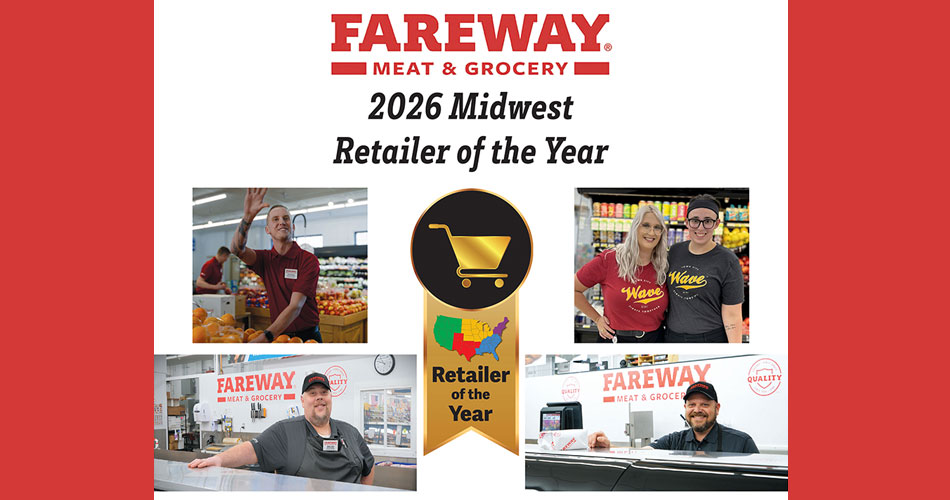
For Fareway Stores Inc. – The Shelby Report of the Midwest’s 2026 Retailer of the Year – staying competitive in an evolving grocery landscape means honoring the company’s rich history while strategically planning for its future.
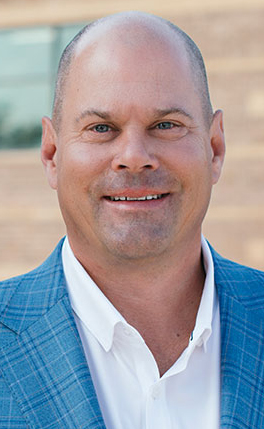
Under the leadership of CEO Reynolds Cramer, the Midwest grocer strikes a deliberate balance between preserving core legacy values and executing forward-thinking operational strategies to meet shifting consumer demands.
Cramer describes his focus, especially the last 15 years, as a split – 50 percent on the company’s heritage, history, culture, consistency and values, with the other half on the strategic vision for the future.
“The whole idea is saying that we’re not 100 percent stuck in the past because I feel like if we had been, we wouldn’t be where we are today,” he said.
The 88-year-old, family-owned company, based in Johnston, Iowa, operates in seven states with more than 14,000 employees.
‘The customer has to think we’re the best’
For about 80 years, Fareway built its stores a certain way and dressed its employees in white shirts and black ties. Cramer wore the uniform himself for more than three decades. The company has since rethought its uniforms and storefronts, decisions he traces to a suggestion from Scott Beckwith, his cousin who retired as chief administrative officer.
Beckwith proposed a focus group. Cramer admitted his first reaction was skepticism.
“At first, my thought – and I think [that of] others – was why do we need a focus group? We know who we are. We know what we’re doing,” he said.
“But one of the things that’s been different about me – not just company-wise, but personally in the last 15 years – has been to have an attitude of, I’ve always done it this way; maybe I should try it a different way.”
Fareway ran two sessions, one in a small town and one in a larger city where the company operates. Cramer and about seven colleagues sat behind a one-way mirror while shoppers who had been sent to Fareway and its competitors reported back.
“Somebody would say something like, ‘I went to this store, and I bought some meat and it wasn’t the best, and then I went to Fareway and their meat was amazing.’ Of course, we’re in the room. ‘Yeah, we’re best. We know we are,’” Cramer said.
“And then someone says, ‘I bought some produce, and I went to Fareway and bought produce, and their produce was terrible.’ And I’m up at the glass, it’s like my eyes are getting bloodshot, and I’m like, what are you talking about?
“But it was a defining moment because I realized that just because we think we’re the best doesn’t really matter. The customer has to think we’re the best.”
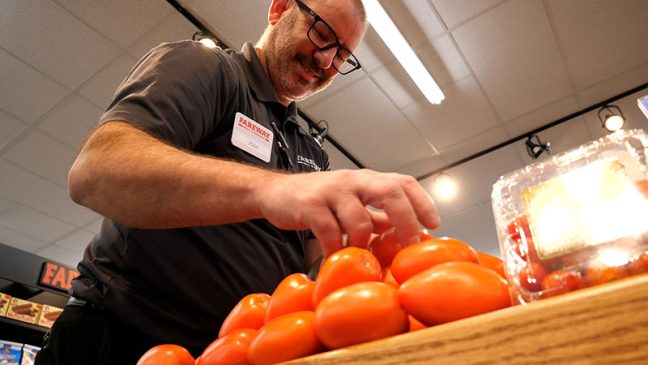
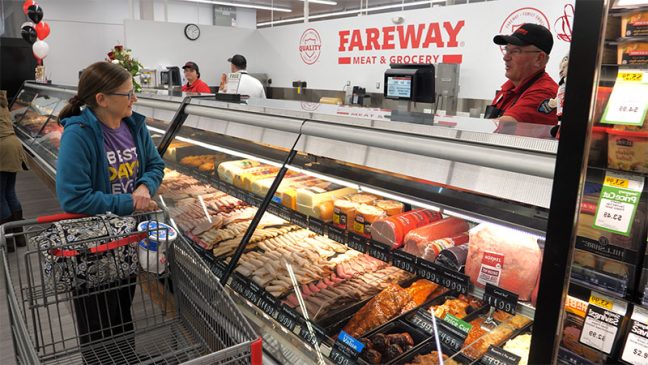
Months later, Cramer took a team to a produce trade show in New Orleans. Fareway came back and retrofitted every produce section in the company with new shelving and added organic offerings.
“Things just took off in our produce department,” he said.
The company applied the same approach to its shirts, storefronts and other longstanding practices, and Cramer said the process builds in feedback from employees and customers.
“Let’s come up with what we think we want to change, and then let’s go and have some test areas, test stores, make some changes, get some feedback from the people that work for us, and get some feedback from customers,” he said. “And then once we feel like it’s 99 percent there, then we can move on and make it that big change.”
Decisions, priorities, list of 10
Cramer’s leadership comes back to a single principle. “I’m always focused on trying to do what’s right,” he said, adding that includes for the company, employees, customers and vendors. “Doing something at work shouldn’t be much different than what you do at home in the community with people that you are involved with in life.”
He described decision-making as the easy part.
“I can make 20 decisions every hour. I have no problem with that. What I have to do, though, is I have to make sure that the team is a part of those,” he said.
“We’re sticking to what is our business, why are we here, and what decisions can we make so that we’re here five, 10, 50 years from now?” he said.
Rather than a formal multiyear strategic plan, Cramer prefers to set a five-year destination and then narrow the focus to the current year through a list of 10 priorities.
“Every year, when you get to the end of the year, you go to that list, and you’re proud of the fact that you checked four of those off. You’ve got two in the hopper, and you’ve decided that three or four, maybe, aren’t what you think they were,” he said.
“What’s the No. 1 thing you got to work on?” he said. “And sometimes people can get caught on the No. 8 thing. The eighth thing is important, but it’s No. 8.”
Building out distribution, constructing smaller stores
On the investment side, Fareway is adding about 100,000 square feet to the roughly 250,000-square-foot refrigerated building at its distribution center. Steel is up on the addition, which will add zero-degree space and minus-20-degree rooms for ice cream and similar products.
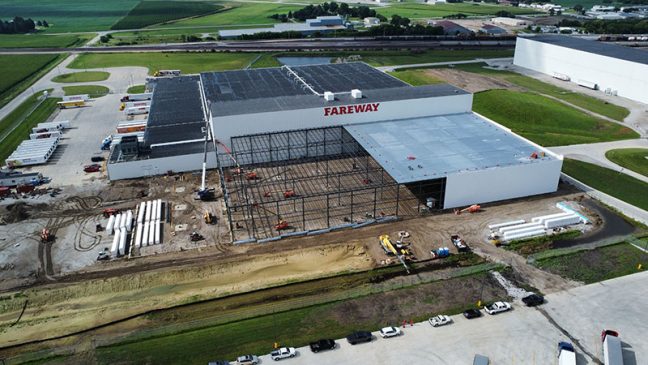
“When we get done with this expansion, we will be in an even better position to be efficient and also have more holding power,” Cramer said. The company also has updated its ASRS towers with new technology to prepare for more automation and robotics.
Cramer said Fareway’s investment philosophy starts with sticking to what it knows.
“We try not to be everything to everyone, and we invest in partners that perhaps are better at doing things than we would be,” he said, citing leased pharmacy space as an example.
On new markets, Cramer said many areas are oversaturated. Fareway is instead targeting growing communities and rural towns, using a smaller footprint and sometimes lower-cost building materials.
“We’re working with some great communities that are open to our thought process when it comes to more housing, more services, so that we can put a store there to have a destination,” he said.
‘Second city council’
Cramer said his view of community impact was shaped by the COVID-19 pandemic, when grocery employees were designated essential workers.
“I always like to think that the second mayor, the second city council, if you will, is our Fareway store. It’s our management team, and it’s our employees that are there every day,” he said. “They are a part of the community. Fareway is a part of that community.”
The day before this interview, Cramer was at a store in Norwalk, Iowa, where he lives, presenting a check to the fire department and another organization after an apartment building burned to the ground. One of the displaced residents worked in a Fareway meat department. The company ran a roundup campaign and matched what customers raised.
The same day, he attended the Stars and Strikes Charity Classic, a softball event with area firefighters, police and EMTs organized by Fareway AVP of Marketing Taylor Blanchard, along with Anheuser-Busch and Doll Distributing of Des Moines. The game was played on a field cut from a cornfield on the Moeckly family farm north of Polk City.
Cramer said much of the money goes to help families in crisis. A local fire chief told him about a friend, an Army Ranger who died of pancreatic cancer, whose family’s mortgage had been paid off by Folds of Honor Iowa, a group Cramer said is new to the state.
Cramer noted that he once was the one taking the lead and participating in charity events, often manning the grill. Today, many Fareway team members sit on local boards of nonprofits.
“I was so proud of the fact that I didn’t do anything to set this up,” Cramer said of the softball event. “Twenty years ago, I would have been doing all this stuff. The team has risen to the occasion, and that’s where I feel really proud.”
‘One spoke on the wheel’
Asked about his own legacy, Cramer pointed to a management meeting of more than 300 people. He asked who in the room knew Bill Beckwith and Bob Cramer, the uncle and father who led the company as CEO and president more than 20 years ago. About 15 raised their hands.
“It’s not that people are forgotten; it’s just that they’re not in the game anymore,” he said. “I’m not doing this for legacy, nor does it really pop into my mind. What I’m doing it for is so next generations can have the same opportunity and the benefit that I received.”
Fareway reaches its 100th anniversary in about 12 years. Cramer said he expects to be retired by then but plans to attend the celebration and see the company’s new 100-year history book, knowing he “was just one spoke on the wheel that helped pedal us to that point.”
“My true legacy is making sure that the people are in place when I leave, that it just keeps going, and they raise the bar,” he said.
Cramer counts off the people who make it work: the truck driver up at 3 a.m., the warehouse worker building pallets at 11 p.m., the shop employee painting a produce table, the IT staffer fielding a 2 a.m. call, the 14-year-old carrying groceries to the car.
“We’ve got a pretty good thing going, and I just am so happy that people get up every day and enjoy coming to Fareway,” he said.
“We must be doing something right to have a great customer experience because we’ve got some amazing customers that keep coming back. And then to have a great employee experience, we’re keeping employees,” Cramer said.
“People like myself can look really good in an article, on TV, getting an award; none of that would happen without those amazing people.”