
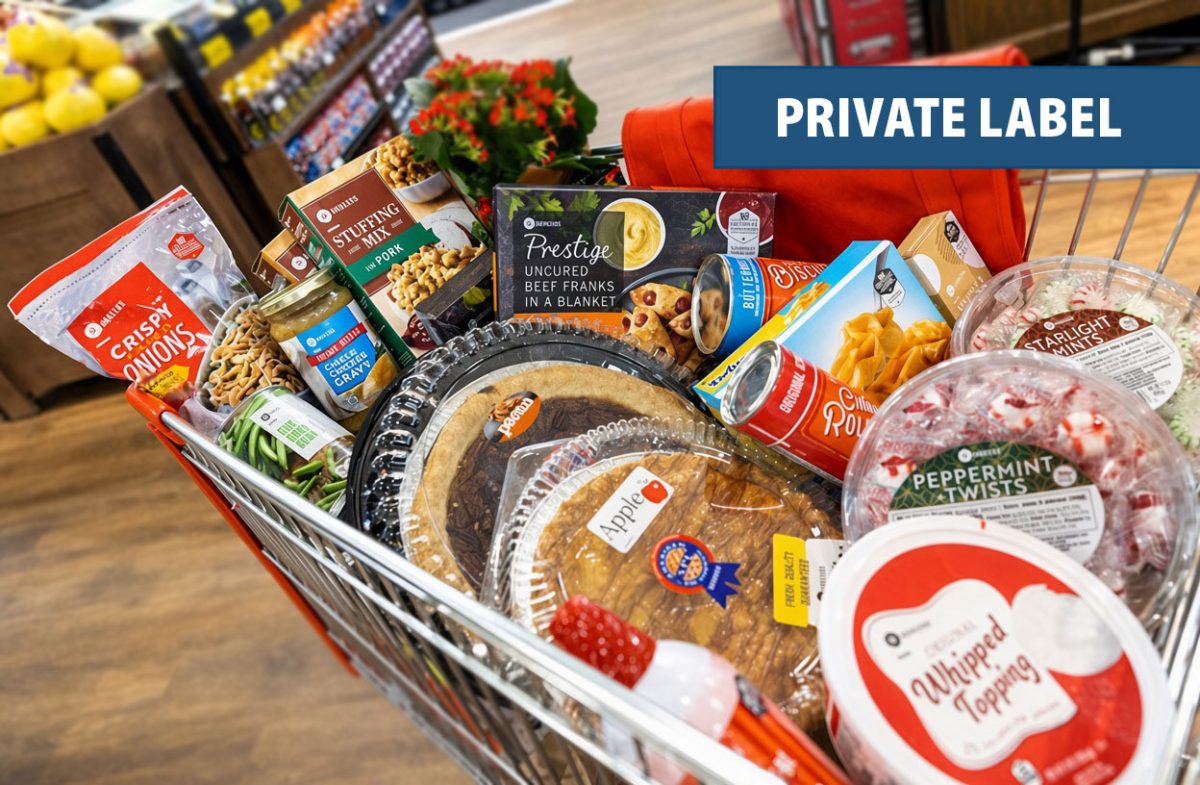
Private label has moved into the mainstream. In the September wave of the PDG Insights Diverse Consumer Pulse study, 36 percent of consumers said they prefer private label or store-brand products over national brands, up from 29 percent in September 2025.
Another 39 percent viewed the two as interchangeable, down from 44 percent a year earlier. Taken together, about three in four consumers preferred private label or considered it interchangeable with national brands. Fewer than one in five (19 percent) generally preferred national brands and just 7 percent said they rarely bought store brands.
That acceptance is translating into a larger role in the basket. Forty-three percent said they were buying private label in more categories than they had a year earlier. Another 47 percent reported buying in about the same number of categories, while 10 percent were buying in fewer.
The pattern suggests that many shoppers are retaining recent private label gains rather than treating store brands as a short-term substitute.
Value leads, but story extends beyond price
Value remains central to private label purchasing. When respondents selected all factors that influence their decisions, 42 percent cited good value for the money and 36 percent cited a lower price than national brands.
When asked to identify the single greatest influence, lower price (18 percent) and good value (17 percent) led the list.
The results also show that quality has become part of the private label proposition. About three in 10 respondents selected similar quality to national brands or better quality than expected as purchase influences.
In a separate measure, 68 percent agreed that private label products are as good as national brands in many of the categories they buy, with 59 percent saying some store-brand products are better quality than national brands. Nearly three-quarters (72 percent) agreed that private label provides good value for their money.
Among shoppers whose private label category purchasing changed over the prior year, 44 percent cited rising national-brand prices as an influence. Improved private label quality followed (34 percent), while changes in household budgets, positive experiences with store brands and promotions or discounts were each named by about three in 10.
The combination indicates that price may prompt initial consideration, but product performance and experience help sustain purchasing.
The purchase barriers tell a similar story. Among respondents who identified reasons for not buying private label more often, 45 percent trusted national brands more, 38 percent preferred their taste, ingredients or features and 31 percent believed national brands offered better quality or performance. Familiarity was cited by 30 percent.
Retailers therefore need more than price gaps – clear quality cues, credible claims and positive trial experiences can reduce the perceived risk of switching.
Age reveals different routes
The strongest category expansion appeared among consumers ages 35-44. Sixty percent of this group said they were buying private label in more categories than a year earlier, compared with 31 percent of those ages 18-24.
Consumers ages 35-44 also stood out on preference: 54 percent generally preferred private label to national brands, the highest share among the age groups measured.
Older consumers were especially value-oriented. Lower price influenced 63 percent of shoppers age 65 and older, and good value influenced 69 percent.
By comparison, those factors were selected by 25 percent and 20 percent, respectively, among ages 18-24. Consumers 65 and older also were more likely to cite similar quality to national brands (42 percent) than the youngest group (15 percent).
Younger shoppers showed more interest in discovery and differentiation. Social media was a route to discovering new private label products for 44 percent of ages 18-24, 40 percent of ages 25-34 and 43 percent of ages 35-44, compared with 6 percent of consumers 65 and older.
The youngest group also was more likely to say culturally relevant products, flavors or package sizes would encourage more private label purchasing: 31 percent of ages 18-24 selected this option, compared with 4 percent of those 65 and older.
These distinctions point to more than one path for growth. Older shoppers respond to dependable value backed by comparable quality; younger adults are more open to distinctive products, culturally relevant choices and new formats.
Consumers ages 35-44 appear receptive to both, leading category expansion while also showing strong interest in new ideas. Retailers can maintain a consistent value promise while tailoring the emphasis by audience and channel.
Households with children show stronger momentum
Private label growth was more pronounced among households with children under age 18. Fifty-five percent of parents said they were buying store brands in more categories than one year earlier, versus 36 percent of respondents without children. Parents were also more likely to plan to replace some national-brand products with private label alternatives, 43 percent versus 27 percent.
The assortment itself carries more weight for these households. Half of parents said unique or exclusive private label products influence retailer choice, compared with 30 percent of those without kids.
Parents also reported higher intentional purchasing in departments such as baby care, beer, wine and spirits, beverages, pet care and health, beauty and personal care. These differences point to store brands playing a role across both routine household needs and products tied to family life stages.
Spanning income groups
Private label preference was not confined to lower-income households. Forty-three percent of respondents earning $100,000 or more said they generally preferred private label or store-brand products over national brands.
This is up nearly 50 percent from 29 percent in September 2025, indicating the rate of adoption among more affluent households is growing.
Income differences were more visible in what shoppers wanted from private label. Higher-income consumers showed greater openness to premium offerings; 69 percent of respondents earning $100,000 or more agreed that they would pay more for a premium store-brand product if it offered better quality or features.
By comparison, about 40 percent of respondents earning less than $50,000 felt that way. The findings reinforce that private label spans income groups while serving different priorities, from affordability to transparency, quality and premium features.
Shelf remains primary discovery point
Despite demographic differences in digital discovery, the store remains where private label is most often encountered. Forty-two percent said they typically discover new products through packaging on the shelf, while 41 percent cited in-store signage. Weekly ads or circulars reached 34 percent, followed by social media at 26 percent and word of mouth at 26 percent.
Discovery matters because exclusive store brands can shape retailer choice. Thirty-seven percent said unique or exclusive private label products have a significant influence where they shop, and another 44 percent said they have some influence.
In addition, 53 percent rated the regular introduction of new or improved store-brand products as extremely or very important to maintaining their interest in a retailer.
The findings also identify practical conversion levers. Forty-three percent said lower prices would encourage more frequent private label purchasing, while 32 percent wanted proof that quality matched or exceeded national brands.
About one in five cited broader assortment, promotions or loyalty rewards, or more premium and better-for-you options. Retailers can address these needs by simplifying comparisons, supporting trial with targeted offers and offering both accessible staples and compelling trade-up choices.
Looking ahead, most shoppers expect a blended basket. Forty-eight percent plan to continue buying a mix of national brands and private label products, while another 32 percent plan to replace some national brands with private label alternatives. Just 11 percent expect to remain loyal to national brands.
The implication for retailers is clear. Private label is no longer just a lower-priced alternative; it is an established part of shopping behavior and a source of differentiation. The next phase of growth will belong to retailers that pair competitive prices with proven quality, relevant assortment, premium options and visibility at the shelf.