
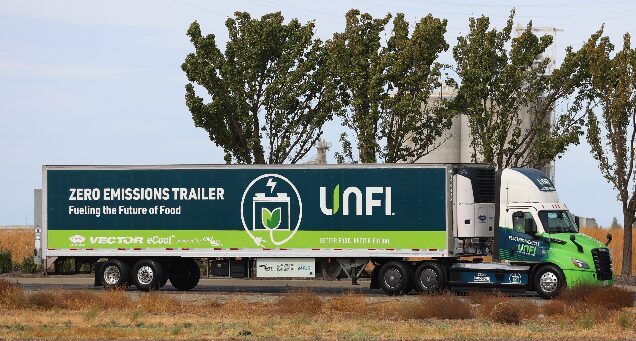
United Natural Foods Inc. has signed on to the U.S. Food Waste Pact, the national voluntary agreement led by nonprofits ReFED and World Wildlife Fund, the pact announced Aug. 5.
The Providence, Rhode Island-based wholesaler becomes the fourth distribution signatory and joins a roster that spans retailers, manufacturers, foodservice operators and, since last year, the trade association FMI.
The pact uses a “Target, Measure, Act” framework under which signatories collect and analyze waste data from their own operations, share practices at multi-stakeholder gatherings and test solutions through intervention projects.
For UNFI’s roughly 30,000 retail customers, the move puts a major wholesaler’s waste data into a benchmarking pool that has so far been weighted toward retail and foodservice. The wholesaler supplies natural, organic, specialty, fresh, conventional and private label products.
What UNFI brings
UNFI has set a goal of zero waste to landfill by 2030. The company said it diverted 85 percent of its food waste from landfill in 2025 through prevention, salvage food donations, food recycling and other diversion programs.
“Joining the U.S. Food Waste Pact builds on our ongoing work to advance our commitment to achieving zero waste to landfill by 2030,” said Alisha Real, VP of sustainability and impact at UNFI. “We look forward to learning from fellow signatories and contributing our experience as we work together to identify practical solutions that can help reduce waste, improve resource efficiency and strengthen food recovery efforts.”
“We look forward to having UNFI join us at the table,” said Sara Burnett, executive director at ReFED. “They bring significant scale and decades of experience in the distribution sector, and we’re excited to see how their participation accelerates our shared goal of reducing food waste.”
The numbers behind the effort
ReFED’s latest estimate puts roughly 29 percent of all food in the U.S., about 70 million tons, as unsold or uneaten each year. That amounts to 114 billion lost meals annually and $380 billion in total value, equal to 1.3 percent of U.S. GDP. Food waste generates more than 3 percent of the nation’s greenhouse gas emissions and consumes more than 15 percent of its freshwater supply, the organization says.
The 29 percent figure is down from the 31 percent ReFED cited through much of 2025.
The pact’s 2025 impact report, released in March, found the unsold food rate at grocery stores fell 1.1 percent from 2023 to 2024 even as total unsold food volume rose by 77,800 tons, reflecting more inventory moving through stores overall. The foodservice food efficiency rate fell 5.7 percent over the same period.
Leave a comment