

A grocery trip used to begin with a shopping list. Today, many consumers start by reviewing promotions, comparing prices among retailers, checking loyalty offers and deciding whether a private label alternative is worth considering. Grocery shopping has become a more active decision-making process, with consumers weighing trade-offs before they ever enter a store.
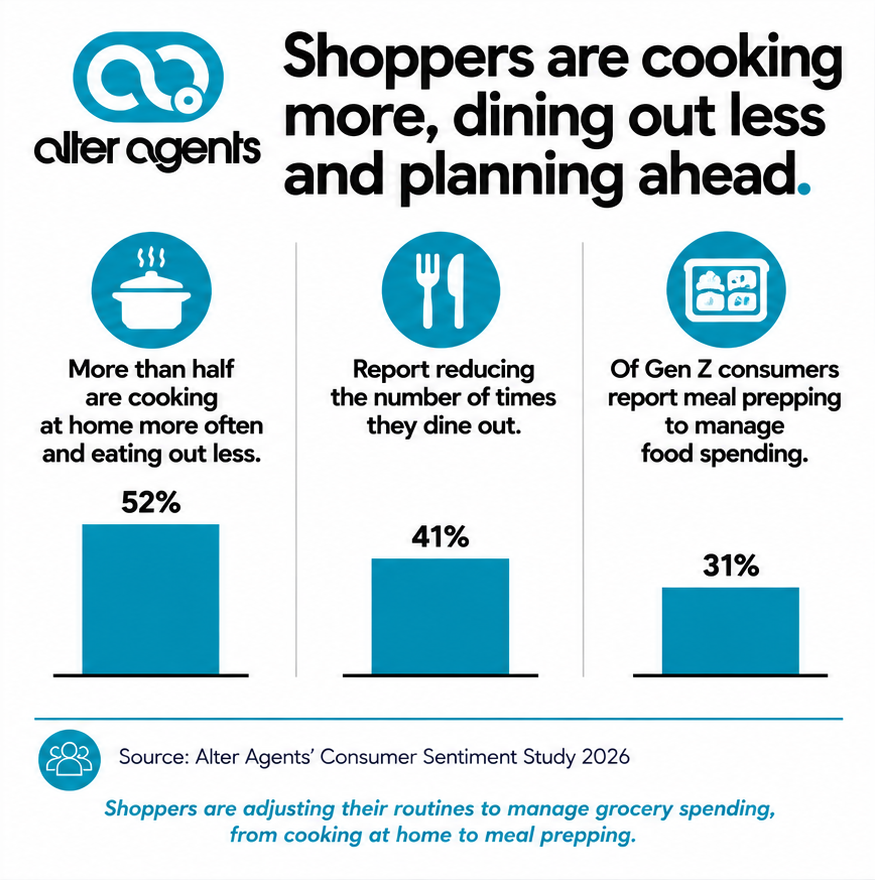
More than half of consumers say they are cooking at home more often and eating out less, while 41 percent report reducing the number of times they dine out, according to Alter Agents’ 2026 Consumer Sentiment Study, a survey of 1,300 U.S. adults. Nearly four in 10 say they are buying more private label products instead of national brands. Among Gen Z consumers, 31 percent report meal prepping as a way to manage food spending. At the same time, shoppers continue to look for savings through promotions, rewards programs and coupons.
These behaviors reflect more than rising prices alone. Consumers continue to navigate economic uncertainty, concerns about household finances and a growing sense that they need to take more control over spending decisions. They also appear increasingly willing to question assumptions about value, which leads more shoppers to evaluate purchases they once made automatically.
Cooking at home, meal prepping, using coupons, buying private label products and cutting back on restaurant visits all require planning. Consumers aren’t relying on a single cost-saving tactic. They’re combining several approaches and adjusting them over time. These shifts show up among several consumer groups, with some of the largest changes among male shoppers.
Shoppers are building their own savings strategies
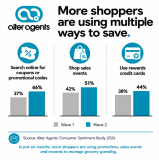
Over a six-month period, the share of consumers who reported searching online for coupons or promotional codes increased from 37 percent to 46 percent. The share shopping sales events rose from 42 percent to 51 percent, while use of rewards credit cards increased from 38 percent to 44 percent.
Managing grocery spending now means working through a set of connected decisions. A household may be balancing promotions, private label substitutions, meal planning, restaurant spending and rewards programs at the same time, and changing the mix as conditions change.
Private label reaches beyond traditional value shoppers
Private label growth is often discussed in the context of tight household budgets, but the study suggests a broader audience. Thirty-nine percent of higher-income households report buying more private label products, nearly matching lower-income households at 41 percent.
If shoppers with more spending flexibility are also reevaluating national brand purchases, private label becomes more than a budget alternative. Consumers are revisiting habits that may once have been driven by routine or brand preference. As shoppers scrutinize spending more closely, brand loyalty alone may no longer justify a price premium. The growth of private label suggests consumers are reassessing which brands continue to earn their trust and where lower-cost alternatives deliver enough value.
The way consumers pursue value also varies by generation. Baby boomers currently lead private label adoption in the study, with 49 percent reporting increased purchases compared with 25 percent of Gen Z consumers. Younger consumers are approaching savings differently: meal prep, cutting restaurant spending and other planning-oriented behaviors appear more often among younger shoppers than traditional deal-seeking.
More decisions are happening before the store visit
 For retailers, one of the most important implications may be where shopping decisions are taking place.
A consumer who reviews promotions before leaving home, compares prices among retailers, loads digital offers into an app and builds a meal plan around available discounts is making many purchase decisions before entering a store. Promotions, rewards programs, meal solutions and private label offerings become part of a planning process that often begins days before a shopping trip and continues long after checkout.
That raises questions transaction records alone can’t answer. Which promotions give consumers enough confidence to make a purchase? When does a private label option feel like a smart substitution rather than a compromise? What information are shoppers looking for before they add an item to the cart?
Purchase records can show what happened. Understanding why shoppers chose one product over another, what alternatives they considered and what gave them the confidence to buy takes a closer look at the decision-making process itself.
As consumers devote more time to managing grocery spending, understanding how those decisions are made becomes just as important as understanding what they buy.