
Axonify, a Waterloo, Ontario-based frontline enablement platform, has released new research showing that as grocery prices stay high, shoppers are scrutinizing more than the price tag. The report, “Eye on the Aisles: Higher Prices, Higher Stakes for Customer Experience,” found that consumers are becoming more price conscious and, at the same time, less tolerant of a poor in-store experience.
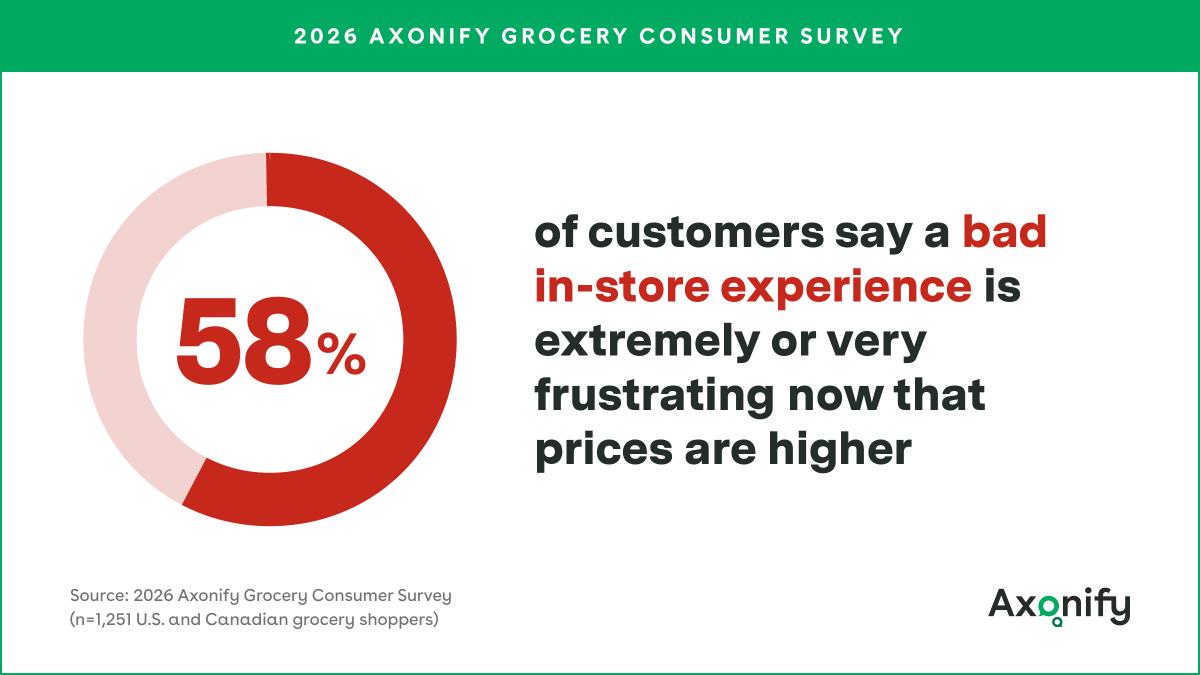
In the survey of 1,251 U.S. and Canadian grocery shoppers, 92 percent said grocery prices have risen over the past year, and 67 percent said they are extremely or very concerned about the cost of groceries. Forty-two percent said they notice in-store problems more than they used to, while 58 percent said a poor in-store experience feels more frustrating in the current higher-price environment.
Nearly two-thirds of shoppers ranked competitive prices as the top factor in a good grocery experience, with 61 percent naming it a priority. Yet the survey found price is not among the strongest predictors of how shoppers actually rate their overall experience. Quality and freshness, cleanliness, store atmosphere, selection and frontline service all showed a stronger relationship with shoppers’ overall experience ratings than price did.
“Grocery and retail operators can’t control inflation, but they can control how their frontline workers and managers deliver the best in-store experience,” said Melissa Burghardt, CEO at Axonify.
“While some operators may consider cutting labor to protect margins, this new data shows the risk of allowing the customer experience to erode when shoppers are already feeling squeezed. Protecting frontline capacity is an investment in the experience that keeps shoppers coming back,” she added.
Grocery retailers using Axonify’s platform include Kroger, Walmart, Winn-Dixie and Sprouts Farmers Market, according to the company.
Key findings
 Eighty-eight percent of shoppers visit more than one grocery store in a typical month, with nearly one in three shopping at three or more stores. Among that group, 69 percent said they shop multiple stores to find better prices.
- Forty-two percent of respondents have cut back on visits to a store they used to shop regularly. Rising prices were the primary catalyst, cited by 59 percent, but a better overall experience elsewhere (26 percent), long waits or checkout lines (26 percent) and out-of-stocks or poor selection (23 percent) also registered.
- Quality and freshness and cleanliness showed the strongest statistical relationship with overall experience ratings among store environment factors, while friendly and courteous staff led the frontline factors, ahead of knowledgeable staff, staff availability and checkout speed.
- Households earning less than $50,000 were the most concerned about grocery prices, yet 47 percent said they would pay somewhat more for a noticeably better experience, above the 44 percent average.
- Expectations differ by format. Sixty-four percent of warehouse club shoppers called a poor experience extremely or very frustrating when prices are high, the most of any format, and 25 percent of dollar-store shoppers ranked quality and freshness as their top priority, ahead of the 18 percent who chose competitive price.
The report also broke out generational differences, finding Gen Z the most experience-loyal cohort. Fifty-seven percent of Gen Z shoppers said they would pay more for a noticeably better grocery experience, the highest of any generation surveyed, and 56 percent have already reduced visits to a store they once frequented. Only 39 percent of Gen Z cited price as key to a good experience, compared with 76 percent of Boomers, while Gen X registered as the generation most concerned about grocery prices at 44 percent extremely concerned.
The online survey was fielded July 30 to Aug. 5 and weighted to be representative of the overall population across seven demographic variables, with a credibility interval of plus or minus 4 percentage points.
Axonify’s platform serves frontline teams across retail, grocery, financial services, healthcare and logistics, with more than 4 million employees using it in more than 160 countries. Click here to request the report.
Related: Survey Highlights How Grocery Stores Can Improve In-Store Experience