
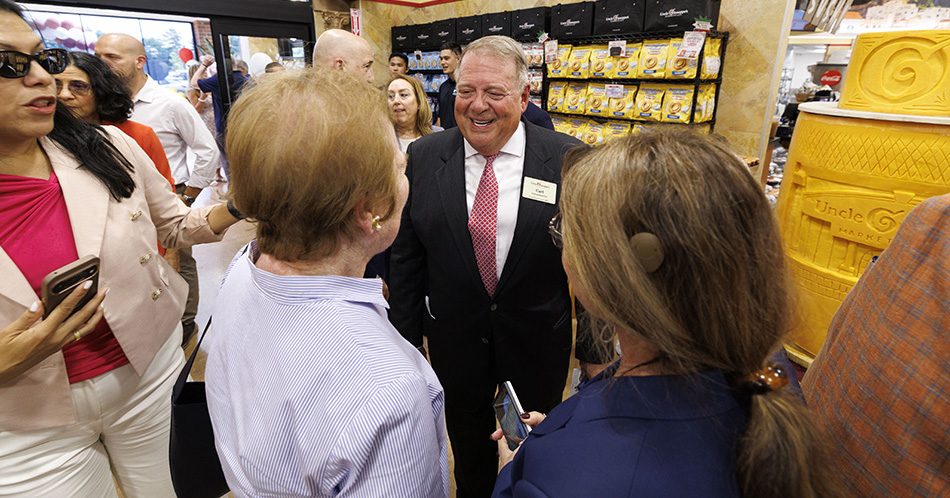
Uncle Giuseppe’s Marketplace waited three years for the lease to run out on the supermarket that occupied its newest space in Greenvale, New York. The payoff is the Italian specialty grocer’s ninth Long Island store, its largest to date and the 13th build in a 25-year run that shows no sign of slowing.
Carl DelPrete, co-founder and CEO, said the site had been on the company’s map for years before it came open.
“Uncle Giuseppe’s looks for locations; we don’t build new stores. Our sweet spot is in that 55,000-foot range,” he said. “This was an existing supermarket that was going out of business, and we’ve had our eye on the location for a number of years.”
Size was less of a factor than fit, DelPrete said.
“If it was 60,000 or 52,000, we still would have done the location. We’re chameleons in a way that we’re able to outfit our stores into any different size box,” he said. “It turned out this was a perfect box for us in terms of its dimensions … We think it’s the best of the format.”
Full steam ahead
Three more stores are on the way. A Levittown location, set to open in the next three months, will move into a former King Kullen. And stores 15 and 16 are slated to open in late 2027: King of Prussia, Pennsylvania, at 320 W. DeKalb Pike, which will mark its first location in that state, and Moorestown, New Jersey, at East Gate Square, 1311 Nixon Drive, bringing the brand to a new market in South Jersey.
Beyond that, the pace stays deliberate.
“We’re building two stores a year. That’s our plan. We like to keep a nice even pace. We’re not going to run and trip,” he said. “We love Pennsylvania. We think [in] New Jersey there are opportunities. We get a lot of requests for Connecticut as well.”
DelPrete said he has looked at opportunities in the Carolinas, and Chicago has come up, but the search will focus “from the Boston, Connecticut, down into the Pennsylvania area over the next couple of years.”
Selling the experience
As more shoppers move their grocery buying online, DelPrete said the fresh specialty format wins by offering what a screen cannot.
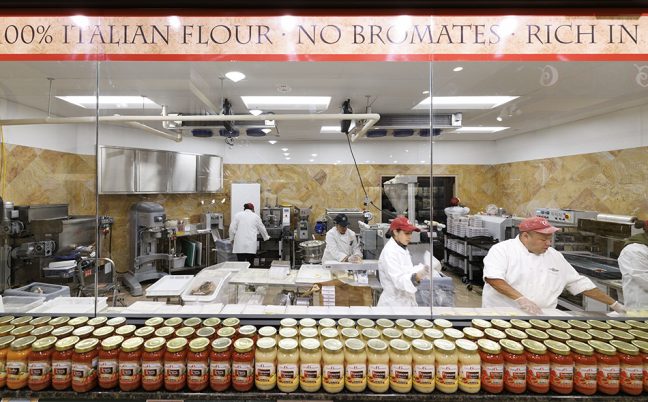
“While many people are comfortable shopping on their phones and their iPads and having deliveries, we like to think that we make it enjoyable for people to come and shop. And I honestly say that without any hubris, people get really excited,” he said.
“The supermarket industry has gotten away from labor. Even some of the very good operators out there that have prepared foods and hot bars, they’re all making that in a factory somewhere. They’re putting it in a bag, a little bit of nitrogen to keep it fresh and transporting it hundreds of miles. We don’t do any of that. Everything we do is done in-store.”
Shoppers watch butchers break down beef, and pasta makers work behind a window. Music plays throughout the stores, with live singers on weekends. The bakery’s aroma is piped into the parking lot, so customers smell it as they walk in.
“People say to me, ‘Are you worried about the Amazon effect, where everybody buys everything online?’ And I’m saying, the more people buy online, the more I think an Uncle Giuseppe’s is needed,” DelPrete said. “Retail isn’t dead; it just needs to be exciting. And it needs to offer people more than just things on a rack.”
Culture as blueprint
Scaling in-store craft across 13 stores comes down to culture and standards, he said. Before every opening, DelPrete meets each team member at a rally.
“The first part of my speech is that everything and anything you prepare, you would want to bring home to your family. If not, throw it away. If something doesn’t look right, don’t serve it,” he said.
A culinary director is responsible for the recipes, and supervisors visit the kitchens, including stores hours away in New Jersey, to check execution.
“If you eat a chicken cutlet in Long Island, it tastes exactly the same,” DelPrete said.
“Making great food is not that difficult. It’s buying really good products and following a good recipe. It’s having the people that believe in it and don’t take shortcuts. And we’re real sticklers on that.”
Hiring 1,000, training tradespeople
The company is hiring more than 1,000 people across Long Island, with 300 hired so far. The Greenvale opening alone brought in more than 280 people for a store that will run 250, the company average. Hiring for Levittown is underway.
DelPrete describes the work to employees as a trade with a future. 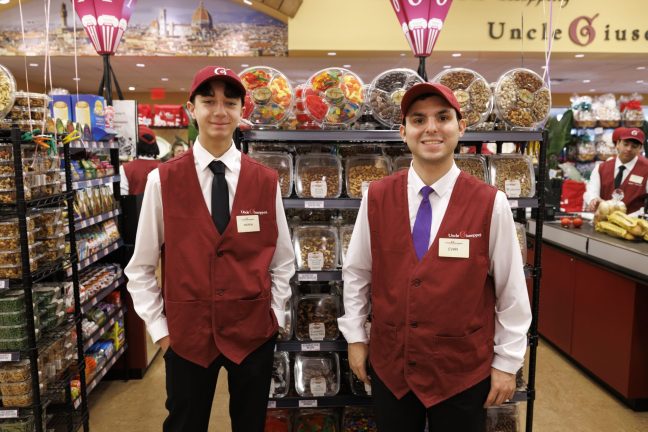
“We all know about AI, but AI is not going to replace cooks and butchers and bakers,” he said.
Among the company’s 3,000 team members are employees who started at the lowest levels and moved up. One began as a dishwasher when minimum wage was $6.15 an hour more than 20 years ago and is now a kitchen manager overseeing 50 people.
“We can teach people how to be tradesmen, how to be great bakers, how to be butchers,” DelPrete said. “I think it’s very respectable to be able to do a trade like that because you’ll always be able to feed the family.”
From rainbow cheesecake to Italian sushi
Innovation doesn’t happen by chance; it is on a schedule. Once a month, a culinary innovation meeting brings new recipes to a tasting team. DelPrete, who said the meeting is one of his favorite days of the month, cited recent hits such as a rainbow cheesecake that drew orders from Chicago and California, an in-house Dubai chocolate created before the trend took off and an Italian sushi with no fish – mozzarella wrapped around fillings such as lettuce and prosciutto with balsamic glaze – dreamed up by Dondi Peterson, director of mozzarella and pasta.
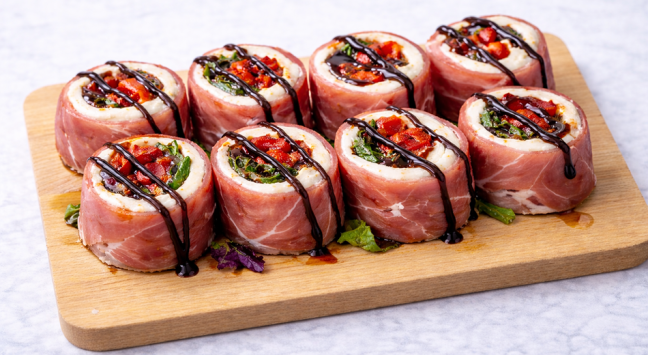
“It’s gone crazy,” DelPrete said of the Italian sushi, which comes in a variety of flavors. “People are loving that.
While innovation is important, some things have not changed in 25 years.
“World-class customer service cannot change,” DelPrete said. “We’ve changed recipes, we’ve enhanced recipes. For instance, now all of the pasta that we make – all the ravioli and fresh pasta – is all made with … flour from Italy that’s not been processed.”
The stores now feature full coffee departments with baristas – the company owns its own roasting operation – and golf carts stationed at the front and back of each shopping center to shuttle customers and their groceries to their cars.
“Does it cost us a little bit more money to have those carts out there? Absolutely. But it’s an investment well worth it because I see the reaction of the people,” DelPrete said.
The company also ships nationwide through a new Goldbelly partnership, sells its sauce on Amazon and has seen growth through Instacart, DoorDash and its own delivery. Still, DelPrete said, “the growth is in-store.”
“Again, retail’s not dead. You just got to make sure people are excited when they come to shop.”