
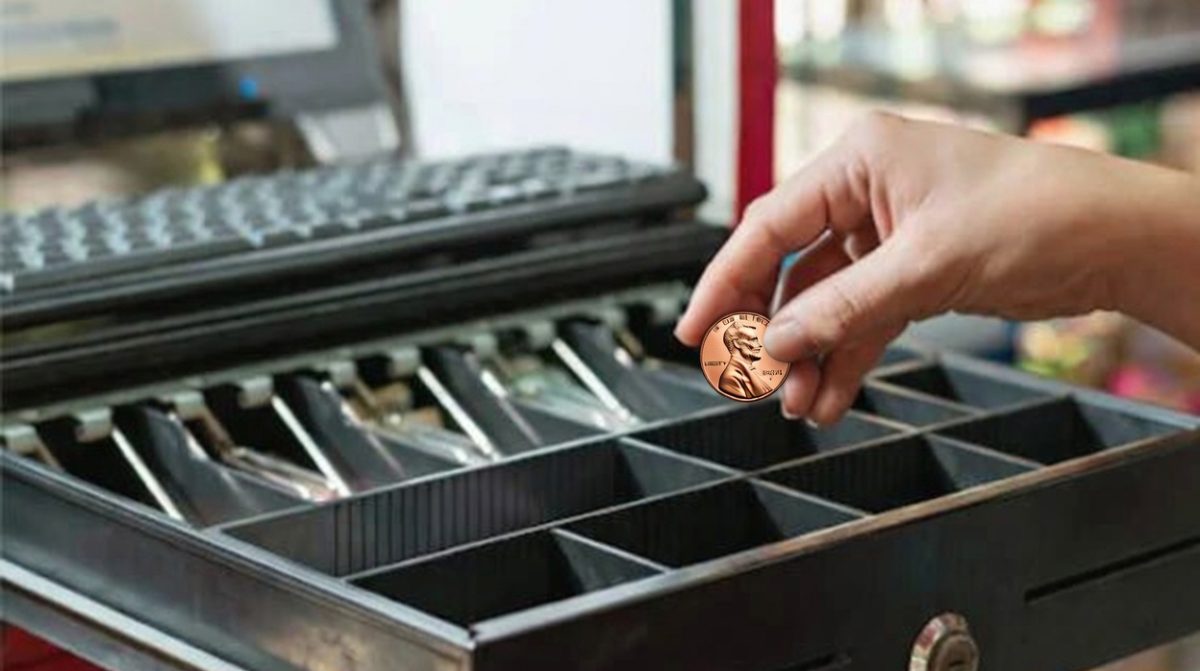
The Senate’s passage of the bipartisan Common Cents Act this month gives retailers something many have been operating without for nearly a year: clear legal authority to round cash transactions to the nearest nickel.
The Senate bill, S. 1525, sponsored by Sens. Cynthia Lummis of Wyoming and Kirsten Gillibrand of New York, establishes a national framework for cash rounding following the end of penny production in 2025. It passed by unanimous consent on Aug. 7, less than a month after the House approved its companion measure, H.R. 3074, by voice vote on July 14. Because each chamber passed its own version, the bill is not yet law; the two chambers must approve identical language before it can go to the President. The Senate amended its bill to conform to the House-passed version, which should ease that final step.
Under the legislation, cash totals ending in 1, 2, 6 or 7 cents would round down to the nearest nickel, and totals ending in 3, 4, 8 or 9 cents would round up. Rounding applies only to cash, not to card, check or electronic payments, and the rounding provisions take effect one year after enactment.
The National Grocers Association, which advocated for the bill over the past year, applauded the Senate’s action.
“Independent grocers serve millions of Americans each day and the sudden shortage of pennies has caused significant operational difficulties and regulatory uncertainty for retailers,” said Stephanie Johnson, NGA senior VP and head of government affairs. “The Common Cents Act establishes clear, consistent guidelines businesses need to handle cash transactions fairly and efficiently while minimizing inconvenience for consumers.”
For many grocery retailers, however, the law formalizes a shift already well underway at the point of sale. Retail technology provider Ravyx, in written responses to The Shelby Report, said it fielded its first request to adapt a retailer’s POS system for the change in September 2025, and requests built from there as penny shortages hit different regions in waves.
“Some areas started to see penny shortages much earlier than others, before proper education and information had been broadly shared,” the company said. “The biggest headache was not adequately preparing for this from a retail technology and staff education standpoint before the issue became a reality.”
Ravyx said it worked ahead of the shortage to notify retailers of the change, walk them through system adjustments and reporting, and help train staff to handle customer questions at the register.
The fix is simpler than it sounds
For most grocers, the technical solution has proven straightforward. Dynamic rounding, which rounds a cash total up or down to the nearest nickel depending on the ending numeral, is generally available in most leading grocery POS systems. Retailers who have adopted it can track the results in their weekly reporting and, according to Ravyx, the financial impact has been generally net neutral.
The complexity comes when retailers pursue more advanced approaches, such as donating rounding proceeds to a charity of the customer’s choosing. Those programs require more programming, oversight and reporting time to build, and Ravyx suggested many retailers weighing them likely concluded “the juice was simply not worth the squeeze.”
“After all, they have a business to run,” the company noted.
Lessons from Canada
The U.S. is not the first market to work through this transition. Canada eliminated its penny in 2013, and Ravyx drew on that experience, including programming and consumer education materials developed for Canadian retailers, in preparing its U.S. customer base.
The biggest hurdle north of the border was not technology; it was consumer perception.
“The biggest hurdle was consumer confusion and the concern that removing the penny would effectively become a hidden price increase,” Ravyx said.
In other words, Canadians generally understood why the penny was going away but worried they would end up paying more.
The most important point for shoppers to understand is that rounding applies only to the final cash transaction total, not to individual item prices, and totals round both up and down depending on the amount.
That makes the checkout the pressure point because it is where customers actually experience the change. Cashiers need to be able to clearly and consistently explain why a final total might differ from what a customer expected.
“The bigger lesson for U.S. grocers is that trust matters more than the change itself,” the company said. “Even when the financial impact is minimal, customers notice changes at checkout.”
Ravyx recommends grocers introducing any new rounding or payment policy communicate the rules clearly, train front-line employees thoroughly and use simple examples showing when a transaction would round up and when it would round down.
Will $4.99 survive?
One open question is whether nickel rounding will push grocers away from psychological pricing that ends in .99. Ravyx does not expect a major shift.
“It’s possible that retailers migrate to clean pricing, but it is tough to rewire psychology,” the company said, adding that shoppers gravitate toward deals, weekly sale savings and unit-cost comparisons more than the final digit of a shelf price.
The overall net impact on grocery pricing remains to be seen. For now, Ravyx said, “strategies that have successfully worked for quite some time, whether it be psychology, or weekly ads, will continue to win the day.”
What grocers should do now
Taken together, the NGA’s advocacy win and the Canadian playbook point to a short checklist for grocery retailers:
- Confirm your POS system supports dynamic rounding and that it is configured to round cash totals both up and down.
- Post clear signage explaining that rounding applies only to cash transactions and only to the final total.
- Train cashiers on a consistent, simple explanation, with examples of rounding in both directions.
- Watch weekly reporting to verify the net impact stays where it should: close to neutral.
- Weigh carefully whether an advanced approach such as charity round-up is worth the added programming and oversight.
With versions of the Common Cents Act now through both chambers and one procedural step from the President’s desk, grocers who took those steps early will soon have legal footing to match their operational one, and those who have not yet formalized a rounding policy have a clear framework for doing so.
Buy pennies from ebay & amazon & spend them. Post signs in stores asking customers to pay with exact change. This way people will not hoard coins.