
Two of the grocery industry’s largest trade associations responded to the Senate’s first hearing on AI surveillance pricing by drawing a sharp line between the practices under scrutiny and the pricing tools their members actually use.
The Senate Judiciary Subcommittee on Crime and Counterterrorism held the hearing, titled “Your Data, Their Profit: The Consumer Cost of AI Surveillance Pricing,” on Aug. 4. Chairman Josh Hawley, R-Missouri, framed the practice as an abuse of consumer trust combining data collection, higher costs and worker displacement. Witnesses included a policy counsel from the United Food and Commercial Workers International Union, a former Visa chief data officer, and representatives from the American Economic Liberties Project, Groundwork Collaborative and the Wharton School.
NGA: independents aren’t doing this
The National Grocers Association was direct about what its members do and don’t do.

“Independent grocers are committed to earning their customers’ trust every day by offering affordable prices, quality service and transparency at the checkout,” said Stephanie Johnson, SVP and head of government affairs at NGA. “They use pricing tools such as weekly promotions, voluntary loyalty program discounts and end-of-day markdowns on perishable products to help customers save money and reduce food waste. These practices are designed solely to deliver lower prices and greater value to shoppers.”
She continued: “Independent grocers are not doing surge pricing, charging different shelf prices to different shoppers or using algorithms to raise food prices based on consumer demand or an individual’s willingness to pay. Independent grocers operate on razor-thin margins and compete every day to deliver value to their communities. We look forward to working with lawmakers to ensure any policy solutions preserve consumer trust while protecting the pricing tools that help local grocers keep food affordable for American families.”
FMI defends loyalty programs, shelf labels
FMI, The Food Industry Association, took a similar approach, addressing loyalty programs and electronic shelf labels specifically.

“FMI supports policies that promote transparent, accurate and understandable pricing for consumers,” said Andy Harig, VP of tax, trade, sustainability and policy development. “Grocery retailers compete every day to earn shoppers’ trust by delivering value, convenience and affordable food, and consumers have more choices than ever about where and how they shop.”
Harig pointed to the range of inputs behind food prices: supply and demand, commodity markets, transportation and energy costs, labor, severe weather and global events.
He also spoke about grocers’ motivation in offering loyalty programs, saying they “are designed to help consumers save money, not pay more. Participation is entirely voluntary, and shoppers choose to enroll because they receive discounts, personalized offers and other benefits tailored to their shopping preferences.”
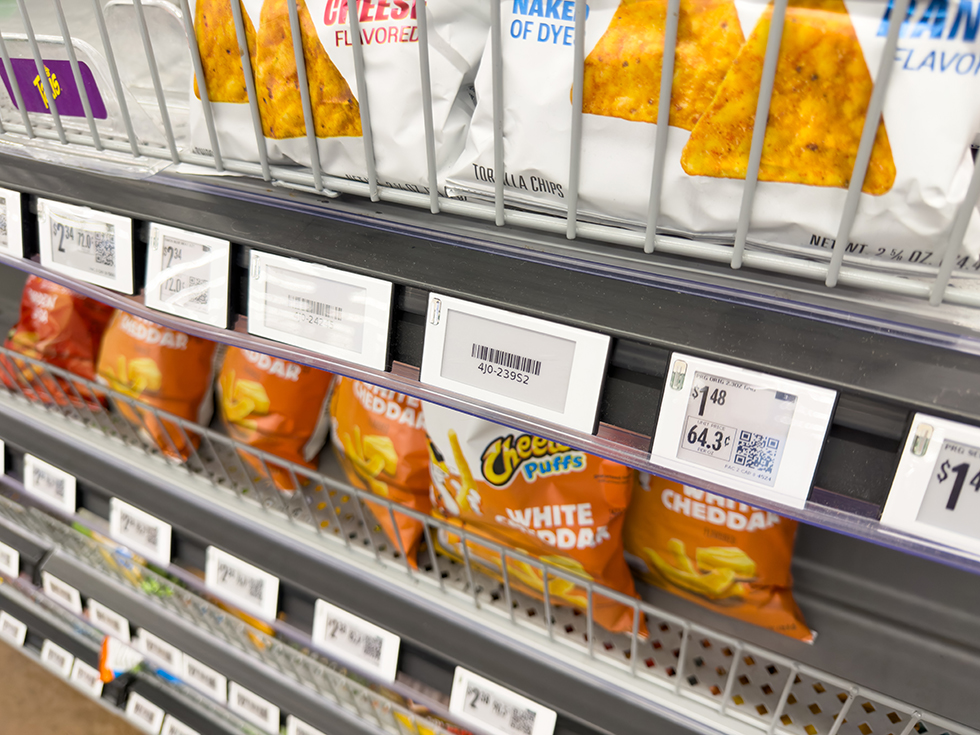
On shelf labels, the technology drawing the most direct legislative fire, Harig commented, “Electronic or digital shelf labels do not determine or dynamically adjust prices based on individual consumers. They replace paper shelf tags with digital displays that improve pricing accuracy, help retailers update promotions more efficiently, and in keeping with state laws, ensure the price displayed on the shelf matches the price charged at checkout.”
Harig said FMI wants to work with Congress on bipartisan policies that encourage innovation while protecting privacy and preserving competition.
Why shelf labels are the flashpoint
The UFCW’s testimony focused on electronic shelf labels, with Policy Counsel Hillary Caron arguing the hardware itself is not the problem so much as how it gets used alongside other tools.
That puts a widely adopted technology at the center of the debate. More than two-thirds of food retailers told FMI in early 2026 they use ESLs, up from 47 percent a year earlier.
Both associations have opposed ESL restrictions in state legislation. NGA asked New Jersey Gov. Mikie Sherrill in a July 17 letter to strike the one-year ESL moratorium from the Fair Price Protection Act before signing. She signed it with the moratorium intact on July 23.
The state patchwork
Four states have now enacted surveillance pricing bans. Maryland and Connecticut acted earlier in 2026, with Maryland’s law taking effect Oct. 1. New York Gov. Kathy Hochul signed the One Fair Price Act on June 17, replacing a disclosure-only regime with a prohibition. New Jersey’s law takes effect Feb. 1, 2027, and includes a private right of action allowing consumers to sue directly, with treble damages available for willful violations.
More than 40 bills across at least 24 states had been introduced as of April. Pending federal measures include the One Fair Price Act and the Stop Price Gouging in Grocery Stores Act. Hawley said after the hearing that he expects to introduce his own bill.