

The Shelby Report recently caught up with Mike Semmann, president and CEO of the Wisconsin Grocers Association, for an update on what’s happening in the grocery industry in the state.
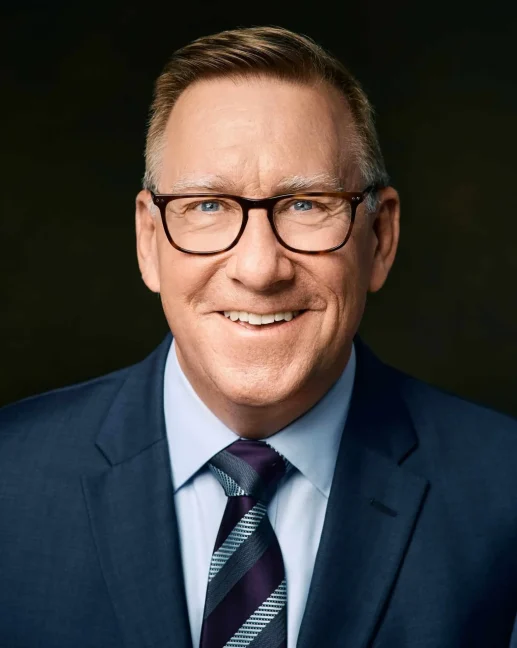
When we spoke last fall you said WGA was working with coalition partners to keep a SNAP waiver from happening. Gov. Tony Evers signed AB 180 (2025 Wisconsin Act 116) in March, which requires the Department of Health Services to seek a waiver banning candy and soft drink purchases with FoodShare and pairs that with $72 million to hold down the payment error rate. Where did WGA land on the final bill, and what did the association secure for retailers in the amended version, including the liability protection when the state’s product eligibility platform gets something wrong?
When this discussion first started, our concern was less about the policy debate surrounding SNAP (Wisconsin calls the program FoodShare) purchases. Healthy outcomes are important for all people in Wisconsin, and we encouraged lawmakers to look at the facts around product offerings and consumption trends. That said, our main concern was implementation. If government changes eligibility rules, retailers cannot become the enforcement arm without clear guidance, accurate technology and protection from the state and inadvertent errors.
As the bill evolved, we worked closely with lawmakers, DHS, retailers, manufacturers and coalition partners to make sure grocery stores weren’t left holding the bag. The final version was improved from a retailer perspective because it requires DHS to develop a centralized electronic product eligibility platform.
It also includes retailer liability protections when a store relies on state eligibility determinations that later prove to be confusing or have outdated information. That was a critical issue for us. We felt strongly that if the state is making the eligibility decision, the retailer should not face penalties for acting on that information. Wisconsin lawmakers recognized that concern.
Another important piece is that the legislation included funding ($68 million) and staffing to help Wisconsin reduce FoodShare payment errors and address new federal requirements. That broader package ultimately made the bill more workable than where the conversation started.
USDA’s waiver tracker still shows no approved Wisconsin waiver. Has DHS submitted the request, and what is WGA telling members about timing? With a federal court vacating waivers in Iowa, Nebraska and three other states in June, how should Wisconsin grocers be thinking about POS updates, UPC lists and compliance costs right now?
As of today, Wisconsin has not received an approved waiver, and until USDA approves one, nothing changes for retailers or consumers at the checkout lane. In conversations with Wisconsin Department of Health Services, their clear priority is deploying resources to keep the error rate low. We anticipate the waiver discussion to begin shortly, but implementation could take months.
Our guidance to members has been simple: Don’t rush into expensive system changes based on speculation. DHS still has to submit and secure federal approval, and other states have shown that waiver reviews can take many months. WGA has advised retailers to stay engaged with their POS vendors but avoid major investments until we have final federal direction and operational guidance.
The recent court activity in other states only reinforces that message. Grocers need clarity before investing in UPC mapping, software modifications, employee training and compliance systems. What retailers want is consistency. We support clear rules, but we don’t support constantly changing standards that create confusion for customers and increase costs for stores.
Starting Oct. 1, Wisconsin’s share of FoodShare administrative costs rises from 50 to 75 percent, and a year later the state starts paying a share of benefits if the error rate tops 6 percent. Are members seeing any effect on enrollment or benefit levels yet, and what would a disruption mean for stores where FoodShare is a significant share of sales?
At this point, our members have not reported significant changes tied directly to the newer federal cost-sharing requirements. What we’re watching closely is whether administrative challenges eventually affect participation or benefit delivery.
For many grocery stores, especially in rural communities and lower-income neighborhoods, FoodShare represents an important portion of monthly sales. When benefits are interrupted or consumers experience delays, grocers feel it almost immediately. That impacts customers, local food access and store operations.
One reason WGA supported efforts to improve administrative accuracy was because payment errors and compliance issues can translate into federal penalties and program disruptions. It’s important that eligible individuals receive benefits accurately and efficiently.
WGA supported Sen. Eric Wimberger’s cottage food bill (SB 739) alongside the bakers and restaurant associations, and it died at session’s end without a floor vote in either chamber. Why was that bill a priority for grocers, and is there a version you could see moving next session?
At its core, the cottage food discussion is about finding the right balance between entrepreneurship, food safety and fair competition. Making a small batch of cookies for local consumption is one thing. Selling 5-10,000 units per year out of a single-family residence without food safety oversight is another.
WGA’s members are connected to local producers. Many grocers started as small family businesses themselves. We generally support creating pathways for entrepreneurs to enter the marketplace.
At the same time, grocery retailers operate under substantial food safety, labeling, inspection and licensing requirements, so we also believe consumers deserve consistent protections and transparency regardless of where food is produced.
I think there’s certainly room for a revised proposal next session. Any successful bill will likely need to continue balancing opportunities for small producers with practical safeguards that preserve consumer confidence.
WGA opposed the lab-grown meat labeling bill (AB 554) as introduced, noting the state shouldn’t place liability on the retailer. Evers vetoed the amended version in March. Did the amendments address the concern, and were there other bills this session where the compliance burden landed on the store rather than the manufacturer?
WGA’s concern with the original lab-grown meat proposal was that manufacturers control labeling, not retailers. Grocery stores should not face penalties for information they didn’t create and don’t control.
While amendments improved portions of the legislation, liability remained a central concern throughout the debate. In fact, Governor Evers specifically cited concerns that grocers or restaurants could be exposed to criminal liability for product labeling issues despite having no role in creating the label. That’s very consistent with the position WGA raised during legislative discussions.
More broadly, liability is a recurring issue in food policy. Whether we’re talking about product eligibility, labeling requirements, age-restricted sales or new reporting mandates, WGA consistently pushes for regulations that place responsibility with the party actually making the decision or creating the product rather than shifting downstream liability onto retailers. The changes to the original bill were hard-fought.
Wisconsin has one of the most competitive grocery markets in the country and comparatively low household grocery spending. How are the roughly 350 independents WGA represents holding their own? Last fall you raised the loss of community leadership when independents sell. Are you seeing more ownership transitions, and what does the succession picture look like in smaller communities?
Wisconsin is arguably one of the most competitive grocery markets in America. Consumers here have a tremendous number of choices, and that’s good for shoppers. But it also means independent operators have to be exceptionally good at what they do.
The independents we represent compete by focusing on their strengths: local ownership, community involvement, personalized service, local sourcing and quick decision-making. Many of these retailers help drive economic development in their communities.
Succession remains one of the biggest long-term challenges facing our industry. We’re seeing more owners reach a point in their business life-cycle and ask difficult questions about what comes next. In some communities, the next generation is interested in taking over. In others, they’re pursuing different careers.
When a community grocer closes, you don’t just lose a store. You often lose a civic leader, a local employer and an important part of the community’s identity. That’s why succession planning is becoming one of the most important conversations taking place among independent retailers today.
Wisconsin will have a new governor in January for the first time since 2019, and with Steve Burkhardt starting his term as WGA board chair, what’s at the top of the association’s agenda for the 2027 session and the 2027-29 budget? Workforce, wage pressure from neighboring states, swipe fees, tobacco or something else?
As Steve Burkhardt continues his term as board chair through 2027, our priorities remain focused on helping retailers stay competitive and continue serving Wisconsin communities.
Consumer confidence, pricing and technology policies, and workforce remain significant issues. Labor availability, rising benefit costs and competition continue to put pressure on overall operating costs. At the same time, retailers are navigating increasing energy costs and regulatory requirements while trying to keep food affordable.
We also expect continued conversations around payment systems and swipe fees. Every time a customer uses a card, a portion of the transaction leaves the local economy. That’s a growing concern for retailers of every size, especially when swipe fees are now one of the top costs for a retailer.
What’s raising eyebrows today is Wisconsin’s state-chartered banks showing a combined net operating income of $504.5 million in the second quarter, a 28.5 percent increase from $392.5 million a year earlier, driven by strong loan growth and improved earnings performance. Interestingly, they don’t pay state franchise/income taxes on select commercial and ag loan income. We hope grocers are getting lower loan rates as a result.
The rate of policy change (or churn) at the federal level is a concern for WGA members. Regulatory compliance, workforce development and policies that improve business certainty are all likely to be major issues going into the next legislative cycle. WGA’s focus will continue to be practical solutions that help stores keep serving customers.
How would you characterize the overall health of the grocery industry in Wisconsin? What do you see as top concerns or challenges for retailers today?
I would describe the Wisconsin grocery industry as resilient but under pressure.
Retailers have done an extraordinary job managing inflation, supply chain disruptions, labor shortages, rising insurance costs, growing regulatory requirements and increasing technology investments. The industry continues to adapt, but nobody would describe the environment as easy.
The biggest challenges today are workforce availability, operating costs, healthcare expenses, retail theft, regulatory complexity and margin compression. Grocery remains a high-volume, low-margin business. Even small increases in costs can have a significant impact.
That said, Wisconsin grocers are innovative and deeply committed to their communities. The independent grocers across our state continue to prove that local ownership, strong customer relationships and community engagement are competitive advantages. The industry faces challenges, but I remain optimistic because of the people who operate these stores every day.