
Utah’s grocery industry is in good shape, with a strong independent retail sector and rapid population growth working in its favor, though affordability remains top of mind, according to Dave Davis, president and chief legal officer of the Utah Food Industry Association.
“I think that there’s a fairly robust independent community of grocery retailers here in the state of Utah, and probably like the rest of the country, part of the big story here is just affordability,” Davis said. “The grocery industry is right on the front line of that, because where the cost of TVs and cars and other things may be going up, those are sometimes seen as nice-to-haves and not have-to-haves. In the food industry … we’re a baseline commodity, so I think that there is more focus on affordability.”
Davis said many of the pressures driving up prices sit outside retailers’ control.
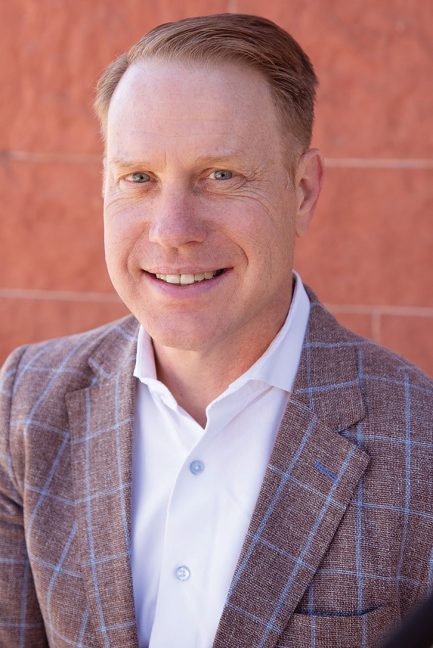
“We’ve had weather events, we’ve had everything that’s going on with petroleum and the cost of getting product from point A to point B,” he said. “Those are things that … have a tendency to drive up the cost of these commodities that we sell.”
Utah remains one of the fastest-growing states in the country, and Davis said grocers are following that growth.
“We have a tendency to chase rooftops, and as those rooftops expand, the market demands grocery retailers go into that space,” he said.
He pointed to Utah County and the “Silicon Slopes” tech corridor running from southern Salt Lake County into northern Utah County as areas of significant growth, along with Washington County in southern Utah, one of the state’s resort centers.
Davis, whose association counts both national chains and small operators among its members, said the state’s independents hold their ground by staying responsive and nimble.
“If they want to go in a little bit different direction or be more responsive to customer need, they are so good at doing that … They have their ear to the ground as far as customer feedback, and they’re able to respond.”
That shows up in product selection and customer experience, he said.
“And let’s be honest, the grocery store is one of the last bastions of where we gather. It’s where we see our neighbors.”
While online ordering and pickup continue to grow – a response, Davis said, to the busyness “gnawing at the fabric of our society” – he does not see technology replacing the store as a gathering place.
“There is nothing I think ultimately that can replace that experience of meeting your neighbors in the frozen aisle and chatting about the barking dog that’s two doors down, or talking about the HOA meeting from a week ago,” he said. “Those are experiences that I think people are still craving.”
He also pointed to what he calls destination cashiers.
“Those are the people that customers seek out. It doesn’t matter if it’s four deep in their line; they want to go there because they have that human interaction with their friend that is in the check stand.”
Value chasers, premium shoppers
As for the Utah shopper in 2026, Davis said value-chasing is real but not the whole picture.
“Sometimes when things may not be going great financially, people think, ‘Well, I can’t buy a new car. I may not even be able to buy a new TV, but I can buy a little pint of premium ice cream, and that’s going to be my reward,’” he said.
“I think that there is still a robust market out there in the food business for premium items at even a premium price, and there is a shopping cohort that is after that as well.”
On the cost side, Davis cited credit card fees and government regulation among the pressures squeezing retailers.
“We all work in a business where margins are tiny, and so putting extra pressure on that margin, I think, is difficult, and we’re hopeful that we can get some regulatory reform to help address that,” he said.
Regulation carries costs that go unseen by shoppers, he added. “Compliance costs are real costs that have to get folded into the overall cost of delivering product to the customer.”
Sorting out SNAP
Utah’s SNAP waiver, which excludes soft drinks from purchases made with benefits, offered the most recent example of compliance costs. Davis said implementation was tough but credited the state’s Department of Workforce Services.
“They did a masterful job of working with retailers in the state to implement this difficult situation, and so that is the silver lining of the dark cloud,” he said, adding that the waiver’s limited scope – soft drinks are easier to define than candy or cake – helped keep confusion to a minimum.
A federal court ruling in June voided SNAP waivers in five other states on findings that the U.S. Department of Agriculture’s Food and Nutrition Service didn’t follow proper rulemaking, muddying the national picture.
“But there are other states where it still stands, and so we’ve got this hodgepodge,” Davis said. “My message to the federal government is: Get your act together. It’s a federal program, and we probably need to come up with a consistent standard where we can have something that retailers can operationalize, and that it’s achieving whatever goals that they want to achieve for the program.”
Davis said he is unsure whether Utah’s waiver will hold, but the state legislature likes the general direction of limiting products perceived to be less healthy. He added the legislature has been receptive to the association’s pleas to keep any restrictions operational for retailers.
Eyes on 2027
Looking ahead to the 2027 legislative session, Davis expects debate over lab-grown meat and dairy products, loyalty programs, personal data and artificial intelligence. A bid to expand the SNAP waiver to ultra-processed foods surfaced this year.
“The other piece that is a big one for retail generally and food stores specifically is pricing – dynamic pricing, electronic shelf labels, and how those are being utilized,” he said.
“I think that there’s some fears out there that electronic shelf labels are going to diminish the number of jobs that are in a grocery store, and then that issue gets conflated with the issue of dynamic pricing and how people are pricing goods … and that bleeds into frequent shopper programs and personal data and how all of that is being used.”
Davis then turned to AI issues and how grocers are using it for ordering and marketing, among other tasks.
“I say this to legislators all the time. We’re not really in the retail industry doing anything different than we have done for eons,” he said, adding that they’re just doing it really fast and efficiently, which can make people uneasy.
On the store front, Davis sees both growth and consolidation, pointing to Ridley’s Family Markets’ acquisition of Terrel’s Markets.
“In the good old days, it was just big national chains that were gobbling up independent retailers,” he said. “But now, what we’re seeing sometimes are regional independents that are buying up smaller independents, and smaller independents in rural areas as well.”
In the year ahead, the association plans to focus on preserving loyalty marketing, along with taxes and revisiting regulations that have proved unworkable in practice.
“We’ve got to make sure that we preserve loyalty marketing programs and the ability to market individually to people, so that we can push them relevant information about things that they care about,” Davis said. “The last thing we want to do is push dog food ads to a cat lover, right? I think we want to focus on that, and that’s something that we’re going to have to go to work educating the legislature about.”