
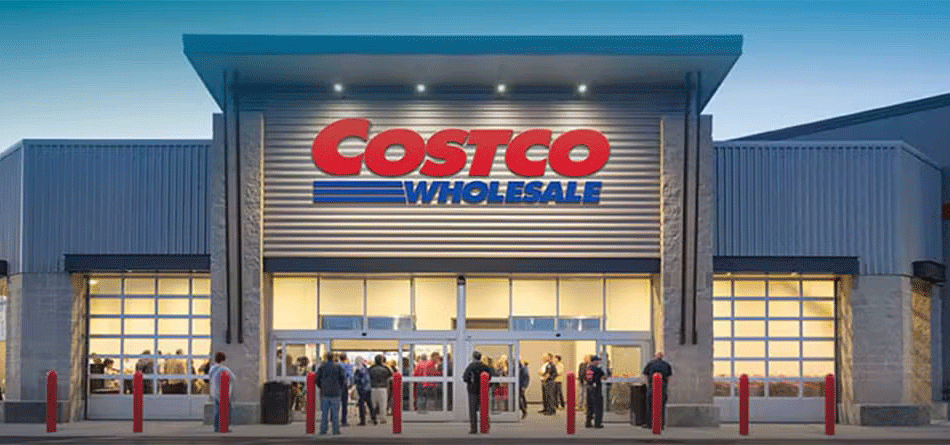
Costco Wholesale Corp. reported Sept. 24 that net sales rose 11.2 percent to $93.9 billion in its 16-week fiscal fourth quarter ended Aug. 30, up from $84.4 billion a year earlier.
For the 52-week fiscal year, net sales rose 10.1 percent to $297.2 billion from $269.9 billion last year, the Issaquah, Washington-based membership club said.
Total company comparable sales rose 9.4 percent for the fourth quarter and 8.4 percent for the fiscal year. Excluding the impacts of changes in gasoline prices and foreign exchange, total comparable sales rose 6.7 percent for the quarter and 6.6 percent for the year.
In the U.S., comparable sales rose 10.7 percent for the quarter and 8.2 percent for the year, or 7.2 percent and 6.6 percent excluding gasoline and foreign exchange. Canada’s comparable sales rose 5 percent for the quarter and 7.8 percent for the year, or 4.6 percent and 6.7 percent on an adjusted basis. Comparable sales in Costco’s other international markets rose 7 percent for the quarter and 9.8 percent for the year, or 6.2 percent and 6.5 percent adjusted.
Comparable sales in the category Costco calls “digitally-enabled” rose 19.5 percent for the quarter and 20.9 percent for the year, or 19.8 percent and 20.7 percent excluding gasoline and foreign exchange.
Net income for the fourth quarter was $2.998 billion, or $6.75 per diluted share, compared with $2.610 billion, or $5.87 per diluted share, a year earlier. The quarter included a non-recurring benefit of 15 cents per diluted share from IEEPA tariff refunds received during the period, less the partial reinvestment of those refunds in increased member values.
For the fiscal year, net income was $9.226 billion, or $20.76 per diluted share, compared with $8.099 billion, or $18.21 per diluted share, last year.
Membership metrics hit records
On the company’s earnings call, CFO Gary Millerchip reported membership fee income of $1.849 billion for the quarter, up 7.3 percent year over year, driven by higher executive membership penetration and base membership growth. Costco ended the year with 84.1 million paid members, up 3.8 percent, and 150.4 million cardholders, up 3.6 percent. Paid executive members reached 42.3 million, up 9.4 percent, bringing executive penetration to an all-time high.
The U.S. and Canada renewal rate ticked up 10 basis points from the prior quarter to 92.3 percent, with the worldwide rate also up 10 basis points to 89.8 percent.
President and CEO Ron Vachris pointed to growth among younger shoppers: “Our member base under 40 has grown nearly 60 percent since COVID, increasing our total penetration of members under 40 to more than one-fourth of our total base.”
While younger members start out spending less, he said, they grow into higher-spending members over time.
Digital, delivery and ancillary growth
Digitally enabled sales, which include third-party delivery, exceeded $33 billion for the fiscal year. Vachris said Costco’s Uber Eats partnership is expanding from 17 states to the entire U.S., and its DoorDash partnership is expanding to include the U.S., complementing the retailer’s long-term Instacart partnership in the U.S. and Canada. Members using the newer marketplaces are significantly younger than Costco’s overall base, he said, with average delivery times under an hour and the sales “mostly incremental with limited impact on our core warehouse grocery business.”
Gas, pharmacy and travel all grew faster than the company’s overall rate. Costco’s gas business had a record year, with the retailer estimating it saved members more than $3.2 billion versus average pump prices in its markets. Pharmacy sales grew nearly 20 percent, aided by GLP-1 and fertility programs and digital options such as Rx Mobile Pay Ahead, and Costco Travel sent more than 750,000 members on cruises, up 16 percent.
Millerchip also noted that traffic to Costco’s site from AI search grew triple digits for the second consecutive quarter and shows the highest conversion rate of all site traffic, with the Costco membership itself among the top items originating from AI searches.
He also confirmed the rumors circulating on social media: the food court churro is returning to all U.S. locations for a limited time, starting in September.
Expansion plans and tariff reinvestment
Costco opened 28 warehouses in fiscal 2026, including three relocations, for 25 net new buildings. The company plans 33 openings in fiscal 2027, including five relocations, as it builds toward a goal of 30 net new warehouses per year, with four buildings planned in Europe, five in Canada and one in Mexico. Vachris pointed to continued opportunities in new U.S. markets, naming Buffalo, New York, and Lawrence, Kansas, along with infills in more mature U.S. markets. Capital expenditures totaled $6.4 billion in fiscal 2026, with about $7.5 billion planned for fiscal 2027.
Of the tariff refunds, Costco received $184 million in the fourth quarter, a little more than one-third of the total expected, and received a similar amount early in the first quarter of fiscal 2027. Millerchip said the company intends to keep reinvesting the majority in member values; fourth quarter price reductions included Kirkland Signature walnuts ($13.79 to $9.99), Colombian whole bean coffee ($21.99 to $19.99) and coarse black pepper ($6.99 to $5.99).
“At Costco, when we see lower prices, we see an opportunity,” Vachris said. “We’ve made significant tariff investments. Unit growth has been fantastic. And that’s what it’s all about… how do we get that value back to the member.”
Costco operates 939 warehouses, including 647 in the U.S. and Puerto Rico, 115 in Canada, 43 in Mexico, 37 in Japan, 29 in the United Kingdom, 20 in Korea, 15 in Australia, 14 in Taiwan, seven in China, five in Spain, three in France, two in Sweden and one each in Iceland and New Zealand. The company also operates e-commerce sites in the U.S., Canada, the U.K., Mexico, Korea, Taiwan, Japan, Australia and China.
Related: Costco Caps FY26 With $297.3B In Sales, Up 10.2 Percent