
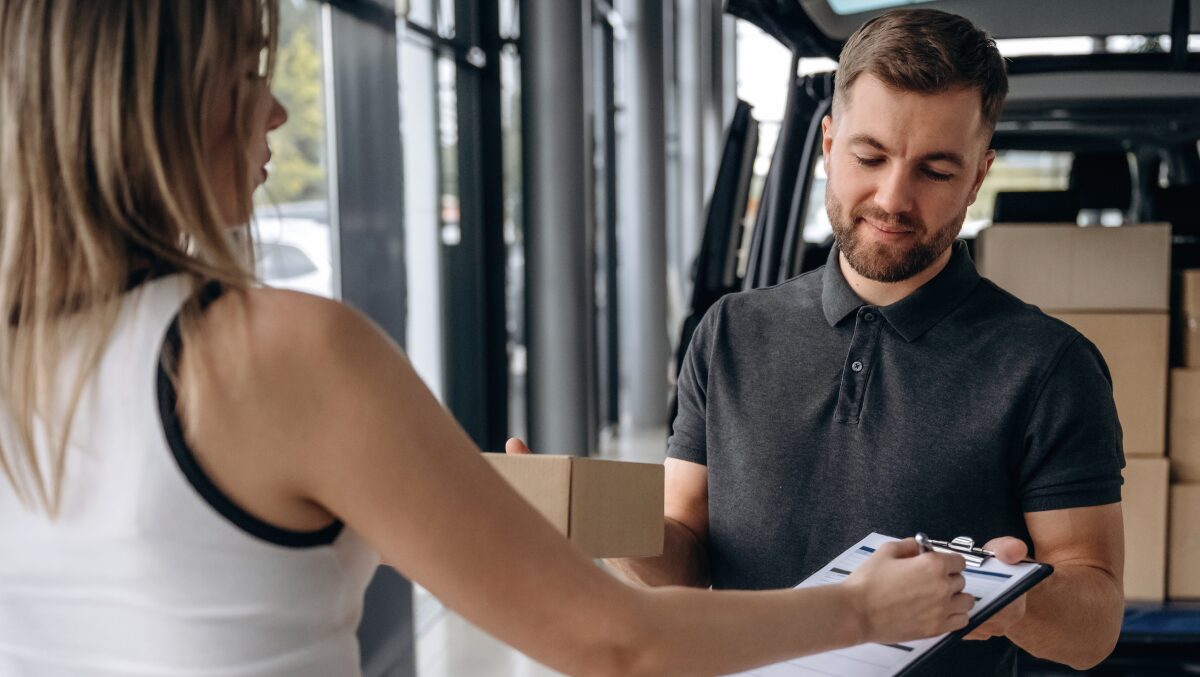
The vendor interactions that happen at a grocer’s back door are unlike those of any other industry. A Direct Store Delivery (DSD) driver shows up, drops off an order, hands over an invoice and is gone before anyone has checked a single price. On any given day, this familiar scene might play out dozens of times across every location.
Each of these brief interactions is a critical moment where margins are won or lost. Yet despite the high stakes, many grocers still rely on a generic accounts payable software that was built for offices, not the hustle and bustle of the receiving dock. Unfortunately, many are discovering the consequences the hard way.
The industry keeps getting it wrong
A recent report found that 70 percent of grocers process at least 5,000 invoices per month. With that volume, it’s not surprising that conversations about accounts payable automation often focus on workflow efficiency, including faster approvals, fewer manual touchpoints and cleaner ERP integration.
Those benefits certainly matter, especially for grocery teams managing high invoice volume with lean teams. But faster invoice processing doesn’t protect grocers from their biggest financial risk: paying the wrong price for a product that’s just been put on the shelves.
Most AP automation platforms were built for the office, not the receiving dock. Vendors tout features such as optical character recognition (OCR) accuracy, approval routing and global because they can help accelerate invoice processing. But they can’t catch a supplier who increased the price of a case by 50 cents across 200 SKUs.
In grocery, margins often sit between 1 and 3 percent. Grocers need a reliable way to flag pricing discrepancies before invoices are approved and paid and overpayments chip away at those razor-thin margins.
DSD leaves grocers exposed
Many grocers rely on direct store delivery to keep some of their fastest moving product categories stocked, including beverages, bread, snacks, dairy and beer. Though this model is essential, it leaves grocers particularly vulnerable to profit leakage. In fact, industry data suggests grocers overpay vendors by an average of $37,000 per year. A large portion of that is the result of pricing discrepancies that aren’t identified until it’s too late.
AP teams are doing all they can, but they’re at the mercy of systems that weren’t built to catch discrepancies at the point of receipt. As a result, seemingly small pricing errors often go unnoticed, and they chip away at already-thin margins.
It’s easy to see how this happens. Back-door receivers count packages, but they don’t audit prices because they don’t have a fast, reliable way to verify them. By the time an invoice makes its way to accounting, the product is already sitting on the shelf and the vendor is long gone.
Most AP software on the market is built on the assumption that invoice processing is the hardest part of accounts payable. As a result, capabilities like item-level validation, cost file comparison and SMS and POS integration often aren’t prioritized.
But for grocers, the bigger challenge is knowing whether the invoice is correct before it’s approved and processed. Closing the DSD receiving gap is critical to protecting already-thin margins.
Going corporate doesn’t solve the problem
When independent and regional grocers struggle with DSD discrepancies, they’re often advised to adopt the same AP tools the large chains use. At first, this seems to make sense. If a system works well for a large, successful chain, then why wouldn’t the smaller players rush to adopt it? But this well-intentioned advice completely ignores the fact that enterprise chains operate much differently from independent stores.
Large grocery chains have corporate AP teams, dedicated procurement teams, centralized cost files and the leverage to dispute vendor discrepancies after invoices have been processed. They also have the staff and resources to support more complex workflows.
On the other hand, an independent grocer might have a single person who manages inventory, oversees store operations and manages AP across multiple locations. That one person might even be the owner. These individuals don’t have the time to chase down pricing errors after products have already been stocked on the shelves.
A large, complex AP platform won’t solve the problem, even if the big players swear by it. Instead, independent grocery operators need technology that fits the way they work by connecting receiving and accounting into a single workflow. Only then can operators reliably identify pricing discrepancies at the point of receipt and protect profit margins.
What grocers should ask every AP automation vendor
Many AP automation platforms promise to make it easier for grocers to process invoices. But grocers eventually realize these platforms don’t work the way they do. Before investing in any solution, grocers must ask the right questions to understand whether the platform simply automates paperwork or if it can also help protect margins at the receiving dock.
Can the platform validate invoice line-item prices before an invoice is approved? Can it compare invoices with what was actually received through SMS and POS integrations? Does it flag DSD discrepancies in real time, when there’s still time to resolve them? Can a back-door receiver get up and running with minimal training?
The answers to these questions will help grocers understand the difference between software that moves invoices faster and a platform that can also help them protect profitability.
The bottom line for grocery
The AP automation market continues to grow, and grocers have no shortage of vendors vying for their attention. When evaluating options, grocers should look beyond vendors’ big promises of greater efficiency and consider whether a platform is truly built for how grocery businesses operate.
Grocers face unique AP challenges, from DSD receiving to constantly changing vendor costs. And in an industry where profits are measured in pennies per item, even small pricing discrepancies can quickly add up. The AP automation platforms that deliver the most value improve efficiency while also helping grocery operators catch price discrepancies before invoices are approved and paid.
