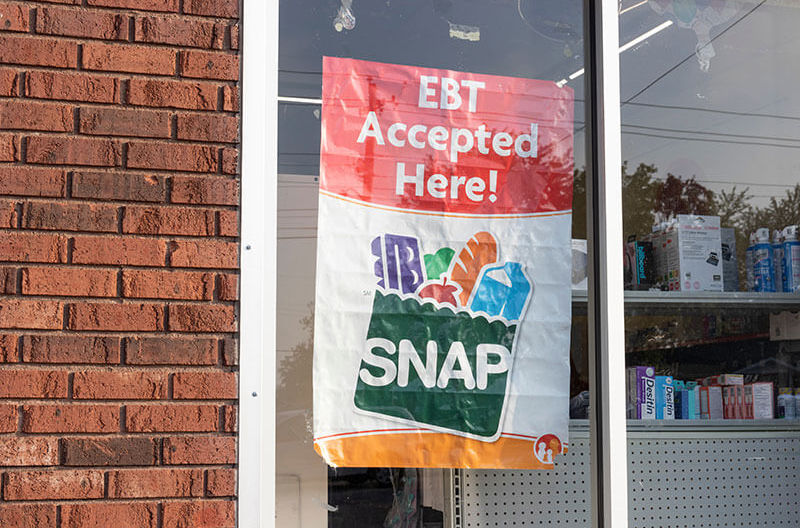
A federal judge on June 22 struck down a set of SNAP pilot programs that would have restricted what participants could purchase with food assistance benefits, handing a significant legal setback to a cornerstone of the Trump administration’s Make America Healthy Again nutrition agenda.
U.S. District Judge Amy Berman Jackson of the District of Columbia ruled that Agriculture Secretary Brooke Rollins misapplied federal law in approving the states’ requests. The ruling vacates and remands the USDA approval letters for Colorado, Iowa, Nebraska, Tennessee and West Virginia.
Writing in a 68-page decision, Jackson found that Congress did not authorize the USDA to redefine what counts as “food” under SNAP. “Neither the USDA nor the states can force this square peg into a round hole to avoid the plain language of the statute,” she wrote.
The case, Aragon et al. v. Rollins, was brought in March by five SNAP recipients – one from each of the affected states – represented by the National Center for Law and Economic Justice. Plaintiffs argued the waivers exceeded USDA’s statutory authority, were arbitrary and capricious and were adopted without the required notice-and-comment process.
What the ruling means for Tennessee
Tennessee’s waiver would have restricted SNAP purchases of processed foods with sugar or corn syrup as a first ingredient, and beverages with sugar or corn syrup as a first ingredient or second only to water. It had been scheduled to take effect July 31. The ruling halts that implementation.
The Tennessee Grocers and Convenience Store Association reported June 23 that the Tennessee Department of Human Services had not yet been briefed on the ruling. USDA is expected to provide direction to TDHS on June 24, with official guidance for Tennessee SNAP retailers possible as early as that date.
USDA is expected to appeal the ruling. Depending on the scope and pace of that appeal, the decision could invalidate Tennessee’s waiver entirely or delay implementation while the appeal proceeds.
Implementation dates in the other affected states
Three of the five states covered by the ruling had begun operating under their waivers, with full USDA enforcement set to have begun April 1. A fourth was on the verge of launching, and Tennessee had not yet gone live.
- Iowa: The waiver restricts all food items eligible for sales tax under state law – a category that includes sweetened beverages, snacks and candy. It took effect Jan. 1, with USDA enforcement set to begin April 1.
- Nebraska: The waiver restricts soda, soft drinks and energy drinks. It took effect Jan. 1, with USDA enforcement set to begin April 1.
- West Virginia: The waiver restricts soda purchases. It took effect Jan. 1, with USDA enforcement set to begin April 1.
- Colorado: USDA had approved a March 1, implementation date, but the state had delayed its launch to April 30.
In response to the ruling, Stephanie Johnson, SVP and head of government affairs for the National Grocers Association, stated, “Our members serve their communities every day and have been faced with the challenges of enforcing a pilot with inconsistent definitions and significant technical burdens that has created confusion at checkout for customers and staff alike. NGA supports efforts to promote nutrition and access to healthy food but believes any such reforms must be developed with meaningful input from retailers and implemented with adequate time, resources and uniform standards and definitions. We urge USDA and state agencies to expeditiously provide guidance to retailers in affected states so grocers can continue serving SNAP customers with confidence, consistency, and minimal disruption.”
Background
The SNAP food restriction waiver program grew out of a “Laboratories of Innovation” initiative Rollins announced on her first day in office, inviting governors to propose state-driven solutions to strengthen federal nutrition programs and protect taxpayer resources.
Rollins and Health and Human Services Secretary Robert F. Kennedy Jr. jointly championed the effort.
At least 23 states had received USDA approval for food restriction waivers by the time the ruling was issued, covering an estimated 13.5 million SNAP participants.
States crafted their own lists of restricted products; Iowa’s waiver was among the broadest, while others targeted only soda and sweetened beverages.
Jackson’s ruling found that the waivers did not qualify as the type of experimental pilot projects authorized under Section 17 of the Food and Nutrition Act of 2008, which permits demonstration projects aimed at improving program administration, increasing recipients’ self-sufficiency, testing innovative welfare reform strategies or allowing greater conformity with other programs. Redefining the statutory meaning of “food,” the judge wrote, exceeded that authority.
The National Center for Law and Economic Justice called the ruling “a major step in restoring essential food assistance to the millions of families that rely on SNAP nationwide.”
USDA has signaled it may continue pursuing other avenues to restrict SNAP purchases, suggesting the legal dispute over what qualifies as “food” under the program is far from over. The docket for Aragon et al. v. Rollins is available at courtlistener.com.