
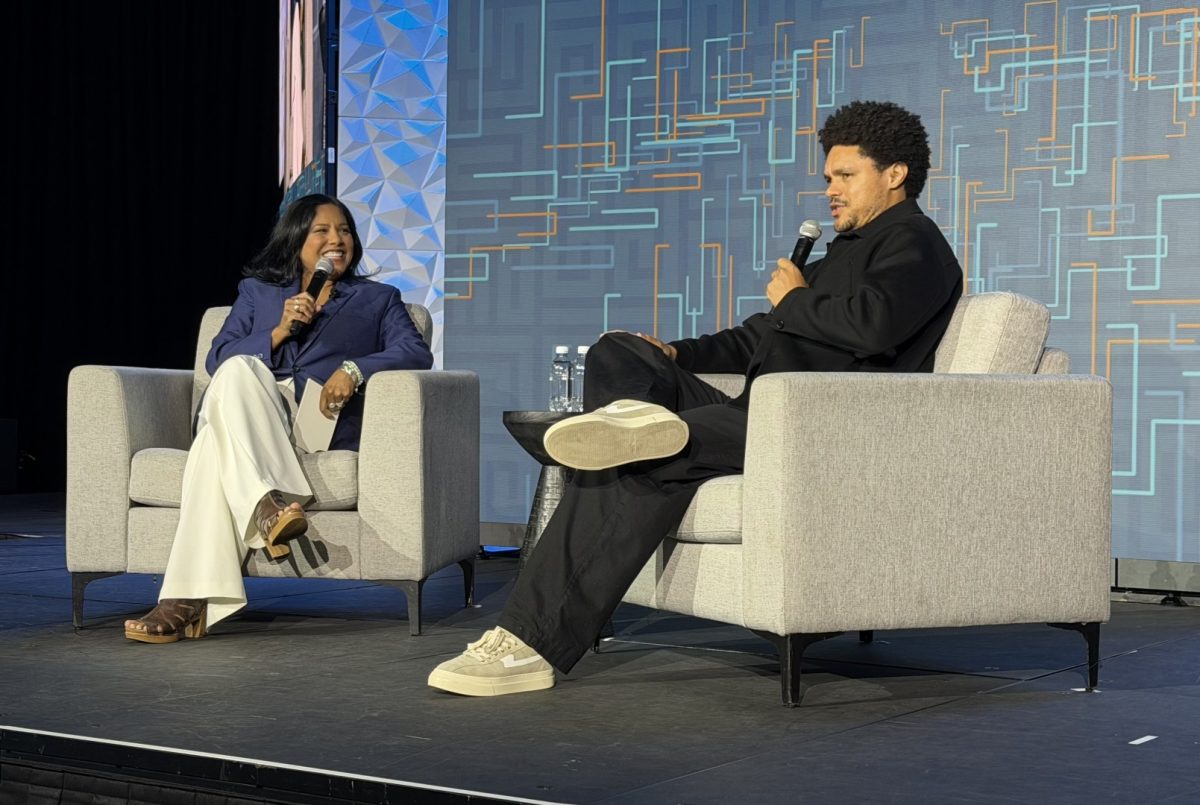
The comedian and author, a surprise addition to the Orlando speaker lineup, urged dairy, deli and bakery professionals to lead with voice over manufactured authenticity, build brands that are sustainable rather than trendy and reconnect with shoppers as people first.
ORLANDO, Fla. — Trevor Noah took the General Session stage at IDDBA 2026 as the show’s surprise celebrity speaker, trading the day’s talk of technology and category trends for a wide-ranging conversation on storytelling, authenticity and human connection.
The Emmy Award-winning comedian, six-time Grammy Awards host and former host of “The Daily Show” joined a star-studded lineup that also included chef and author Alton Brown and Hall of Fame basketball coach Mike Krzyzewski.
His appearance came during the association’s annual show, held June 7-9 at the Orange County Convention Center, which drew more than 10,000 industry professionals and 1,000-plus exhibiting companies from 40-plus countries under IDDBA’s refreshed “Thinking Outside the Aisle” brand.
Author of the No. 1 New York Times bestseller “Born a Crime: Stories from a South African Childhood,” Noah opened with the story of his upbringing in apartheid-era South Africa, where his birth to an interracial couple was illegal, and his improbable path into comedy – a career his mother long assumed was a cover for dealing drugs. Comedy, he joked, was simply the less risky option.
A story is defined by the audience
Asked what makes a story compelling and memorable – a theme IDDBA returned to throughout the show – Noah argued there is no single formula. A story connects, he said, based on what the listener is looking for, which means the most effective brands identify the one element of a product that resonates with their customer, whether that is exclusivity, craftsmanship or a personal, tailored feel, and build the narrative around it.
The takeaway for retailers and suppliers: know your audience before you decide how to tell the story. A brand positioning itself as ultra-luxury tells a very different story than one leaning into artisanal, handmade roots, often by showcasing the people behind the product.
Why “authenticity” is overrated
Noah offered what he called a third-rail opinion: the idea of authenticity is often overrated. Staged “behind the scenes” content, he noted, is rarely as spontaneous as it appears, and consumers are not really responding to whether something is real.
What younger shoppers mean when they call a brand authentic, he said, is that they can tell when someone is pretending to be like them – and they can spot it instantly. The fix is less about manufacturing realness and more about voice.
He pointed to brands with sharp social media presences, noting that no one believes a founder is personally writing the posts; the voice simply comes through as genuine. His advice: rather than borrowing the language of a demographic, bring in someone who actually belongs to it and let them speak.
Resist the trend chase
The most sustainable strategy, Noah said, is the one a brand can repeat over and over – which usually means doing what is true to the business rather than chasing the latest trend. By definition, he noted, trends come and go, and constantly trying to keep up is exhausting and self-defeating.
He illustrated the point with the evolution of a single automaker, whose vehicles were marketed as performance cars but were ultimately embraced by safety-minded family buyers the brand had not initially targeted – a reminder that customers often choose a brand before the brand chooses them. Sometimes, he said, the audience finds you.
Communication is a leadership discipline
Drawing on his experience growing up among South Africa’s many official languages, Noah distinguished translation from interpretation: translation swaps words between languages, while interpretation captures how meaning shifts.
Great communicators, he said, focus on meaning rather than words and spend significant effort confirming the other person has actually understood them.
That responsibility grows with seniority. The higher a leader sits, he argued, the more time they should invest in making sure their message lands, because employees are often afraid to admit when they are unclear.
Organizations that ask people to repeat instructions back – and that invest more in planning than in fixing and correcting – lose less time and trust. “Measure twice, cut once,” as he put it.
Lead with humanity, not the news cycle
On the sense that the world feels more divided, Noah suggested the divisions are being amplified rather than deepened, in part by the constant, instant flow of information that has crowded out small talk and shared, everyday connection. His remedy was to start with the human, not the headline – the kind of common ground people find when they talk about family, school or food.
He recounted a story from World War I, in which soldiers on opposing sides of no man’s land negotiated and joked across the trenches over a stray cow, as an example of finding common humanity and even joy in the most divided of circumstances. The lesson he drew – connect first, and the harder conversations become possible.
Hospitality and a few hard food opinions
Closing on customer service, Noah reminded the audience that the full phrase is “the customer is always right in matters of taste,” not a license to treat staff as servants.
He praised the warmth of American hospitality while noting it can tip into the overbearing, and pointed to the quiet dignity of a master baker who shares their craft as an equal exchange rather than an act of indebtedness – a relationship, he said, that travels well and is worth preserving as food grows more distant from the people who make it.
A lightning round revealed his most unforgettable meal (sushi at a Tokyo fish market), the department he would most like to work for a day (the bakery, for the smell) and the food trend he would happily see disappear (photographing food before eating it).
His parting thought tied the morning together: Great hospitality, like great food, works best when both sides remember how lucky they are to share the experience.