
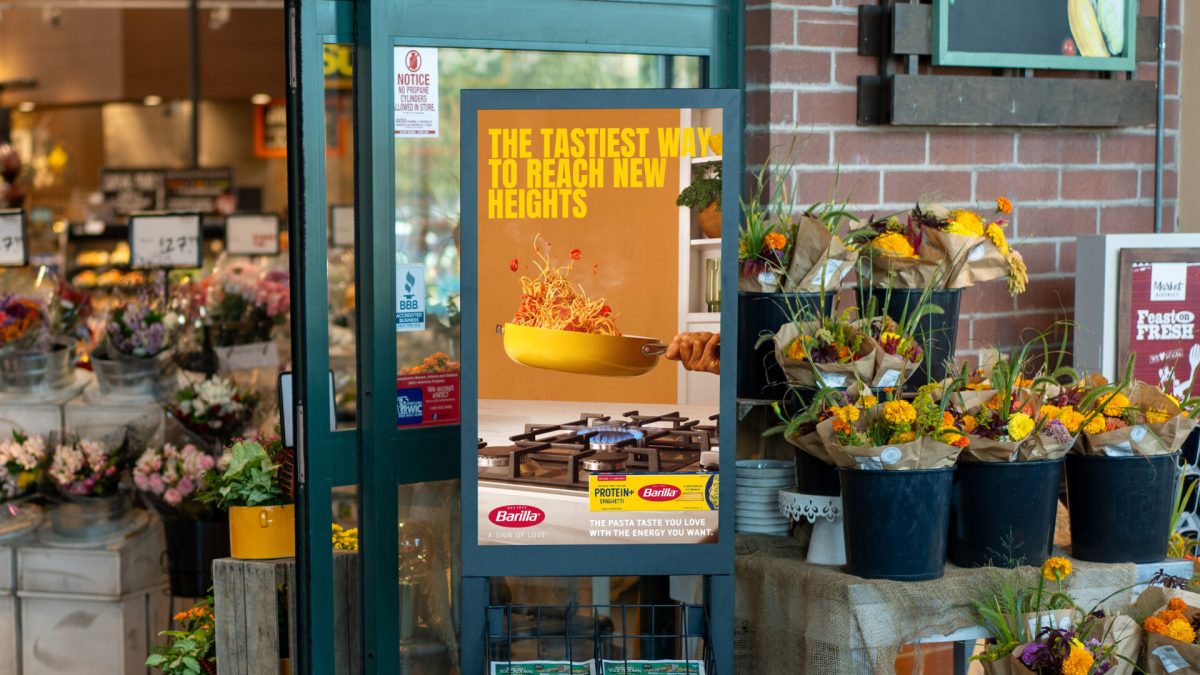
Nearly two‑thirds of grocery shoppers say they have purchased a product after seeing it advertised on an in‑store screen, according to Grocery TV’s 2026 In‑Store Shopper Perception Report.
The study, co‑published with independent analyst Andrew Lipsman, surveyed more than 1,000 grocery shoppers on in‑store media receptivity, shopper behavior and creative preferences.
The report found that 95 percent of grocery shoppers make at least half of their purchase decisions in‑store, reinforcing the store’s role as one of the most influential moments in the path to purchase.
Receptivity to in‑store screens increased significantly across every major store zone compared to Grocery TV’s 2023 study.
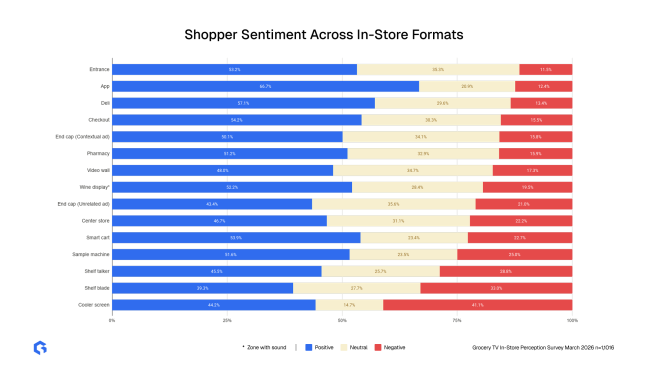
Front‑end acceptance jumped from one‑third of shoppers to just over half since 2023 – a 23‑point increase.
Acceptance of screens is consistent across age groups, with just an eight‑point gap between the most and least receptive, according to the report. Millennial shoppers lead on overall acceptance (81 percent), followed by Gen X (80 percent), Gen Z (74 percent) and Baby Boomers (72 percent).
Placement matters; entrance, checkout, deli and pharmacy were favorable zones for at least 84 percent of shoppers. Formats that blocked products or crowded aisles scored significantly lower.
In‑store product discovery converts at nearly twice the rate of online discovery. The report found that shoppers are 2.5 times more likely to consider a brand when an ad fits the surrounding environment and products they are shopping near. Eighty-six percent said contextually relevant ads on endcaps are important to their shopping experience.
“With national and regional grocers launching and expanding digital screen networks, in‑store retail media is finally reaching a long‑awaited inflection point,” Lipsman said.
“This research shows consumers are growing more receptive to in‑store advertising, and that it can be overwhelmingly CX‑positive for retailers. In fact, the majority of digital surfaces are either no‑risk or low‑risk — with store entrance, checkout, deli, and pharmacy among the highest performers.”
For Marlow Nickell, co‑founder and CEO of Grocery TV, the most effective in‑store media strategies are built around the realities of how people shop.
“The formats shoppers respond to best deliver value in moments where shoppers are already engaged,” he said. “When done thoughtfully, in‑store media becomes part of the shopping experience rather than an interruption to it. For retailers and brands, this report is a blueprint for building in‑store media experiences shoppers actually welcome.”
About the research
The study was conducted in March, surveying 1,018 U.S. grocery shoppers on attitudes toward in‑store retail media across 15 display formats covering every major store area.
Respondents were shown before‑and‑after photos and asked how the addition of a screen would affect their experience. The study was first conducted in 2023, allowing for year‑over‑year comparison.