
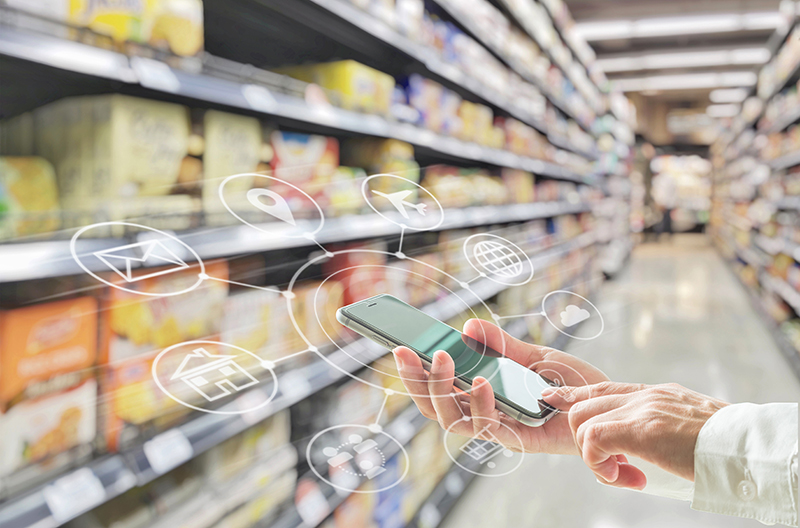
Grocery shopping is no longer a choice between store and screen, but a seamless blend of both, according to the latest Digital Engagement Transforms Grocery Shopping 2026 report released April 22 by FMI – The Food Industry Association and NielsenIQ.
With omnichannel behaviors as the new normal, total U.S. online grocery sales will reach $452 billion by 2028, making e-commerce a primary engine of grocery progress.
E-commerce drives dollar growth
The report finds that e-commerce now drives nearly three-quarters of total grocery dollar growth. In 2025, online sales contributed close to 75 percent of total grocery dollar growth, while in-store sales remained relatively stable.
Jack O’Leary, director of e-commerce strategic insights for NIQ, said the pace of expansion puts new pressure on retailers to unify the shopping experience.
“E-commerce is poised for extensive growth,” O’Leary said. “With online grocery sales increasing at a projected 11.6 percent annual rate through 2028 and already accounting for about one-fifth of total grocery spending, success now hinges on how well retailers connect digital and physical experiences into one cohesive journey.”
Food category gains momentum
Food represents one of the largest opportunities for category expansion within e-commerce. While food purchases remain primarily store-led, online sales jumped nearly 19 percent in 2025.
The report finds that without e-commerce, many grocery categories would post flat or declining sales, reinforcing the role of digital as a competitive lever rather than a complementary add-on.
Shoppers blend channels
Omnichannel behavior has become the standard approach for most U.S. households, according to the report.
“Nearly 94 percent of grocery shoppers in 2025 purchased both online and in-store, blending digital discovery, fulfillment and store visits based on needs, timing and convenience,” said Steve Markenson, VP of research and insights for FMI.
Fulfillment becomes a differentiator
As online grocery scales, speed of delivery has emerged as a key competitive battleground. Doug Baker, VP of industry relations for FMI, said retailers must deliver across every touchpoint to earn shopper loyalty.
“Average delivery times have fallen sharply since 2018, and shoppers increasingly expect same-day or next-day delivery, especially for food,” Baker said.
“Shoppers place a premium on frictionless execution across the entire shopper journey. From the digital shelf and shoppable content to fulfillment speed and the in-store experience, food retailers that offer seamless, enjoyable experiences will provide shoppers value and build loyalty.”
AI and the next phase
Looking ahead, the research points to the next phase of digital evolution.
While still early, advances in artificial intelligence – including agentic tools that support planning, discovery and low-consideration purchasing – have the potential to further reshape how shoppers engage with grocery.
The report advises food retailers and suppliers to prepare now as these technologies mature.
Digital Engagement Transforms Grocery Shopping 2026 is part of an ongoing FMI and NIQ research series examining omnichannel growth, e-commerce performance and emerging technology across the grocery industry.