
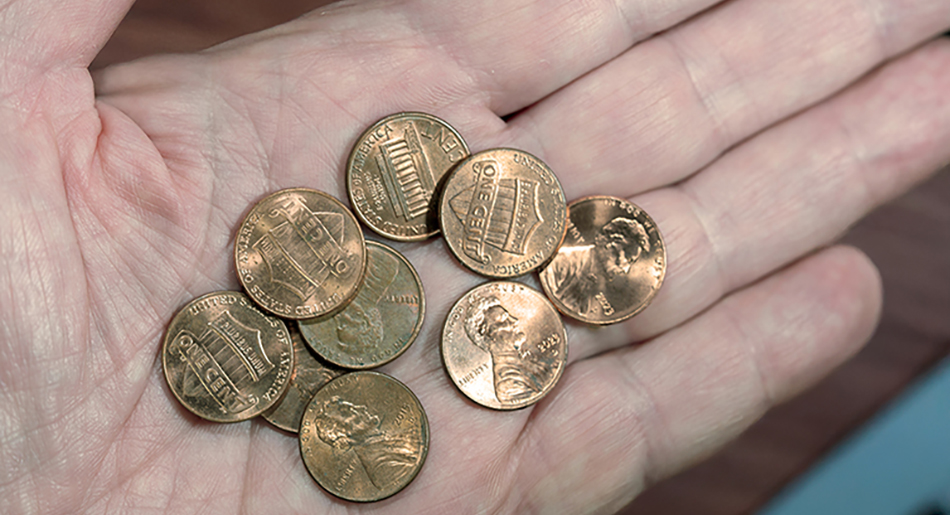
The National Grocers Association has applauded the U.S. House of Representatives for passing the bipartisan Common Cents Act, legislation that provides retailers with clear legal authority and protections to round cash transactions to the nearest nickel following the end of penny production in 2025.
The legislation, sponsored by Rep. Lisa McClain, R-Michigan, and Rep. Robert Garcia, D-California, establishes a national framework allowing businesses to continue serving customers as pennies fall out of circulation.
The House passed the bill, H.R. 3074, by voice vote July 14 under suspension of the rules, according to congressional records and published reports. The bill advanced through the House Financial Services Committee on a 35-13 recorded vote in July 2025, according to the committee report.
The measure now heads to the Senate, where a companion bill introduced by Sens. Cynthia Lummis, R-Wyoming, and Kirsten Gillibrand, D-New York, has not advanced out of committee, according to Congress.gov.
The U.S. Mint ceased penny production last year, and Federal Reserve coin distribution sites across the country reported widespread shortages. As a result, many retailers have been unable to provide exact change for cash transactions, forcing businesses to implement rounding practices without clear legal protections.
“Independent grocers serve millions of customers across the country every day, and the rapid disappearance of pennies created serious operational challenges and legal uncertainty for retailers of all sizes,” said Stephanie Johnson, NGA SVP and head of government affairs.
“The Common Cents Act provides the clarity businesses need to continue conducting cash transactions fairly, consistently, and without disruption for consumers.”
NGA joined other business groups in urging Congress to pass the legislation.
NGA is a trade association representing the retail and wholesale community grocers that comprise the independent sector of the food distribution industry. The independent grocery sector accounts for 2 percent of the nation’s overall economy and generates more than $557.5 billion in annual economic activity, 1.5 million jobs, $115 billion in wages and $27 billion in taxes.
NGA members include retail and wholesale grocers in every congressional district, as well as state grocers’ associations, manufacturers and service suppliers.