

Higher‑income Americans make up just 10 percent of the population, but their grocery shopping habits differ markedly from other income groups, according to a YouGov analysis of data collected between June 2025 and June 2026. The findings offer grocers a clear picture of how affluent customers shop and where they see opportunities.
Costco is the primary grocery store for 11 percent of higher‑income Americans, compared with just 5 percent of middle‑ and lower‑income shoppers. Conversely, Walmart Supercenter is the top choice for 20 percent of middle‑ and lower‑income Americans but just 8 percent of higher‑income shoppers.
Higher‑income consumers also shop more often: 34 percent say they go several times a week, versus 25 percent of other income groups. They are less likely to shop only several times a month (18 percent vs. 24 percent).
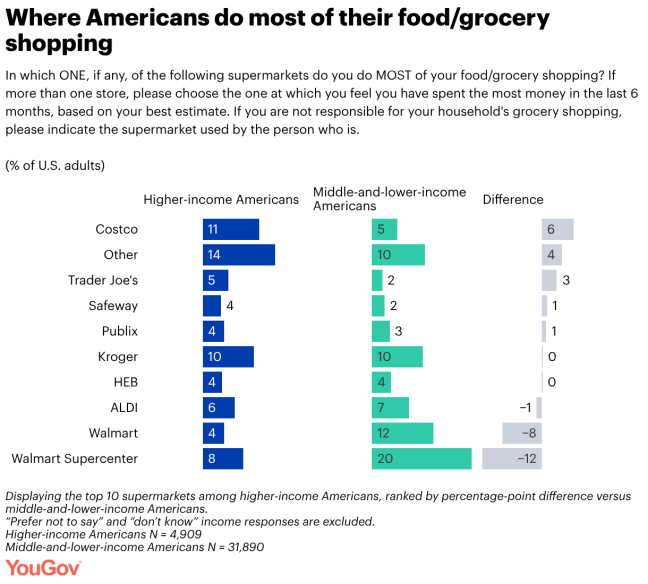
The most pronounced gap appears in weekly spending. Half (51 percent) of higher‑income households report spending more than $150 per week on groceries, compared with 28 percent of middle‑ and lower‑income households.
For independent grocers, the data suggests that affluent shoppers are seeking alternatives to mass merchants. While Costco captures a share, many higher‑income consumers still spread their trips across multiple banners.
Smaller independents can attract these shoppers by emphasizing premium and specialty products, offering a distinctive in‑store experience and training staff to provide knowledgeable service – areas where smaller stores often outshine big‑box competitors.
The weekly spend figure ($150 or more) also indicates that higher‑income customers are willing to invest in quality; independents should highlight fresh, local and artisan items that justify a higher basket ring.
Methodology
YouGov Profiles uses continuously collected data from rolling surveys. The figures are drawn from responses collected between June 2025-June 2026, using a 52‑week dataset updated weekly. Data is nationally representative of U.S. adults (18 and older) and weighted by age, gender, education, region and race.