
by Diana Leza Sheehan, founder of PDG Insights
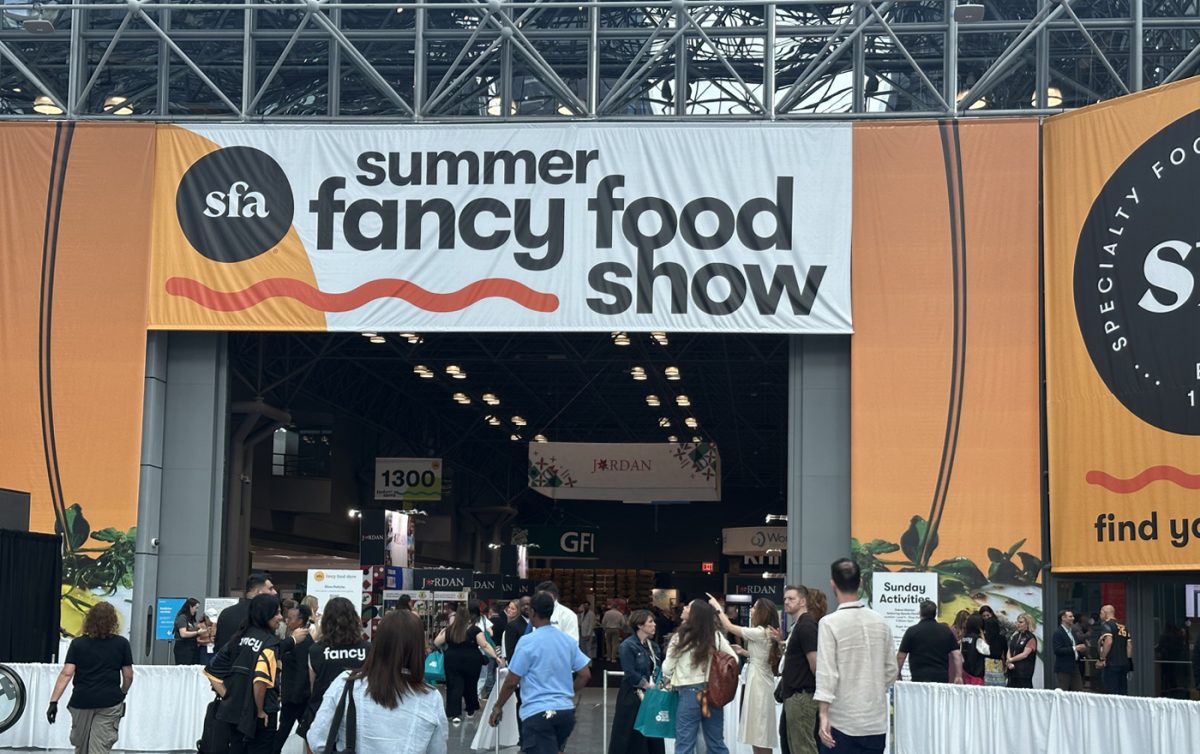
At the Specialty Food Association’s Summer Fancy Food Show, held June 28-30 at the Javits Center in New York City, a few themes were clear throughout the educational sessions and across the exhibit hall.
Specialty food and beverage brands are operating in a market defined by contradiction: cautious consumers who are still willing to pay up for the right product; a grocery channel losing share even as niche brands post outsized growth; and an artificial intelligence-driven discovery layer that is reshaping how shoppers find products before they reach a shelf.
Speakers pointed specialty brands toward a common set of priorities – curated distribution, unprecedented brand transparency and a willingness to meet shoppers wherever they are browsing, including inside a chatbot.
Grocery loses ground, specialty brands gain opening
Sherry Frey of NielsenIQ and Nick McCoy of Whipstitch Capital noted that traditional grocery lost significant sales last year to Amazon, mass merchandisers and warehouse clubs, which are winning on curated value and convenience.
The upside for specialty brands: Retailers are responding by investing more heavily in differentiated, curated assortments to pull shoppers back. This creates an opportunity for niche products that cannot be found everywhere.
That fragmentation extends to online retail, where many food and beverage categories remain under-penetrated, leaving room for smaller brands to establish a foothold without the scale required to compete head-on with category giants.
Nearly 60 percent of retail sales are now digitally influenced, and platforms such as TikTok Shop are emerging as legitimate specialty food discovery channels.
AI discovery is new SEO
Multiple speakers touched on the role of AI in product discovery and exploration.
In the same presentation, Frey and McCoy explained that while 68 percent of consumers have used generative AI, just 11 percent have used it to make a purchase, suggesting massive near-term upside rather than a sign that AI shopping is overhyped.
The same research found that nearly half of consumers say they are open to AI making recommendations – or even purchases – on their behalf.
The practical takeaway for brands: Start testing today how products surface in AI-driven searches, using the kinds of natural language queries real consumers would type.
Marketing strategy is shifting from search engine optimization toward what amounts to agent engine optimization, which structures product data around use cases, dietary needs and context so AI models can recommend correctly. Brands that get their data in order now will have an edge as agentic shopping scales over the next few years.
Summer Fancy Food Show 2026


Cautious consumers still chase standout products
In a joint presentation from the Specialty Food Association’s Leana Salamah, The Food Institute’s Brian Choi and MenuData’s Sunny Khamkar, speakers leaned into the implications of a slower economy. They said GDP growth has cooled to about 1.6 percent, and consumer confidence is hovering near historic lows.
Rather than pulling back across the board, presenters pointed to the opportunities of a “K-shaped” consumer base, in which some shoppers are doing well while others are constrained. The latter are increasingly eating at home, a trend that benefits specialty brands sold through retail rather than foodservice.
Brands also are seeing stronger returns from increasing buy rate among current customers than from chasing new ones; even $100 million brands often operate with just 5 percent household penetration, underscoring how much headroom remains.
Where dollars are being spent, shoppers want more for them. Value – and what defines it – is becoming much more complex. Consumers also are leaning into interesting new product trends, including “SenseMaxxing,” which includes heightened sensory flavors and textures. Examples include freeze-dried candy, which saw sales up 9 percent from 2024 to 2025.
Challenger brands are finding ways to break through on shelf by finding gaps in traditional categories and meeting consumers where they are versus where national brands drive the category.
In addition, premium shelf-stable and pantry essentials are growing fast as consumers seek quality, control and value amid economic pressures. Private label has a clear role to play in this space as retailers invest heavily to improve margin, drive store traffic and create differentiated assortment.
Transparency, authenticity aren’t optional
Across sessions, “honest processing” and ingredient transparency came up repeatedly as baseline expectations rather than differentiators.
Consumers continue to make it clear they are concerned about food safety and label accuracy, and Gen Z shoppers are reading labels and leaning on reviews over brand heritage.
A panel moderated by INFRA, a purchasing cooperative of natural food retailers, reinforced that certifications and claims need to be truthful and relevant.
That panel also made the case for independent retailers as an underrated growth engine for emerging brands. Independents offer the kind of in-store education, demos and staff product knowledge that large chains cannot replicate.
Packaging still matters for driving that first trial (clean, straightforward design that communicates benefits at a glance wins shelf space), but flavor and perceived value are what bring shoppers back.
The bottom line
Specialty brands heading into the back half of the year face a market that rewards curation over ubiquity. It includes smaller, targeted retail footprints, premium positioning grounded in real ingredient stories and an early, deliberate push into how AI tools discover and recommend products.
Brands that treat those three threads as connected rather than separate initiatives are the ones presenters expect to keep outgrowing the broader grocery channel.