
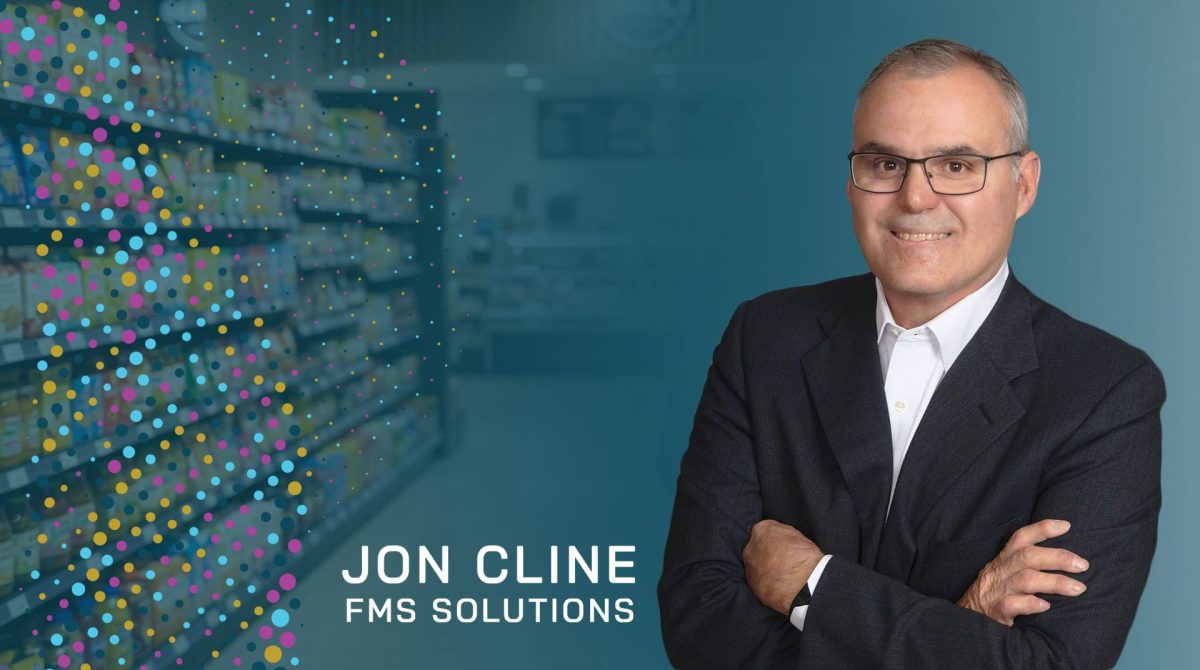

Jon Cline knows the grocery business from the ground up. He started bagging groceries at Safeway in high school, managed a 7-Eleven while earning his accounting degree at the University of Oklahoma, and went on to build a career spanning some of the industry’s biggest names: Arthur Andersen, Scrivner, Fleming and Supervalu. At FMS Solutions, he has served as both Chief Operating Officer and Chief Relationship Officer, giving him a rare combination of operational depth and client-facing perspective on what it takes to run a profitable independent grocery operation.
Here, Cline shares what today’s top-performing independent grocers are doing differently, and what others can learn from them.
Q: Jon, you’ve worked in every corner of this industry. What does winning look like for independent grocers right now?
Jon Cline: No doubt large chains have scale and technological advantages over independents. But independent grocers have real advantages too. They know their customers and the communities they serve. When I was a youngster playing baseball, the front of my uniform had Piggly Wiggly emblazoned on it. That kind of community connection is a real differentiator. Independents can tailor their prepared food and perishable offerings to local preference rather than a one-size-fits-all approach. They’re nimble and can react quickly to market changes.
But those advantages alone don’t pay the bills. The operators who are actually winning have married those strengths with genuine financial discipline. They know their numbers cold. They’re measuring, comparing and making decisions based on data. That’s what separates them.
Q: What financial habits are you seeing from the top performers?
Cline: The best operators run their stores with retail flair but also think like a CFO, with clear KPIs at every level. They push KPI performance down to the department level so key associates know what success looks like. I like to think of each department as a business within a business. That means understanding contribution to overhead by department, not just store-wide gross margin. If your deli is doing 42 percent gross margin but labor is running 38 percent, it’s contributing almost nothing to the operation. You need to know that quickly so you can effectuate change.
Top performers also track inventory turns, labor as a percentage of sales, and sales per labor hour. These aren’t just numbers; they’re early warning signals. The sooner you measure them, the faster you can course-correct. Labor is your biggest variable expense below the line. Top performers track it daily, schedule against a budget, and use tools like Workhappy to keep it connected to the rest of their numbers.
And critically, they financially plan. A budget isn’t just a financial exercise. It’s a living, breathing roadmap to success. If gross margin isn’t where you expected, the budget tells you immediately whether it’s ad penetration running deeper than planned, a pricing update that didn’t get made, or shrink quietly eroding the perimeter. Without a budget, you’re reacting. With one, you’re managing.
Q: Many independent grocers don’t have a formal budgeting process. Why is that a problem, and where do they start?
Cline: It’s one of the most common gaps I see, and honestly, it’s understandable. For years, experience and instinct were enough. But today’s environment has changed the math. Tighter margins, elevated labor costs and unpredictable consumer behavior have changed the math. Without a budget, you have no definition of the relevant metrics. Even if you’re having a successful financial year, what if it could have been better? Financial planning paints that picture for you.
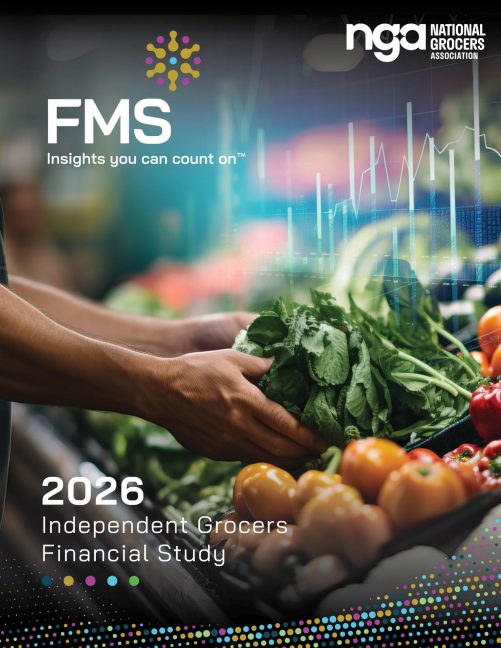
Pair that with benchmarking and you’re playing a different game entirely. With the 2026 FMS/NGA US Independent Grocers Financial Study just being released, independent operators now have access to the most current performance data available, giving them the same financial intelligence the big chains have had for decades.
Q: Can you share an example of an operator who put these principles into practice?
Cline: Brooks Davis is a great example of what’s possible when an operator commits to the data. We work closely with their family-owned company on annual budgets and timely monthly financials. Their perishable and prepared food offerings are second to none, and those are difficult departments to manage well. After implementing FMS Track-It to get control of perishable shrink, the results were immediate.
In Brooks’ own words, “We’re putting two more percent on the bottom line in perishables. Our people really bought in and we track it every day, every week, every month. We know what our shrink is and it’s been tremendous.” He sums up the broader impact simply: “I love the numbers of the business. It’s so good to talk to people that know what they’re doing and it’s just making a tremendous difference.”
Q: What would you tell an operator who wants to start moving in the right direction today?
Cline: Start with visibility. You can’t manage what you didn’t measure. Get your financials in order, including your balance sheet. Build even a basic budget, and understand all components of your department-level margins. Once you have that foundation, problem areas surface faster, decisions get easier, and you stop being surprised at month end. Most operators are leaving money on the table not because they’re doing things wrong, but because they don’t have the visibility to see where the opportunities are.
Q: How does technology like Profit Hound help operators get that visibility?
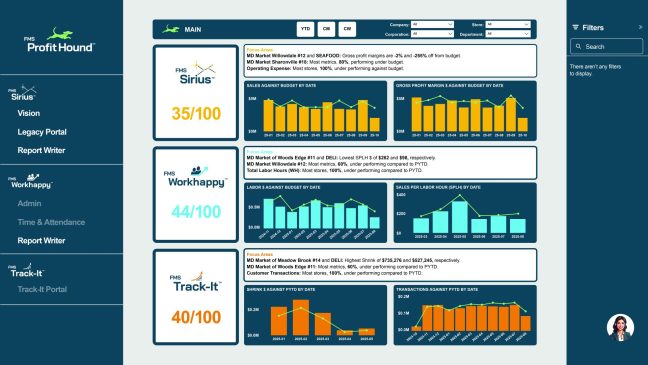
Cline: Profit Hound was built specifically for independent grocers, and that matters. It’s not about the software. It’s about what becomes possible when the right information is in front of the right person quickly. Operators can see their margins, track expenses and benchmark against peers. And with FMS Track-It now part of the platform, shrink and inventory management are fully connected to that same financial picture, with real-time visibility by department, SKU and location, with built-in shrink detection that protects margins automatically. When shrink data and financial data live in the same place, you stop reacting to problems after the fact and start managing them before they hit the bottom line.
The financial challenges facing independent grocers aren’t going away, but operators who measure, manage, and benchmark are pulling ahead. Profit Hound brings it all together: financials, benchmarking, shrink management with FMS Track-It and labor visibility with Workhappy, in one platform built specifically for independent grocers. Request a preview at fmssolutions.com.
About Jon Cline, Chief Relationship Officer, FMS Solutions
Jon grew up in retail. From going to work with his dad at a Goodyear store to working through high school and college in retail stores, later leadership roles in distribution, CPG and retail allow him to utilize a career’s worth of grocery industry experience in his role at FMS Solutions. Those experiences span accounting, finance, merchandising, operations and sales. At FMS, Jon has served as both Chief Operating Officer and Chief Relationship Officer, helping independent grocers across the country build stronger, more profitable businesses.
Workhappy, ProfitHound and FMS Track-It are registered trademarks of FMS
