
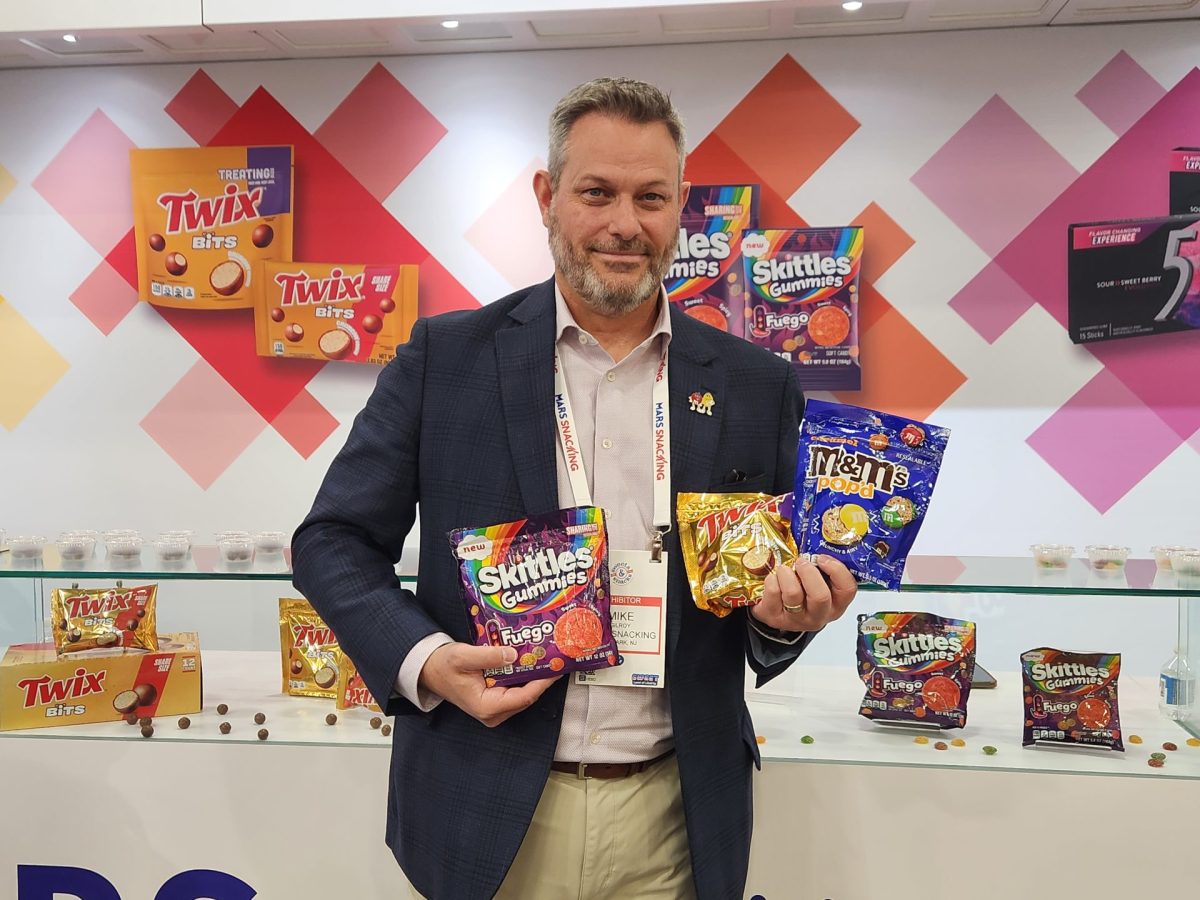
Halloween is no longer a six-week season, the meal is increasingly being replaced by the snack, and roughly two-thirds of in-store confectionery purchases still ride on impulse. Those were among the headline messages Mike Gilroy, VP of industry engagement at Mars Snacking, shared with The Shelby Report at this week’s Sweets & Snacks Expo in Las Vegas.
Halloween extends on both ends
Gen Z and millennial shoppers are pushing the Halloween season earlier and later — a phenomenon Mars Snacking and its retail partners are tracking under the labels “summer-ween” and “Hallow-mas.” The company’s annual “Tricks, Treats and Trends” report began tracking the trend last year, with an updated edition expected in July.
“People are looking to celebrate it earlier, but we also want our retailers to meet the moment,” said Hannah Messinger, Mars Snacking’s corporate affairs team for North America. “We’re making sure that our products are starting to roll out on shelves in July to make sure that we can celebrate summer-ween.”
The company has anchored that early-season activation in Topeka, Kansas — what Mars Snacking calls its “Halloween headquarters,” where the majority of treats sold in variety bags are manufactured. For the third year running, the plant hosted a halfway-to-Halloween trick-or-treat event for the surrounding community, drawing thousands of costumed neighbors. Tim LeBel, Mars Snacking’s chief customer officer, doubles as its self-appointed “chief Halloween officer.”
For grocers, Gilroy laid out a three-phase merchandising arc. Early-season stocking should emphasize immediate-consumption items in seasonal shapes, including new Twix Skulls and Snickers Pumpkins. Mid-season demand shifts to party-bowl formats such as black-and-orange themed M&M’s bags built for Halloween gatherings. Late-season is variety-bag territory, when retailers need depth of inventory to avoid stockouts on trick-or-treat night.
Three truths reshaping snacking
Gilroy framed the broader category outlook around three truths.
The first is that snacking is increasingly replacing meals. Citing the FMI – The Food Industry Association, he noted that 74 percent of consumers skip at least one meal a week in favor of snacks, and 30 percent say their most recent meal was actually a snack.
The second is the rising influence of Gen Z, which Gilroy said is driving demand for bold flavors, new textures, new formats and new experiences. The third is that even as Gen Z chases novelty, those consumers still want to participate in shared cultural moments — from major holidays to NFL season to phenomena like the Taylor Swift Eras Tour.
That set of insights, he said, drives a “more people, more occasions, more conversions” growth model.
Three musts for the category
From that framework, Gilroy outlined three “musts” he said apply industrywide, not just to Mars Snacking.
The first is innovation that resonates with Gen Z. Mars Snacking is leaning into the sweet-and-spicy or “swicy” trend with Skittles Gummy Fuegos; the sour trend with Starburst Sours and a new Extra Sours gum line in strawberry and blue raspberry; and the freeze-dried trend with new M&M’s Caramel and Skittles freeze-dried items. Freeze-dried, Gilroy said, is among the fastest-growing segments in confectionery. New formats are also feeding Gen Z’s appetite for nostalgia with a twist — Mars Snacking introduced Twix Bits at the show, billed as the first new Twix format in decades.
The second must is meeting seasonal expectations. About 63 percent of confectionery sales are tied to the four major seasons – Valentine’s Day, Easter, Halloween and the winter holidays – according to the National Confectioners Association’s State of Snacking report. But Gilroy urged retailers to look beyond those tentpoles to NFL season, now effectively a 365-day calendar, along with Mother’s Day, summer road-trip occasions, and June, designated as National Candy Month by the National Confectioners Association (NCA).
The third must is mastering the digital path to purchase. Mars Snacking projects that by 2030, one in every six dollars spent on confectionery will be transacted online. The opportunity, Gilroy said, lies in closing the impulse gap: while approximately 67 percent of in-store confectionery purchases are impulsive, only about 37 percent of digital purchases are — a finding the company is sharing through an immersive digital commerce experience at this week’s expo, alongside partners including DoorDash and BJ’s Wholesale Club.
Recapturing impulse at checkout
On the in-store side of that impulse equation, Mars Snacking’s Transaction Zone team — an internal consultancy stood up around 2022 — is working directly with retailers. Using what the company describes as a patented Paypoint Optimizer program, the team advises grocers on the right mix of manned and self-checkout lanes by daypart, queuing configurations and fixture choices designed to keep impulse merchandise in view during the ongoing shift to self-checkout.
“When you lose that impulse opportunity because of self-checkout that’s not merchandised effectively for both the retailer and ourselves, we’re losing that opportunity for that one more sale,” Gilroy said.