
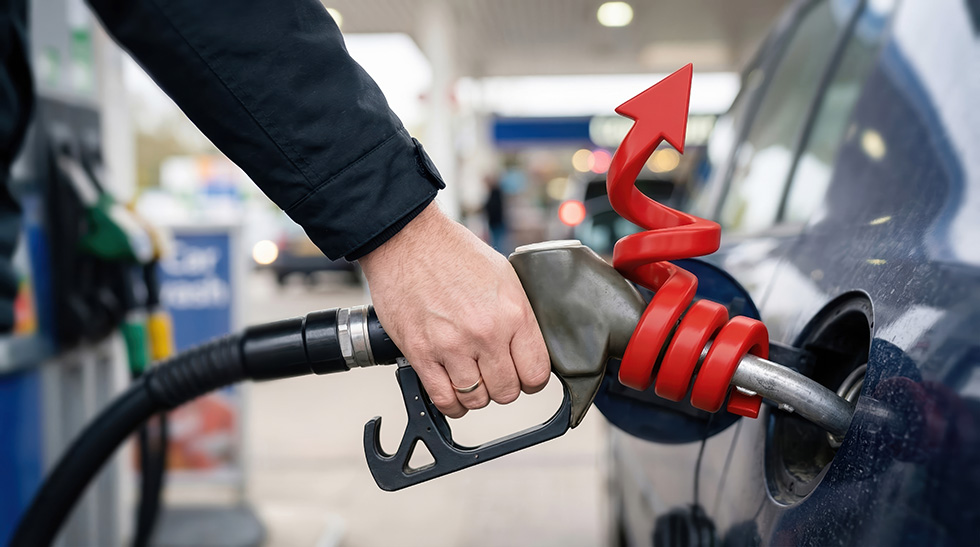
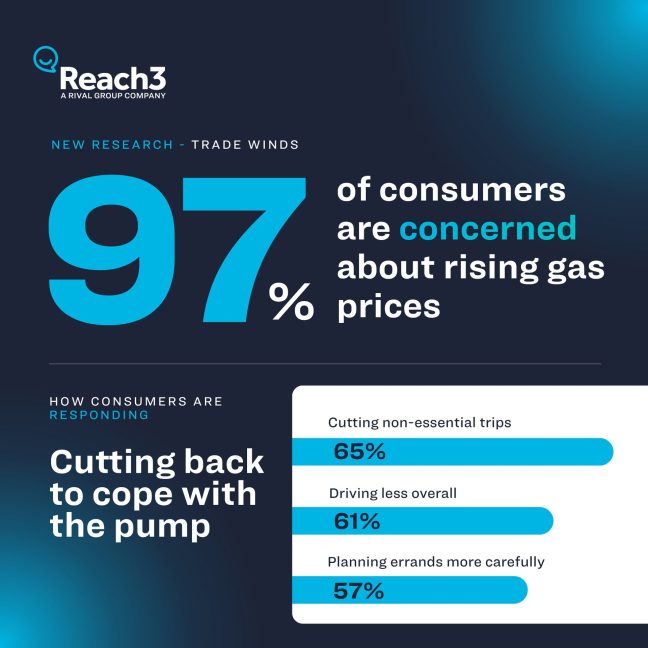
A new consumer sentiment study from Reach3 Insights found that 97 percent of Americans are concerned about rising gas prices, with many cutting back on nonessential trips and rethinking everyday spending as economic pressure persists.
The latest wave of the company’s “Trade Winds” program, conducted last month among a video-validated panel of 480 U.S. adults, shows that 65 percent are cutting nonessential trips, 61 percent are driving less overall, and 57 percent are planning errands more carefully.
Grocery prices remain the biggest source of financial strain: 66 percent say rising food costs are affecting them most, followed by energy and utilities (39 percent), dining out (38 percent) and transportation (38 percent).
“This is no longer just about reacting to headlines or temporary price increases. Consumers are adapting their routines around sustained economic pressure,” said Matt Kleinschmit, CEO and founder of Reach3 Insights.
“People are becoming more intentional about where they go, what they buy and which expenses still feel worthwhile. Brands need to understand these decisions are happening constantly in everyday, real‑world moments.”
Overall economic sentiment remains bleak: 78 percent of Americans report negative feelings about the economy, and 49 percent said they are not optimistic about the future. Frustration (17 percent) and stress (16 percent) are the most common emotions tied to the economy.
Consumers increasingly expect transparency from brands. One study participant said, “Trying to be deceptive about it … is more frustrating than being clear about why the added costs are occurring.”
The study also found that 38 percent are watching subscription costs more closely, with nearly half (49 percent) having considered canceling video streaming services.
The 66 percent of shoppers citing grocery prices as their top financial strain means value messaging – everyday low prices, private label savings and digital coupons – must be front and center. Transparency about pricing and sourcing, as the study participant noted, builds trust when shoppers feel squeezed.
“This study makes it clear that economic pressure is changing how consumers make decisions day to day,” said Varun Jog, research director at Reach3 Insights.
“Trade‑offs are happening in real time across categories, which is why it’s more important than ever for brands to actively capture real‑time insights on the emotional and contextual factors driving consumer purchase decisions.”