
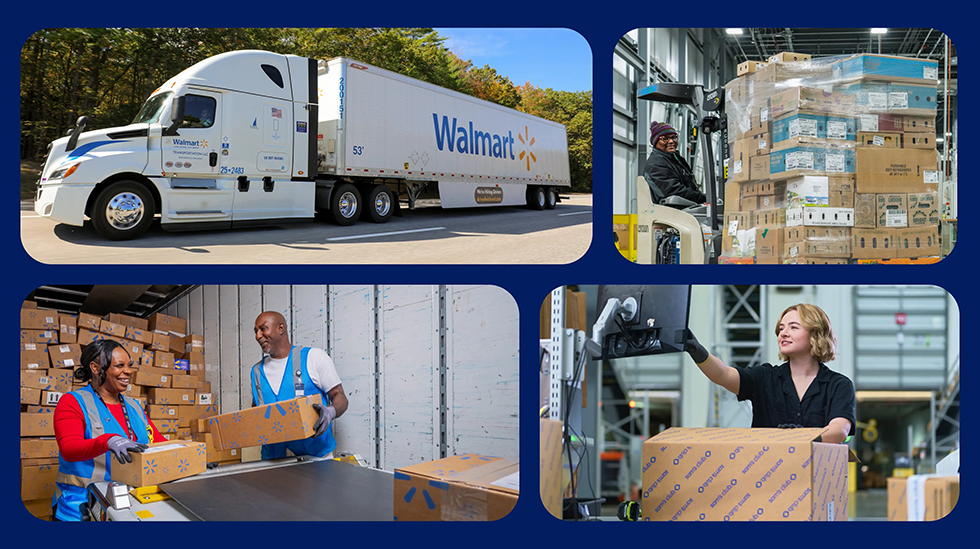
Walmart is overhauling its first‑mile logistics with a new Prepaid Consolidation Program, designed to get products onto store shelves faster while reducing complexity for suppliers.
The program allows vendors to send products under a single national purchase order to one location. From there, Walmart combines the inventory and distributes it to 42 regional distribution centers (RDCs).
The model is intended to reduce the number of partial truckload shipments, lower transportation costs and improve in‑stock rates.
“We’re focused on making our supply chain simpler, faster and more efficient for suppliers, while also keeping products in stock for our customers,” said Mike Gray, SVP of supply chain at Walmart U.S.
“By strengthening our first‑mile capabilities, we’re reducing complexity and keeping goods moving, so we can deliver even more value every day.”
The program works within a supplier’s prepaid freight terms. Vendors can manage shipments through Walmart or work with approved third‑party logistics providers, including C.H. Robinson, Hub Group, and RJW Logistics.
Walmart said the model can lower total landed costs while accelerating speed to shelf by eliminating multiple touchpoints.
The Prepaid Consolidation Program will roll out in phases, with participation prioritized based on volume alignment and capacity expansion.
Walmart also is investing in technology to provide suppliers with real‑time visibility into shipment status and inventory flow. The company expects the program to scale across most of its general merchandise and consumables categories by early 2027.