
When an ice storm hits and the news tells everyone to stay home, Greg Sparks knows exactly what happens next.
“Our drivers are out there,” he said.
That mindset – part duty, part pride – helps explain why Food City is The Shelby Report of the Southeast’s 2026 Retailer of the Year. Having served friends and neighbors for over a century, the company is locally owned and operated, now spanning 164 retail outlets across five states with a team of more than 19,200 associates.
And according to Sparks, chief operating officer, the real action happens long before a customer ever walks an aisle. It happens in the warehouse.
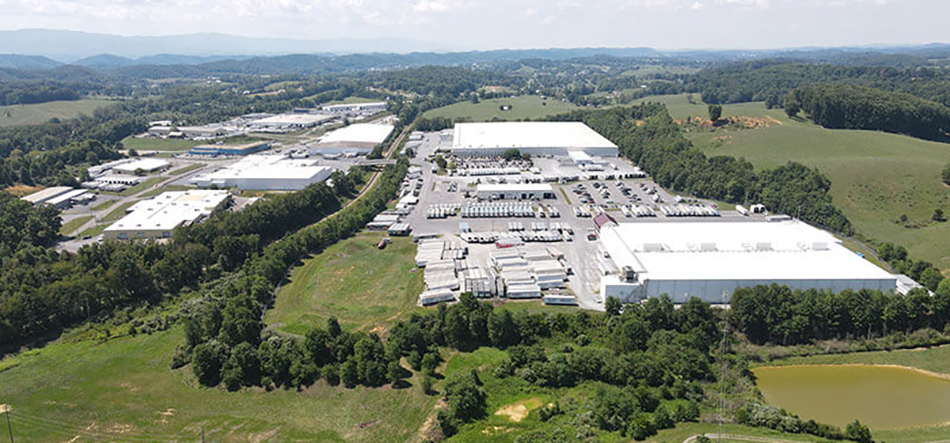
Food City’s distribution center in Abingdon, Virginia, hasn’t gotten any bigger lately – still 1.2 million square feet, including the Misty Mountain Spring Water bottling facility. But that doesn’t mean things have stayed the same.
“We have not made any changes to the actual amount of space,” Sparks said, “but we have reconfigured it in many different ways. We’ve made some strategic enhancements to improve efficiencies and support our growth.”
In 2026, that includes some significant re-racking adjustments. “It is for space optimization and efficiencies,” he said. “We’re pretty excited about optimizing our space better.”
Food City’s water company, Misty Mountain, is also getting a boost; new equipment is on the way.
“Throughput will be much faster, in some cases two to three times faster,” Sparks said. “We operate on two shifts, but on those two shifts, they’ll be able to produce approximately double what they did in the past. So it will give us some efficiencies. We can have more product available and sell to more customers. That business continues to grow, so it’s a worthwhile investment.”
Today, about 950 associates work in the distribution center. Before COVID-19, that number was about 700. “This has radically grown,” Sparks said.
Training that cuts accidents, builds morale
That kind of growth only works if training keeps pace. Years ago, Food City realized it needed a more structured training program.
“Many years ago, if you started in our distribution center, Joe might train you Monday, and John might train you Tuesday,” Sparks recalled. “You had all these different people training you. We decided several years ago that we need to have our trainers be the best in the distribution center, so we actually train our best people to be trainers.”
Now, new associates go through a comprehensive, structured program that lasts several weeks with the most experienced operators.
“That’s really helped cut down on our accidents,” Sparks said. “It’s helping our turnover and just helping us be more efficient.”
The results showed up dramatically during a recent ice storm, when business surged more than 30 percent before the weather hit.
Icy roads kept some associates from getting to work. Warehouse managers loaded up four-wheel-drive vehicles and made runs to pick up employees who couldn’t drive in.
Workers offered to pull double shifts – 10 hours back-to-back
“You know how much overtime we spent that week in the distribution center? Less than one hour per employee for a 30 percent surge in business,” Sparks said. “I attribute it to the morale.
“Our management team is very experienced. They’re very engaging. They know everybody in the center on a first-name basis. Know about their background, know their kids’ ball team. The morale is very strong.
“Morale and culture is really what sets us apart,” Sparks said.
That culture hasn’t gone unnoticed. Food City was a Certified Great Place To Work for 2024, 2025 and 2026, an employer-of-choice recognition based entirely on what employees report about their workplace experience.
Drivers home every night
Recruiting remains steady, with one exception. 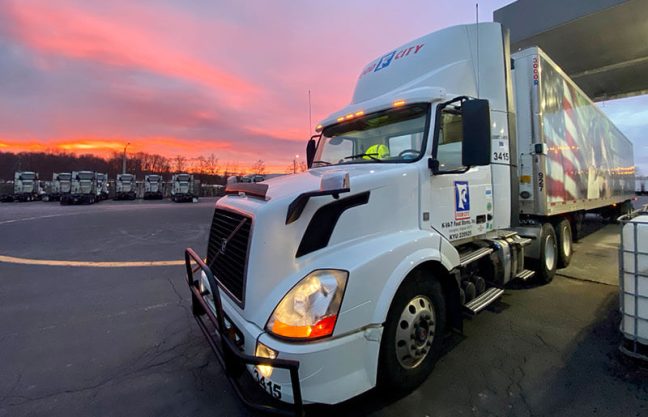
“There is a nationwide driver shortage, so we could always use a few more drivers,” Sparks said.
Food City works with job fairs, digital recruiting and partnerships with local technical schools and community colleges. Drivers can earn their CDLs through those programs and then come work for the company.
“We think we have competitive pay, dependable schedules,” Sparks said. “Our drivers are home at night. A lot of drivers across the nation … they’re gone for two or three nights. Our drivers are home every night, which is a big deal. It really helps in our turnover.”
Tech boosts dynamic routing
One recent investment has paid off faster than most – a new dynamic routing software program in the transportation department. The new software optimizes load planning so trucks leave the distribution center as full as possible.
Before that, the team used an Excel program – partly manual, partly spreadsheet.
“As you might imagine, the most expensive thing to ship is air,” Sparks said. “With dynamic routing, we’re able to fill our trucks. We save millions of dollars, and the trucks ride better full … It’s been a big game-changer for us,” he said.
Food City ships perishable and non-perishable items from its Abingdon facility, with some non-perishable grocery items flowing through a partnership with Associated Wholesale Grocers. AWG has a new automated facility in Hernando, Mississippi, near Memphis, and Food City is utilizing that operation as well.
The company also continues to invest in cold chain management – from the moment a product arrives until it lands in a customer’s basket.
“Once it hits our door, we examine it, and it has to be a certain standard or we refuse the product,” Sparks said. “And then we also watch all throughout the system until it gets to the store and ultimately in the customer’s basket.”
That includes Brix testing – measuring the sugar content in fruit to confirm it falls within an acceptable range. Quality control is not a checkpoint; it is a continuous thread from receiving dock to store shelf.
“Cradle to grave,” Sparks said, “that’s our cold chain.”
Retail Reserve Team born out of COVID
One of the more innovative programs at Food City was born out of necessity during the COVID-19 pandemic: the Retail Reserve Team, a cross-trained group of store operations associates who can step into distribution center roles when volume surges.
“It required us to think outside the box,” Sparks said. “Now that staffing is more stabilized, we don’t have the crazy surge like we did. We don’t need to use them as much, but we still have the team.
“It’s really valuable when our operations folks see what happens behind the scenes and actually work in the distribution center,” he said. “And also vice versa – the distribution center, when they have interaction with operations folks, they can see how they impact each other.”
Store assistant managers go through Retail Reserve Team training as part of their development. The program also has created a pathway for operations associates who discover, mid-career, that warehouse work suits them and make a permanent move.
“It’s been a great idea,” Sparks said. “It’s really valuable.”
‘The store is the boss’
Ask Sparks what sets Food City apart, and he comes back to one phrase.
“We have a whatever-it-takes mentality,” he said. “The store is the boss, so to speak. I have a saying, ‘If you’re not directly serving the customer, make sure you’re serving the people who do.’ That’s our distribution center.”
To associates who work in the distribution center – people the average shopper will never see – Sparks delivers a consistent message.
“Our customers may not see you, but they can feel your impact,” he said. “It makes them feel valuable.”
That culture extends to shrink, which Sparks calls a major industry challenge. Food City uses technology, training and data to identify the biggest opportunity areas, whether certain commodities, stores or departments.
“It’s not a glamorous thing to manage shrink,” he said. “There’s a lot more fun things to do in the industry. But shrink is a big deal for us.”
But the best problem to have, he said, is growth. And there is plenty of it.
The company opened three new stores in the Huntsville, Alabama, market in 2025, along with three replacement stores in Tennessee. It completed significant expansions in Knoxville and Trenton, Georgia, opened six Gas ‘N Go fuel centers, added nine Starbucks cafés and has acquired three former Winn-Dixie locations in Alabama to expand into the Birmingham market.
Looking ahead in 2026, two more new stores are planned for Alabama, along with a replacement store in Marion, Virginia, and three expansions in Tennessee.
“The best challenge we have is just managing our growth,” Sparks said. “And that’s fun. That’s a fun challenge to have. As you spread your geography, you need a strong team to manage it. So we’re hiring people, training people, rewarding people and getting people up to manage their business.”
Looking ahead: AI and next 100 years
Food City is already looking at artificial intelligence across the entire system – merchandising, operations, distribution, accounting, IT.
“Every functional area in our organization is looking at AI,” Sparks said. “Some areas are using it more than others. But as AI grows and develops, we’re optimizing it now and we’ll continue to optimize it. It’s pretty exciting.”
Long term, the company also will make decisions about its distribution network as its geography stretches.
But through it all, the mission hasn’t changed. Food City’s commitment to community runs deep – more than $108 million contributed to non-profits, area schools and events over the past decade, including $8.6 million in 2024 alone.
“We frequently and proudly say, ‘We feed America.’ And people take responsibility for that,” Sparks said. “They take a lot of pride in that.
“My family and friends, when the weather is bad and people can’t go to work, they know we’re going to work because people have to eat. We’re pretty proud of that and take it seriously.
“It starts with our CEO [Steve Smith]. His father, Jack Smith, started the company. The culture that has been developed is we’re here to serve our communities. Feed America. I feel pretty proud about that. The entire organization does.”