
Q&A with Jill Blanchard, President of OSMG
What has “national coverage” traditionally meant for grocery brands?
This can mean different things depending on the size and distribution of a brand. If you’re an emerging brand, national coverage is viewed as getting that initial distribution and then having the ability to scale that nationally. Typically national coverage is the ability to work with a sales agency across the U.S. versus a particular region or channel.
How has the definition or expectation of national coverage changed in the last 20 years?
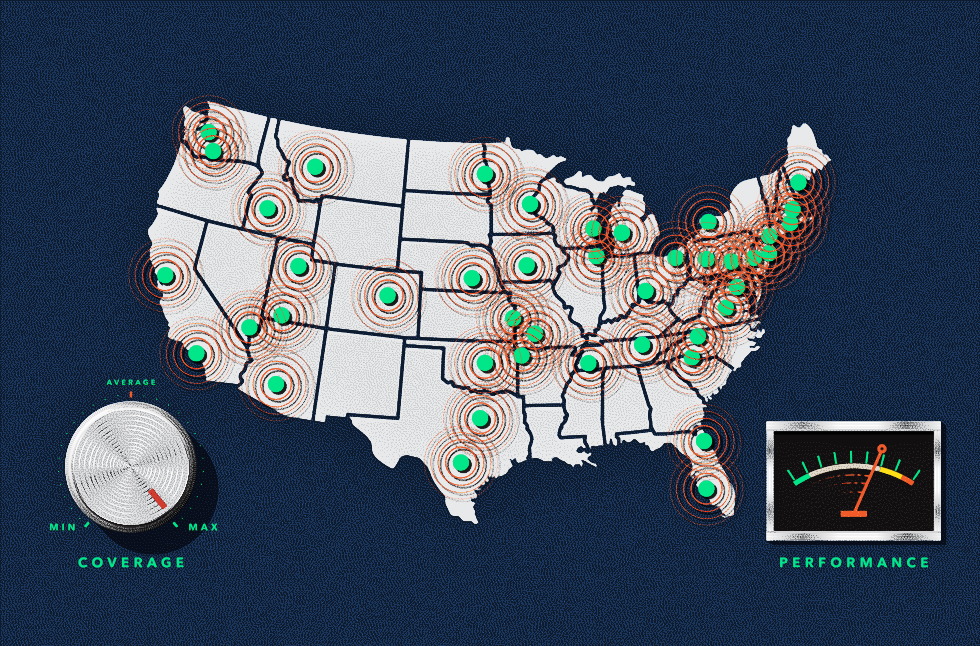
Many years ago, the sales agency space was pretty fragmented, so a grocery brand would have to work with many agencies to get
national coverage. With some consolidations and partnerships, there are now a handful of sales agencies that are able to provide national coverage. Expectations have also evolved in that grocery brands now expect that single source management – account lead, contract, scorecard and more – alongside very localized knowledge and execution. So, for a manufacturer, instead of having to work with multiple parties, they can work with one sales agency to get national coverage. It’s a big change in how manufacturers have the ability to go to market.
What challenges do manufacturers face when national coverage is managed across multiple partners?
The biggest challenge has to be the time it takes to manage multiple partnerships – the updates, scorecards, executive reviews and planning. Doing that 5+ times takes time. It’s so much time to manage; it just becomes cumbersome.
Why is consistency across markets increasingly difficult to achieve at a national level?
It’s a bit of a “jack of all trades master of none” quandary. I think it’s fair to say that being the best everywhere within a single structure is difficult if not impossible. That single structure can’t be in all places at one time, leaving the lower levels to manage the market level activity. Think about somebody who’s just a classical broker, you’re probably going to be pretty good at Costco. That’s all you do. But if you literally do every retailer in the country, it’s going to be hard to be great everywhere. So, I think that’s kind of the biggest challenge. That single agency can’t be in all places at one time, so you’re probably not going to have the CEO of that company or the president of that company super entrenched in your business.
Why is local market insight still essential, even as brands scale nationally?
One of my favorite questions. Anybody in this industry knows you could never successfully manage AWG, Publix and Wakefern the same way. They’re wildly different. And not just them. Think about how to sell to and manage Kroger vs Albertsons. Similar retailers but very different from a grocery brand perspective. Hy-Vee. Market Basket. We could go on and on. No two retailers have the same strategy and way of working, making the absolute key to success being deep local knowledge and relationships. Every retailer is so incredibly different. You want that. You don’t want a company that’s gonna go to market the same way. So that super localized, you know, deeply entrenched regional retailer relationships and deeper knowledge is the real benefit. It is one of the reasons that they do typically have great performance.
What should brands be evaluating when they assess whether their national coverage is truly effective?
One hundred percent start with performance. How is your business doing versus other markets that maybe you’re managing directly, the category, competitors and expectations. There are many layers below this that drive the answer – could be promo plans, basic execution, retailer relationships, analytical insights and much more. But ultimately it’s performance.

What do you believe strong national coverage needs to look like moving forward?
I’m always going to start with performance. Great results are really driven by all the parts. It’s meticulous management, and it is all the retailers, all the senior level management involvement, and every brand. But then layer that on with the ability to be simple. Manufacturers typically have super slim structures, so they need simplicity. They need that one client leader, one contract. They need the ability to meticulous management at lower level.
Traditionally, grocery has been a slower moving industry. You know, just the pace of change in the world today is fast. Consumers are shifting their behavior faster, which means that retailers have to shift their behavior faster. The old days of like, every year we’re gonna do a category of reset to make decisions is over. More than 75 percent of retailers now are willing to pull a product out or put a new one in, mid-cycle, and that’s happening more and more. So, it’s forcing manufacturers to be more agile as well. And so, as a sales agency you’ve got to be ahead of that curve and move on a dime. It’s a constant game of offense and defense. Just because you’re put on shelf today does not mean you’ll remain on shelf tomorrow. And then vice versa, manufacturers now have the opportunity to get a new brand in mid-cycle.
Why has fast decision-making become more critical for grocery brands than it was in the past?
Everything in our world is moving faster, and that pace of change will continue to exponentially increase – especially with the integration of AI into our everyday lives. Consumers are making changes faster in their buying behavior, sometimes driven by external factors such as GLP1’s and SNAP. This forces retailers to make faster decisions. Maybe resetting the category once per year won’t win in the marketplace any more, which gives grocery brands both a challenge and opportunity – both which need to be addressed fast. I have yet to find a retailer who wants to talk about a great product for Q2 2027.
About Jill Blanchard
Jill Blanchard is president of National Services at OSMG America, a national sales agency built on regional and channel strength. Previously, she served as president of client solutions and analytics at Advantage Solutions, where she created and authored a proprietary executive-level engagement process that generated actionable insights from senior leaders across leading retailers and consumer products companies. Jill is a featured retail expert in outlets such as Bloomberg Retail and a mainstage speaker at major industry conferences including FMI, NIQ C360, Instacart, NACDS, dunnhumby, and the National Restaurant Association.
Prior to Advantage, Jill served as president of BrandLoyalty USA and as CEO of SPAR Group Inc., a publicly traded international merchandising services company. She also held senior leadership roles at HAVI, a global foodservice services organization.
Jill began her career as a statistician at Monsanto and spent 14 years at NielsenIQ across analytics, client services, marketing and business development. She is known for connecting strategy, analytics, and insight to drive results for some of the world’s most admired brands, including Kraft Heinz, P&G, Apple, McDonald’s, Smucker’s and Kroger.