

Leadership wisdom often comes from unexpected places.
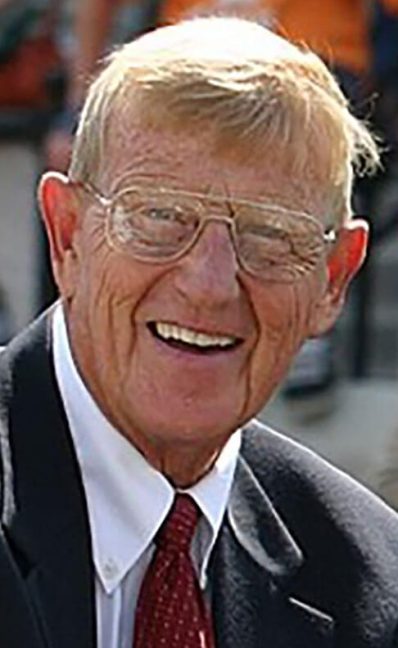
One of the most respected leadership voices in American sports is the late Lou Holtz, who we lost in March. The legendary college football coach was known for turning struggling programs into championship teams.
While his career unfolded on football fields rather than grocery aisles, the leadership lessons from his life and teachings translate well to the grocery industry.
A few years ago, I had the privilege of getting to sit at Holtz’s table during a conference where he was the keynote speaker. I was blown away by his wisdom and ability to speak for more than an hour without a single note. He was as genuine at the table as he was on the stage. That alone is a leadership lesson we can all learn from.
Grocery leaders face a unique leadership challenge – balancing operational efficiency, customer experience, employee engagement and profitability, often in fast-paced environments with diverse teams and constant pressure.
Holtz’s leadership philosophy offers practical insights that can help leaders build stronger teams, develop employees and create stores where people want to work and shop.
Below are several core principles from his leadership approach and how we as grocery store leaders can apply them to lead more effectively.
Have clear standards for excellence
Holtz believed teams perform best when expectations are clear and standards are non-negotiable. At Notre Dame, he established simple but powerful expectations about preparation, discipline and accountability.
For grocery store leaders, this principle begins with clearly defining what excellence looks like in the store.
That includes clean, organized aisles and fresh departments; friendly and proactive customer service; accurate pricing and full shelves; and safe and efficient operations.
When standards are clearly communicated and consistently enforced, employees know what success looks like. Ambiguity often leads to inconsistent performance.
Grocery leaders should regularly reinforce standards through morning huddles, daily coaching conversations and recognition of employees who demonstrate excellence.
Employees are more likely to meet expectations when they understand them and see leaders modeling them.
Focus on people first
Holtz often said that leadership is fundamentally about people, not systems.
He believed that if we invest in people – develop them, support them and hold them accountable – results will follow.
In grocery retail, leaders sometimes become consumed by operational tasks: shrink control, labor scheduling, inventory management or merchandising. While these tasks are essential, the most successful stores are often those with engaged, motivated and friendly teams.
Leaders can apply Holtz’s people-first philosophy by getting to know employees personally; understanding individual strengths and career goals; providing regular coaching and feedback; and celebrating wins, big and small.
Employees who feel valued are more likely to care about the store’s success. They also are more likely to stay longer, reducing costly turnover.
A grocery store may have the best pricing strategy in the market, but if employees feel disengaged, the customer experience and company longevity will suffer.

Create culture of accountability
Another principal Holtz emphasized was personal responsibility.
He famously stated: “Don’t tell me how rocky the sea is. Just bring the ship in.”
Holtz expected players and staff to take ownership of their performance. Excuses were not acceptable; solutions were expected.
For grocery leaders, accountability is essential for running efficient operations. When issues arise – out-of-stocks, long checkout lines or messy departments – leaders must focus on solving problems rather than assigning blame.
Creating accountability involves setting measurable expectations; following up on commitments; and addressing issues quickly and constructively.
For example, if a department consistently struggles with shelf conditions, a manager should work with the team to identify root causes and create a clear improvement plan.
Accountability works best when leaders hold themselves to the same standards as their teams. When employees see leaders taking responsibility, they are more likely to do the same.
Communicate constantly, clearly
Holtz was known for his ability to communicate clearly and inspire people. His teams always understood the mission and the plan to achieve it.
Communication is equally critical in grocery stores, where many employees work different shifts and departments.
Effective grocery leaders communicate in several ways:
- Daily communication – quick shift briefings or huddles and clarifying priorities for the day.
- Operational communication – changes in promotions or merchandising and safety reminders.
- Motivational communication – recognizing strong performance and reinforcing the store’s goals.
Consistency matters. When employees hear the same message repeatedly, it reinforces focus and alignment. I believe this is the most critical element of delivering a pleasant shopping experience every time for our customers.
Poor communication often leads to confusion, mistakes and frustration. Clear communication, on the other hand, creates confidence and teamwork.
Teach, develop future leaders
Holtz believed that a great coach’s job is not only to win games but to develop players for life.
Many of his former players went on to become coaches, executives and leaders in their own fields because Holtz prioritized mentorship and development.
Grocery store leaders should adopt the same mindset. Instead of simply filling shifts, strong leaders build pipelines of future supervisors and leaders.
Leaders can develop employees by delegating responsibilities; teaching decision-making skills; offering cross-training opportunities; and encouraging employees to take initiative.
When employees see growth opportunities, they are more motivated to contribute and stay with the company.
Leadership development also ensures operational continuity when experienced employees move on or get promoted.
Lead with integrity
One of Holtz’s most enduring leadership messages was about character.
He often said there are three key questions people ask about a leader that’s very similar to what John C. Maxwell teaches us: Do you care about me? Are you committed? Can I trust you?
Integrity builds trust, and trust is the foundation of strong teams. For grocery leaders, integrity appears in everyday actions, including being honest with employees; treating all team members fairly; following company policies; and admitting mistakes when they occur.
Employees watch leaders closely. When leaders act with integrity, it creates a culture where honesty and responsibility are valued. Without trust, teamwork quickly breaks down.
Maintain positive attitude
Holtz was known for his optimism and belief in the potential of his teams even when circumstances were difficult.
He understood that leaders set the emotional tone for the organization.
In grocery retail, challenges are constant. They can include staffing shortages, supply disruptions, customer complaints and tight margins.
Leaders who remain calm and positive help teams stay focused on solutions rather than problems. A positive leadership attitude can be demonstrated through encouraging words during busy shifts, celebrating progress and supporting employees during stressful situations.
Positivity does not mean ignoring problems. It means approaching challenges with confidence and determination. Teams are far more resilient when their leaders maintain a constructive mindset.
Prepare relentlessly
Holtz believed that preparation creates confidence and success. His teams were known for disciplined practice and detailed preparation for every opponent.
For grocery store leaders, preparation can take many forms, such as reviewing sales forecasts before ordering; planning staffing schedules around peak traffic; preparing for major promotions or holidays; and ensuring departments are ready before the store opens.
Prepared leaders prevent problems rather than constantly reacting to them.
For example, anticipating high demand before a holiday weekend allows leaders to schedule additional staff, stock key items and prepare displays.
Preparation reduces stress for both employees and customers. Stocking shelves, assisting customers and maintaining clean stores all contribute to improving people’s daily lives.
When employees see the importance of their work, they perform it with greater pride and commitment.
Conclusion
Holtz built a legendary career by transforming teams through strong leadership, clear standards and a deep commitment to people. Although his arena was college football, the leadership lessons from his life apply to grocery store management.
By focusing on people, establishing clear expectations, communicating effectively and leading with integrity, grocery leaders can build teams that perform at a higher level.
The grocery industry is ultimately a people business. Products may fill the shelves, but it is employees who create the experience that keeps customers coming back.
Leaders who adopt Holtz’s leadership principles can foster stores where employees feel valued, teams operate efficiently and customers receive outstanding service.
In the end, great leadership – whether on the football field or in a grocery store – comes down to inspiring people to do their best and helping them succeed together.
Steve Black is CEO and founder of abrighterday.life, a business and leadership coaching organization devoted to helping people and companies with personal growth and implementing simple leadership principles. A 47-year-veteran of the retail grocery arena, Black is the author of “The 5 Rules” and offers an online Masterclass.
[RELATED: Leadership, Math And Power Of Perspective]