
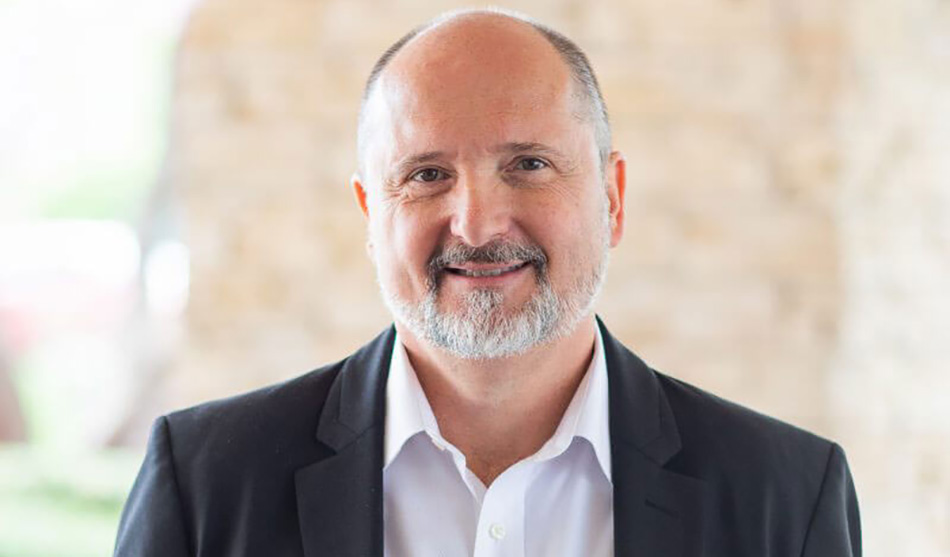
by Paulo Goelzer
For over three decades, I have lived and breathed the dynamic world of grocery retail – an industry where leadership is forged not in corner offices, but in backrooms, front ends and produce aisles.
In those 30 years, I have had the opportunity to work with store management that navigated chaos on a Saturday and balanced tight labor budgets with customer satisfaction. With the responsibility to develop better leaders for the grocery industry, I always turned to traditional management literature as an additional source of material to build better programs.
What I learned over the years is that traditional management literature still is dominated by legacy theories from manufacturing with a misalignment that is too important to ignore. Much of what we’re told about “good management” was drawn from structured, scaled and siloed factories. But grocery retail doesn’t operate like that.
Grocery is fast, fluid and profoundly human. Inventory turns daily and customer feedback is instant. Teams are diverse, often cross-trained and must adapt in real time. In this environment, rigid hierarchies and linear planning models fall flat.
Over the years, I’ve seen leadership in grocery retail evolve into something more adaptive, empathetic and hands-on than many traditional theories allow. I’ve watched leaders emerge not by climbing ladders, but by solving real-world problems under pressure with humility and grit.
Grocery leadership is in “the business of people serving people” – it has unique dynamics rooted in the fast-paced, people-driven, customer-facing environment.
Here’s a breakdown contrasting grocery leadership and regular leadership in key dimensions:
Speed, immediacy
Grocery leadership operates in real time, requiring the ability to quickly adapt and execute in fast-paced settings.
Teams employ a tactical focus, often with daily performance targets. Regular leadership tends to be more planned and analytical.
People-centric approach
Grocery leadership demands emotional intelligence, patience and hands-on coaching for diverse, high-turnover teams.
Many staff view the job as temporary, but leaders must still inspire, coach and retain them whenever possible. Often leaders must teach professionalism, punctuality and teamwork from the ground up.
Communication is on the floor, in real time, frequently non-verbal, with quick huddles. It must be fast, clear and action oriented. Grocery leaders must manage moods, conflicts and fatigue constantly.
Regular leadership often includes professionals with more autonomy and specialized skillsets, where leaders focus on mentoring high-potential talent for long-term succession. Leaders may operate behind the scenes.
Customer-facing role
Grocery leaders are on the frontlines, often acting as both manager and customer service representative.
The direct and frequent interaction with customers forces leaders to model customer service excellence and handle front-line escalations. Leadership is visibly present, accessible and often judged in real-time by both staff and customers.
Regular leadership is usually indirect – customers do not experience the impact firsthand. These leaders seldom interact with customers directly and many times customer insight comes through data and reports.
Operational focus
Grocery leadership is execution-heavy – ensuring shelves are stocked, staff is present, customers are satisfied and promotions are executed correctly.
Grocery leaders must understand and often operate POS systems, workforce management software and mobile tech, among others.
Regular leadership may have a broader strategic scope and less direct execution and implementation.
Small business relevance
Grocery leaders often operate in environments that lack the scale, formality and functional silos assumed by many traditional management models.
Leadership in grocery retail frequently emerges within smaller, more informal and less bureaucratic businesses – often shaped by close-knit teams and family dynamics.
In short, grocery retail leadership is a distinct profession rather than a diluted form of “traditional” management. It requires agility, emotional intelligence and a distinct blend of tactical execution and personal connection.
We at the Retail Learning Institute give it the respect and framework that it deserves. Please check out our Supermarket Management Class, an intensive conference featuring 22 sessions delivered by a faculty of industry professionals from April 27-May 1 in Atlanta, Georgia.
Paulo Goelzer is president of the Retail Learning Institute and IGA Coca-Cola Institute.
[RELATED: IGA Adds Bitcoin Access To Independent Grocery Stores]