
As Associated Wholesale Grocers celebrates its centennial, former CEO David Smith looks back on his tenure with the perspective of a steward who sought to leave the cooperative stronger than he found it.
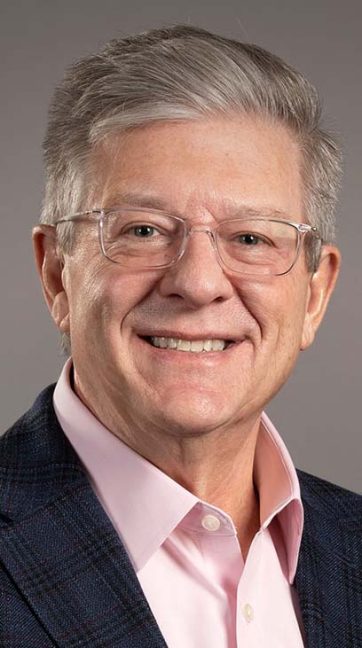
Smith joined AWG in August 2003 as director of real estate. He stepped into the CEO role at the end of 2015, beginning officially in early 2016. He retired at the end of 2023.
“When I took the seat, the co-op was strong,” Smith said. “The reason being that its independent grocers were really good operators, and they had been battle-tested and already proven their value in the communities they serve, for decades and decades. It’s a very strong company.”
Smith said he entered the role with a simple mission.
“My mission was simple – to listen to the needs of the retailers and to provide them with what they needed, whether it was products or tools or the support in order to be able to succeed and remain competitive.”
One of the first major steps under his leadership was forming a strategic council of retailers to serve as the voice of the membership. Their feedback shaped AWG’s strategic plan – what to maintain, improve and stop doing.
“Implementing those plans involved maintaining the momentum that we already had as a company and what was working and defining and communicating the new things that we needed to do, as well as stopping some of the things that we were applying time and effort that really weren’t any longer applying value,” he said.
Difficult start – and strategic pivot
Early in his tenure, Smith faced a defining challenge. AWG’s largest member acquired a chain that required self-distribution, meaning the retailer would leave the cooperative.
“That’s not really the kind of notices you want to receive, especially not in your first year,” Smith said.
AWG had a choice: pull back and minimize the damage or push forward and grow through it. Smith chose the latter.
The cooperative completed an acquisition with Affiliated Foods Midwest, significantly increasing volume and strengthening buying power and service offerings. The addition of what became the Great Lakes division in Kenosha, Wisconsin, brought a wave of new stores and members.
“It just became very, very, very successful,” Smith said. “Even though we were facing something difficult, it ended up really good. It didn’t start on a positive note, but it did end on one.”
He described the move as a “very strategic pivot” that positioned AWG in new markets and set the stage for Upper Midwest growth.
Innovation rooted in values
Balancing heritage with innovation is an ongoing challenge for any 100-year-old company. For Smith, the cooperative structure provided the answer.
“AWG had 19 fantastic grocers [on its board] that were owners and were kind of built into our fabric, representing every cohort of AWG’s membership – single store operators, big stores, small stores, practically every format and operating philosophy,” he said. “By involving that board in all of our strategic decisions and changes, we always were able to receive candid feedback, direct voices from the users, before making any bold left- or right-hand turn.”
When the members helped select a course, Smith said, they were fully committed to seeing it through.
“I believe that’s … a secret to the innovation and adoption and change and improvement process at AWG is that we have the end-users as a part of those decisions,” Smith said.
When asked about his proudest achievement, Smith did not point to expansions or facilities.
“It’s really the people, and specifically the leadership team,” he said.
The executive team he assembled more than a decade ago remains largely intact.
“[I’m] the only one that’s kind of hit the off-ramp. But the rest of them are there, and I have just tremendous pride in that team,” Smith said.
He cited their leadership during his unexpected quadruple bypass and valve replacement, as well as their continued performance today.
“That’s my pride, all of them, and the way that they have managed and led and stepped up to every challenge and every opportunity that has happened,” he said.
Lessons in resilience
Smith recounted a particularly vulnerable stretch when AWG was simultaneously exiting the market in Fort Worth, Texas, adding new divisions and absorbing hundreds of new members. Competitors seized the opening, and AWG lost a handful of stores – a rare and painful experience for a cooperative known for member retention.
“I felt that we had failed those retailers, or else they would not have switched,” Smith said. “And internally, we were sick, and it was a time of reflection, and we did our best to address the challenges and those losses with humility in order to learn from that, because it was a very humbling process of loss that we really hadn’t experienced.”
However, in the months and years that followed, those retailers returned.
“We did snap back. We did re-earn their business. We got a second chance,” Smith said.
The episode reinforced his belief in the cooperative model.
“If you have the right business model, you have the right people and you have the right attitude for your customers, or members in this case, who really are there in an ownership role – it’s our role to serve them. We have a resilient business model, and it is a reliable and predictable place for the independent grocer,” he said.
Smith characterizes his time as “a season of growth, despite headwinds.” Today, he sees AWG in a season of refinement and operational improvement, investing in supply chain performance, replacing antiquated systems and leaning into technology.
“This season is a season of building a very, very strong and stable base for the future,” he said.
He believes the most consequential decisions ahead will revolve around technology adoption.
“The technologies in the next three years – what to adopt and what to avoid – will be more consequential than almost any other strategic decisions the grocer and AWG will make,” he said.
The ‘All-In-One’ investment
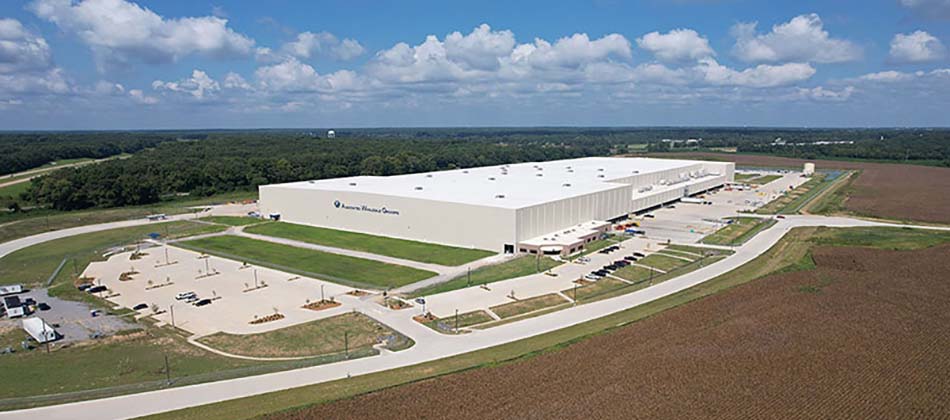
Among the initiatives board members most frequently cite from Smith’s tenure is the All-In-One Distribution facility in Hernando, Mississippi – the largest single capital investment in AWG’s history and, at the time, the first of its kind in North America.
The facility was born from two seemingly contradictory pressures: consumers demanding greater product variety and big chains and discounters driving down prices. In conventional warehousing, those goals work against each other – more variety means more SKUs, slower order selection and higher costs.
“In wholesale distribution and in retail, the more product variety you stock, the more it increases your cost of operation,” Smith said.
The automated system in Hernando allowed AWG to lower operating costs while expanding variety – shifting from labor-intensive processes to investment-intensive automation.
“It was the biggest single investment the company has ever made,” Smith said. “It was scary, as all new things are. But it’s worked out fantastic, and it’s been a real blessing for AWG.”
Still, he returns to people as the true differentiator.
“It would be easy to say that was one of the things I’m most proud of, but that’s just the people. It was the people that made that possible,” he said.
Role of a steward
Reflecting on his place in AWG’s 100-year story, Smith frames his tenure not as leadership but as stewardship.
“My role, as I viewed it, was that of a caretaker, really a steward, with the goal of leaving the company better than I found it,” he said.
That meant expanding AWG’s scale, fighting for competitive fairness with vendor partners and legislators, driving down the cost of goods and giving independent grocers access to the technology needed to compete with chains investing billions in innovation.
“Independent grocers are an integral and essential part of the communities that they serve, and protecting them for the future was one of our most essential roles,” he said.
If he could go back to his first day as CEO with one piece of counsel, Smith said he would urge himself to ease the pace.
“You have to build in and have a cadence to business, to where you are able to rest the team, where they’re ready to take on the next [challenge],” he said. 
Reflecting on AWG’s 100-year milestone, Smith points to resilience forged through the Great Depression, World War II, the inflationary 1970s, the 2008 financial crisis and the COVID-19 pandemic.
“Each of those milestones was more than just a challenge for us. It was an opportunity for AWG to stand up and show its strength and refine its resilience and really deepen its commitment to its member retailers in the communities they serve,” he said.
As AWG enters its second century, Smith is confident.
“No matter what the next century holds, AWG possesses the proven expertise, the strength and the unwavering resolve to ensure that its members will always have exactly what they need to survive and thrive,” he said.
[RELATED: AWG’s Cooperative Strength Positions Independent Grocers For Future]
 Prairie Farms Dairy
 Acosta
 Alliance Retail Group
 Blue Bunny
 Crossmark
 Dietz & Watson
 Houchens Insurance Group
 Indiana Packers Corp
 Kenvue
 Kimberly-Clark Corporation
 McMahon Carriers Inc.
 Mueller-Yurgae
 National Beef Packing Co.
 Nestle USA
 Return Management Services
 RSA America LLC
 Seaboard Foods
 Sunkist Growers
 SuperFridge
 Wayne Sanderson Farms