
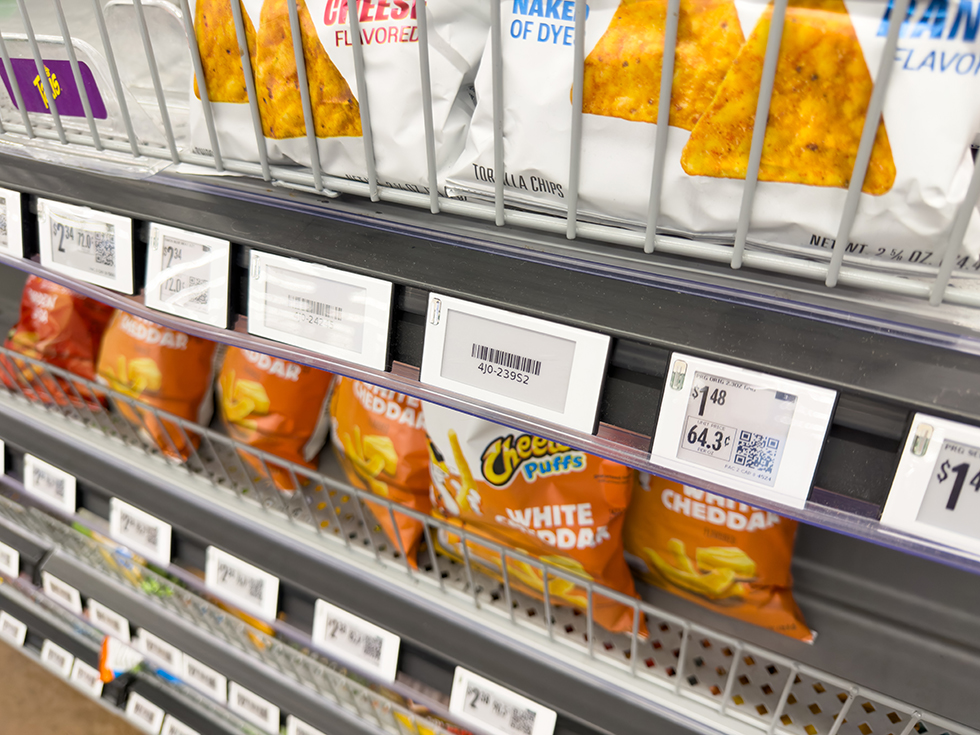
A new poll released by the United Food and Commercial Workers International Union (UFCW) found that 68 percent of Maryland voters support banning electronic shelf labels (ESLs) in grocery stores. The survey, conducted by GBAO Strategies, also found 69 percent believe the technology will cause grocery prices to increase.
The poll comes as Gov. Wes Moore and Maryland legislators weigh legislation to prohibit ESLs and what the union calls “surveillance pricing” — the use of shoppers’ personal data to set individualized, dynamic prices. Maryland is one of 12 states to join the UFCW’s “Affordable Groceries and Good Jobs Campaign” targeting AI-driven pricing technology in grocery retail.
Support for a ban cuts across party lines, according to the poll. Additionally, 61 percent of respondents said they do not trust grocery stores to use the technology responsibly. Nearly 80 percent of Marylanders surveyed hold a negative view of the U.S. economy, with 71 percent worried about household grocery costs and 74 percent expecting their grocery spending to rise in the next year.
UFCW International VP Ademola Oyefeso framed the issue as a matter of urgency.
“No Marylander is insulated from the devastating effects of record-high grocery prices. Electronic shelf labels, and the discriminatory practice of surveillance pricing that they enable, threaten to drive costs even higher,” Oyefeso said.
“The results of this poll confirm that Marylanders know the dangers of electronic shelf labels and surveillance pricing and expect their lawmakers to take action. Maryland has a chance to get ahead of this corporate exploitation before it becomes common practice.”
The campaign carries direct implications for grocery operations and labor. ESLs allow retailers to change prices instantaneously, and major chains are accelerating deployment. Walmart plans to replace traditional paper price tags with digital labels across all of its stores by the end of 2026. The retailer has also recently secured patents to use shoppers’ personal data to update prices at scale.
[RELATED: Walmart To Deploy Digital Shelf Labels Chainwide Within A Year]
UFCW Local 27 President Jason Chorpenning pointed to the budgeting challenges the technology creates for shoppers.
“UFCW members understand the toll high grocery prices take on lives: they see it at the register, in the aisles, and in their own grocery bills,” Chorpenning said. “Electronic shelf labels will only hike costs higher. With the ability to change prices at a moment’s notice, ESLs make it nearly impossible for families to stick to a budget.”
The union also argues ESLs threaten grocery jobs. The systems could replace the work of grocery clerks who manage pricing or leave frontline workers fielding complaints about price changes they had no role in making. The UFCW represents more than 800,000 grocery workers across North America.
UFCW Local 400 President Mark Federici put the fight in personal terms.
“Food is a necessity, and no one should be paying more for milk or eggs based on their identity or zip code,” Federici said. “UFCW members are at the frontlines of the affordability crisis, and they are demanding action from their lawmakers. Keeping electronic shelf labels out of our grocery stores is vital to lowering the cost of groceries for Marylanders.”
The legislative push in Maryland will be one to watch for independent grocers and retail operators nationwide. If passed, a ban could set a precedent as similar proposals advance in the 11 other states participating in the UFCW’s campaign.