
As Associated Wholesale Grocers (AWG) celebrates its 100th anniversary in 2026, the cooperative is reflecting on a century defined by independent spirit, shared success and an unwavering commitment to its members – while keeping its focus firmly on what comes next.
Founded in 1926 by a group of independent grocers who believed they were stronger together, Kansas City, Kansas-based AWG has grown into the nation’s largest retailer-owned grocery wholesaler. Yet, according to President and CEO Dan Funk, the cooperative’s greatest strength remains the same today as it was a century ago: alignment among ownership, strategy and service.
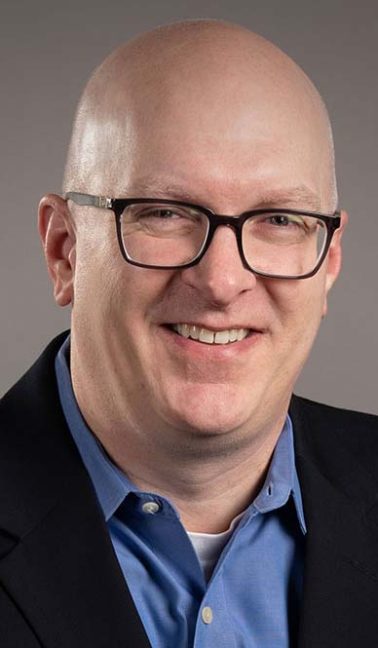
“When you think of the governance model and the bylaws and how the company was developed and formed, a lot of those same principles have withstood the 100 years,” Funk said.
“Early on, when that first group came together, they had an idea about how to be fair and equitable and transparent and work together. To be part of a team and do something that was going to help them just thrive and survive at that time. And then over generations, you saw that continue to build out at AWG.
“The cooperative model for us is so unique because the stakeholders, who traditionally are just wholesale customers, are owners of the cooperative model,” Funk said.
Advantages to the member-owners include the services offered by the co-op that are designed to meet their specific needs. And on the financial side, the “profitability from the supply chain is essentially going back to those independent members to be able to reinvest back into their stores. That is a huge differentiator within the cooperative model that really stands out,” Funk noted.
That model, giving independent grocers both operational and financial advantages, is increasingly important as consolidation reshapes the grocery landscape, he said.
“When the industry is consolidating in many respects, whether it’s on the retail side or the wholesale side, AWG strives to be the wholesaler of choice for anybody that’s an independent, an ESOP or regional grocer – those that want to control their own destiny,” he said. “That’s why it’s more important now than ever for that alignment.”
A family feel with national scale
AWG, The Shelby Report’s 2026 Wholesaler of the Year, has maintained what Funk describes as a distinctly personal culture over the years.
Funk calls AWG “the biggest small company you’ll ever work for,” maintaining a family atmosphere despite operating nine distribution centers across 33 states – soon to be 34 – and serving 1,100 member stores.
“We have a group of entrepreneurs that came together 100 years ago, and we have a group of entrepreneurs today that continue to come together and try to make a better outcome, for their stores, for their communities and for their supply chain,” he said. “It’s not only an economic or financial commitment; it’s in their head and their heart.”
That sense of shared purpose has carried AWG through multiple eras of change, including several key growth moments that expanded the cooperative’s footprint while staying true to its founding principles.
Generational growth milestones
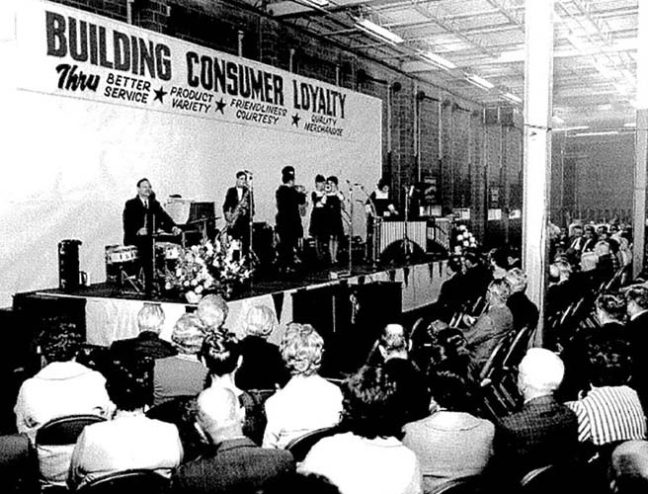
Several pivotal decisions shaped AWG’s century of growth. Within the first decade of its founding, AWG added a second division in Springfield, Missouri, which nearly doubled its size, Funk said.
More growth came in 1995, when the company opened its Oklahoma City division and launched Valu Merchandisers Company as a subsidiary.
“That was huge. You almost doubled the size of the footprint of the company in one year, in ‘95, placing some bets on a market like Oklahoma and that surrounding area,” Funk said.
The 2003 acquisition of multiple assets following Fleming Foods’ challenges proved equally impactful, bringing Nashville and Memphis, Tennessee-area facilities into the fold.
The volume from those Fleming assets, building from 2003-13, allowed the company to start its Gulf Coast Division.
“Had they not made that acquisition in 2003, a big part of our company now – what’s in Hernando [Mississippi] and what’s in Gulf Coast and what’s in Nashville – wouldn’t exist today,” Funk said.
The 2016 acquisition of Affiliated Foods Midwest facilities in Norfolk, Nebraska, and Kenosha, Wisconsin, expanded AWG’s geographic reach northward.
“Ultimately, those two divisions helped generate and create the division we have in St. Cloud [Minnesota],” Funk said.
When a Chicago-area cooperative faced challenges in 2017-18, AWG’s Kenosha facility was positioned to serve displaced independent retailers.
“Had we not bought Kenosha … we would not have had the facility there to be able to serve and move forward,” Funk said.
Funk described those moves as “one big event that led to several events after that, helped shape those generational changes of growth in the company.”
He also noted that while AWG’s members have changed in “size and shape and forms over that century, we just continue to find ways to serve the members based on where they are today.”
Navigating competitive pressures
In the current retail landscape, independent grocers face mounting challenges from value chains like Aldi, mass retailers like Walmart and the proliferation of dollar stores in small communities. AWG conducts annual member surveys to track competitive threats and member needs.
“Dollar stores are in towns of less than 5,000 people, sometimes less than 2,000 people now,” Funk said. “That’s a huge change for a lot of our retail entities, having another competitor in town, particularly in small rural communities.”
Despite these pressures, Funk remains confident in independents’ resilience.
“Through 100 years, our independents have been resilient about finding ways to adapt, change and compete,” he said. “Our role is to try to take these 1,100 disparate family businesses and aggregate that volume in a way that they couldn’t do on their own.
“We have to take a big responsibility at AWG to try to help position our independent retailers to be successful in any environment.”
Investing in supply chain for next century
That responsibility has driven significant investment in supply chain infrastructure and technology, including the All-In-One Distribution (AIO) facility in Hernando – the largest single project in AWG’s history.
At the time, AWG’s 2024 opening of its highly automated AIO facility represented one of just three such operations worldwide. The facility now serves as the Mid-South Division, also handling health, beauty, wellness and specialty natural and organic products for the entire membership. This allows the cooperative to move more variety with greater efficiency and lower cost.
“It was a lot of moving parts and a significant capital investment but also a lot of consolidation and realignment [along with] new tools and technology that needed to go into it,” Funk said. “And I think it really showcases that.”
He added that the investment in the AIO was “very strategic in being able to help our remaining support centers across the country, and it reduced our need to have to put more capital into other facilities across the company.
“Also, by this single investment, we’ve been able to use a hub-and-spoke type of a supply chain to really help move more variety, more products with less cost through the supply chain to our customers.”
Looking at the success of the AIO, Funk said AWG is planning to invest more capital in automation and deliver improvements in service, efficiency and scale.
“We’re very focused on how we use our existing assets, but how do we also incorporate automation into existing facilities to help scale that facility and help improve throughput and efficiency for those facilities in the future … very close on the horizon, more projects are coming and we’re excited about that.”
Funk noted that with the opening of the AIO, the cooperative kept its Valu Merchandisers Company subsidiary open, but it now serves non-members.
“When we moved into that facility, we moved those product departments from a subsidiary company into the cooperative. So now all of those departments that used to sit outside of the cooperative are now part of the cooperative, so they’re patronage eligible, and they’re for any member now … That’s just adding more value to our existing membership.”
VMC now, as a separate entity, is growing through non-member business, including regional grocers, competitive wholesalers and self-negotiating chains.
Looking ahead, AWG is investing in a new warehouse management system, procurement and forecasting modules and additional automation projects.
Artificial intelligence will play an increasingly important role.
“We’re going to have artificial intelligence embedded into [many of] those tools,” Funk said. “It’s not some standalone product anymore. It’s a commingled product in which that artificial intelligence will help us to be much more predictive and proactive within our supply chain.”
‘One Team’ and a shared direction
Internally, AWG’s “One Team” philosophy has shaped how the cooperative sets priorities and makes decisions, emphasizing input from members, employees and vendor partners.
The “One Team” philosophy emerged from extensive stakeholder input as the company transitioned leadership and emerged from the COVID-19 pandemic’s disruptions. The approach involved gathering feedback from members, teammates, vendor partners, the board of directors and executive leadership.
“One Team for me was really about getting everybody on a common game plan going forward,” Funk said. “We curated feedback from each one of those stakeholder groups and ultimately came together with a multi-year strategy.”
A recent example of member-driven innovation came in the produce department, an area Funk said is essential to helping independent retailers compete.
He said over the course of the last several years, AWG has worked on its perishable departments within product assortment, quality and freshness. Produce, in particular, continues to be a highly competitive area.
Based on member feedback and competitive analysis, AWG formed a board subcommittee to examine how the company could better position members for success in this critical category.
Through the subcommittee’s recommendations, AWG has “made adjustments in how we manage our markup policies in produce, how we manage our produce investments for promotion and for ongoing, everyday value that our members can take advantage of,” Funk said. “That cross-functional initiative launched here in 2026.”
Funk said it is an example of feedback from the field, from competitive situations and from members about adjustments that everyone could participate in, helping drive future success.
“That’ll be an ongoing initiative for us in ‘26, and that will stick … as the go-forward model, not unlike when we pulled the VMC product departments into the cooperative,” he said.
Funk added that the produce project and the AIO are examples of how board and member involvement “really helped to curate and craft that we need to find ways to help our members be more competitive in that space. Those are adjustments that we make all the time.”
Elaborating on the “One Team” philosophy, Funk said he tells his AWG team that this is the work they signed up for.
“When departments and team members are willing to sacrifice something that they believe was important for their team, but they know what they’re sacrificing is for the greater good of our membership and the greater good of the company, that’s when the team is really clicking on all cylinders. We strive every day to do that, and we’re getting better at it.
“But it is critically important, because we don’t have infinite resources and we don’t have infinite time, and we don’t have infinite ability to take on every single project. We have to focus our energy on what is really going to move the business forward for the future.”
Annual member engagement surveys and strategic planning councils help guide major decisions.
Funk also noted that “this utopia of ‘one decision works for everybody’ doesn’t work well” at AWG.
“We have to constantly be thinking about groups of members together, and how do we help particular groups differently, whether that’s through geographic differences, whether that’s through store format differences or whether that’s through size of community that’s served, or urban versus rural,” he said.
While considering the needs of different groups of members or geographies is important, Funk emphasized one thing that applies to all members is AWG’s commitment to the common cost of goods, the infrastructure of the cooperative and the share in the patronage pool of profits that comes from the whole company.
Looking to next century
For Funk, leading AWG during its centennial carries both pride and responsibility.
He reflected on times in the past when so many would have ruled out the independent and cooperatives.
“For the company to not only make [its] way through those generational changes but to be thriving at 100 years, it’s one of those feelings that you can’t really explain. You’re proud; you’re so grateful for what the company has accomplished. And I think at times you’re scared, because you have this feeling of, we’ve got to do this for another 100 years now.
“Think of all the decisions that have been made by the leaders before us and the boards before us and the members over the last 100 years, and we’ve got to position the company to be ready to do it for another 100 years.”
The CEO sees independent grocers’ personal investment in their communities as a defining strength.
“Their whole family, their livelihood – everything is on the line every single day,” Funk said. “They put their family’s livelihood on the line to take care of their neighbors.”
As consumer expectations evolve, AWG must continue adapting its support for members in areas such as store format, e-commerce and shopping experience while maintaining supply chain efficiency.
“This is what our members really empower us to do, and they’ve collected their equity together for us to make sure we run the best supply chain,” Funk said.
“We can’t burden our independent members with a supply chain that is not meeting their needs and not delivering on the economies of scale that this infrastructure of the cooperative is designed to do.”
The cooperative’s founding principles of fairness, equity and transparency remain central to its identity.
Funk noted that AWG’s prior strategic plans, as well as its current one, help it make choices and investments so that it does not become stagnant.
“People shouldn’t confuse cooperative [with] stagnant,” Funk said. “Cooperative means that we’re coming together to find the future solutions … We’re constantly evolving in products and services to meet our members’ needs for the future.”
For AWG’s team members across the country, the daily work of receiving, selecting and shipping products represents the backbone of the operation.
“As a supply chain company, our team and what we do in those division support centers, that’s where all the real magic happens within the company,” Funk said.
“It’s a pleasure to lead the group, and I think that’s part of ‘One Team.’ What is important to me is that I’m a team member, just like every other team member here. I just happen to do different things on the team,” he said.
“It’s just as important that we select a grocery order effectively and efficiently and with accuracy, so it gets to our store on time as any decision that I’ll make today … and that’s part of being on the ‘One Team.’”
[RELATED: AWG Rolls Out SmartMeals AI Shopping Assistant]
 Prairie Farms Dairy
 Acosta
 Alliance Retail Group
 Blue Bunny
 Crossmark
 Dietz & Watson
 Houchens Insurance Group
 Indiana Packers Corp
 Kenvue
 Kimberly-Clark Corporation
 McMahon Carriers Inc.
 Mueller-Yurgae
 National Beef Packing Co.
 Nestle USA
 Return Management Services
 RSA America LLC
 Seaboard Foods
 Sunkist Growers
 SuperFridge
 Wayne Sanderson Farms