

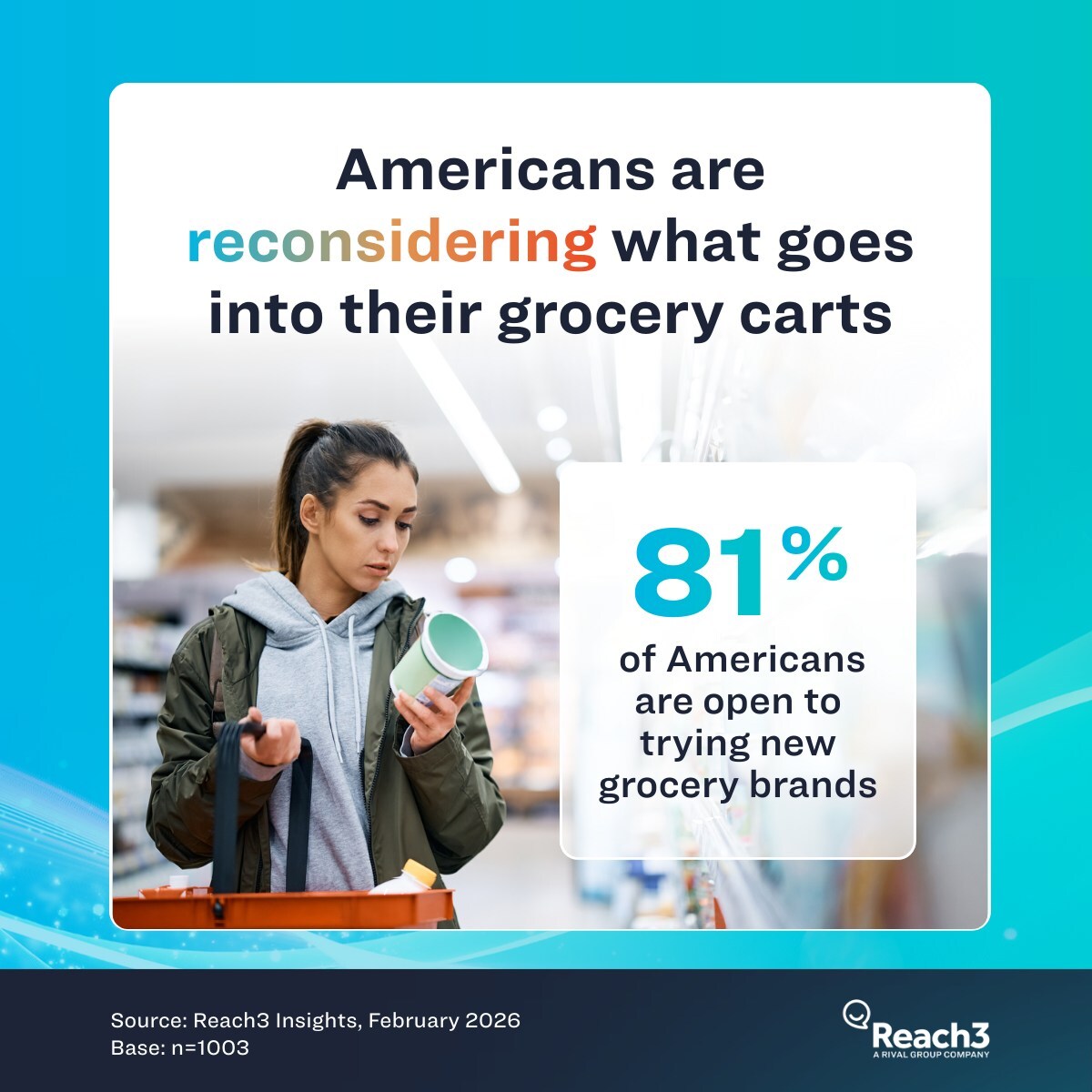
Loyalty in the grocery aisle is softening, according to a new national study from Reach3 Insights that found 81 percent of Americans are open to trying new brands – a signal that routine, habit-driven CPG purchases are giving way to more deliberate in-store decision-making.
The study, “Rethinking Routine: What’s Really Happening in the Grocery Aisle,” surveyed 1,003 nationally representative U.S. adults last month using Reach3’s conversational research methodology on Rival Technologies’ video-validated consumer panel.
Ninety-two percent of Americans say they notice grocery prices more than they did in the past, and 78 percent report paying closer attention to the specific brands and products they choose.
Nearly half of consumers (44 percent) say they spend more time in the grocery store than they previously did, suggesting more active comparison and less automatic decision-making at the shelf.
Jonathan Dore, EVP at Reach3 Insights, said the findings reflect a fundamental change in how shoppers engage with the grocery category.
“In this time of sustained economic volatility, the grocery aisle has become more evaluative, rather than CPG shopping being comprised of quick, non-conscious decisions,” Dore said.
“Shoppers, particularly younger generations, are investing more time and attention into what they’re buying, and new tools like generative AI are becoming a bigger part of the decision process.”
Gen Z, Millennials bring new tools
Younger shoppers are turning to generative artificial intelligence tools as part of their grocery decision-making at significantly higher rates than older cohorts.
Thirty percent of Gen Z shoppers and 22 percent of Millennials report using generative AI when grocery shopping, compared with 11 percent of Gen X and 8 percent of Baby Boomers.
Dore said the generational divide has direct implications for how brands approach consumer research and engagement.
“To understand this evolving dynamic, brands need to rethink how they engage consumers and use more immersive, in-the-moment research techniques that enable both fast, system 1 learning and a deeper system 2 understanding of the emotional drivers behind CPG purchase decisions,” he said.
What it means for retailers, brands
The study points to a more competitive, attentive in-store environment where brands can no longer rely on purchase inertia.
Shoppers are spending more time evaluating options, weighing brand values alongside price and quality and increasingly arriving with AI-assisted information.
The full interactive report is available at reach3insights.com.
[RELATED: Flashfood Report: 90% Surge In Egg Purchases As Prices Squeeze Shoppers]