
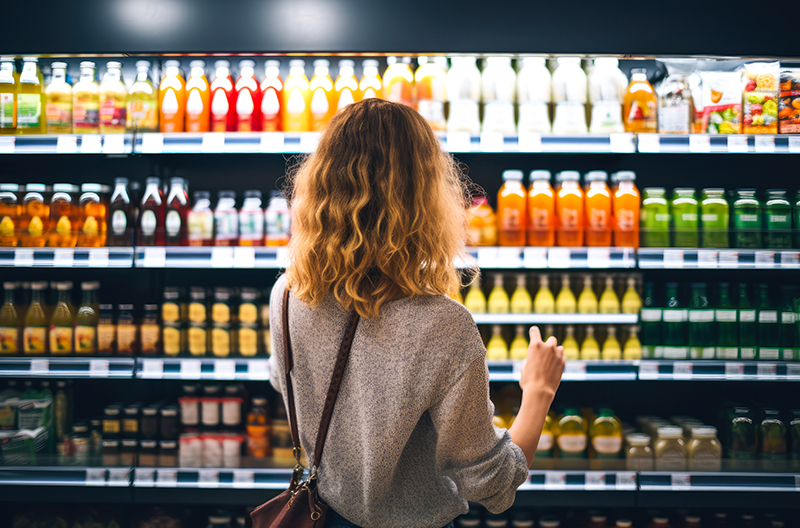
A new survey from EY finds that health awareness, generational differences and digital tools are fundamentally changing what consumers want from beverages – with implications for retailers and CPG brands across the category.
The study surveyed more than 2,500 adults in the U.S. and Brazil between Nov. 20-Dec. 11.
Wellness is baseline expectation
Health-driven behavior is reshaping purchase decisions at the shelf.
Fifty-eight percent of U.S. consumers say they pay attention to ingredients in the beverages they buy, and 52 percent are willing to pay more for drinks that support their health and wellness goals.
Sixty-six percent of U.S. respondents said they choose lower-sugar, lower-calorie beverages.
Sean Harapko, EY Americas Beverage Leader, said the shift reflects a more deliberate consumer mindset.
“Our research shows a clear rise in intentional beverage consumption, with consumers paying closer attention to ingredients, prioritizing functional benefits tied to health and well-being, and modifying behaviors, such as reducing sugar and alcohol intake,” he said.
“These shifts signal a more informed and selective consumer, particularly among younger generations, who are reshaping demand and accelerating change across the beverage product landscape.”
In Brazil, functional benefits extend well beyond hydration – three out of four consumers cited immune support as a top driver of functional beverage purchase intent.
Digital and AI tools shaping discovery
Online grocery recommendations (19 percent), fitness and health apps (17 percent), and loyalty apps (16 percent) are among the primary channels consumers use to discover functional beverages.
Gen Z shows notably higher digital use for beverage discovery – 26 percent – compared with older cohorts.
Artificial intelligence-powered recommendations are gaining ground faster in Brazil than in the U.S. Forty-five percent of Brazilian consumers said they used them, compared with 27 percent in the U.S.
Among Brazilian consumers, 70 percent said they are very likely to use AI recommendations in the next year, with Millennials leading adoption.
EY Global and Americas Consumer Products Sector Leader Rob Holston said the convergence of wellness and digital is where the competitive stakes are highest.
“Consumers are rewriting the rules of the beverage aisle. Wellness isn’t a niche segment but a baseline expectation shaping formulation, claims and pricing strategy,” Holston said.
“For beverage companies, the winners will be those that deliver clear benefits, build trust through transparency and meet consumers where decisions are increasingly made across apps, social channels and personalized, data-led experiences. Brands must design for multiple definitions of wellness.”
Generation gaps run deep
Consumption patterns diverge sharply across age groups, reshaping alcoholic and nonalcoholic categories.
In the U.S., 80 percent of Gen Z and 75 percent of Millennials drink alcoholic beverages at least every two weeks, compared with 65 percent overall. At the same time, social pressure to drink persists — 20 percent of U.S. consumers reported feeling it.
Energy drinks further underscore the generational divide. More than half of Gen Z consumers (53 percent) and nearly half of Millennials (47 percent) drink energy drinks at least every two weeks, compared with 34 percent of all U.S. respondents.
In Brazil, 57 percent of consumers overall drink alcohol at least every two weeks, but Gen Z lags significantly – just 47 percent – pointing to a generational shift toward moderation and alternative beverage choices.
“As beverage choices are so uniquely personal, so should be the experience of discovery and purchasing,” Harapko said.
“In order for brands to succeed, they must embrace an innovation ecosystem and insights engine that allows them to proactively identify and define market trends and determine opportunities for both engagement and growth with their core consumers.”
The full EY Consumer Beverage Survey is available at ey.com. The survey was conducted online with 2,512 adults – 1,511 in the U.S. and 1,001 in Brazil – weighted to census representation, with a margin of error of about plus or minus 2.5 percent for the U.S. and plus or minus 3.1 percent for Brazil.
[RELATED: FMI Research: 94% Of Food Retailers Have Health, Well-Being Programs]