
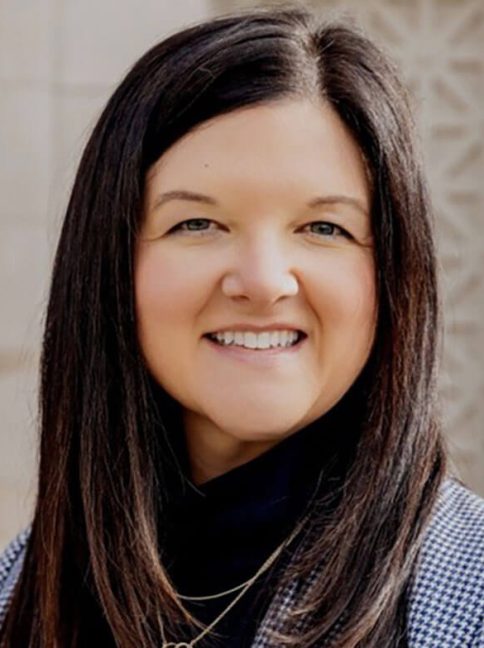
Ansley Fellers, executive director of the Nebraska Grocery Industry Association, responded to questions from The Shelby Report of the Midwest about what’s happening in the state’s grocery industry.
How would you characterize the overall health of the grocery industry in Nebraska right now, and what are the key factors driving performance in 2026?
I think like most places there’s a general sense of unease, and it’s tough to tell if that’s the normal anxiety that runs in all business owners or if there really is an economic shoe that’s going to drop.
Sales are steady but margins are tight. Inflation has leveled off but there still seems to be stickiness in the supply chain. I don’t think folks have been able to enjoy the tax certainty they were hoping for after federal action last year because tariffs keep growers and manufacturers in an uncertain spot.
What are the biggest operational challenges your member grocers are facing?
The cost of labor, utilities, insurance, credit card fees – you name it. Nebraska’s minimum wage went to $15/hour on Jan. 1.
Labor costs have always been top of mind. But combined with new paid sick leave requirements, the mandate has created immediate pressure. And that can’t just be offset through pricing, particularly in grocery, where customers are extremely price sensitive.
With such tight margins, even slight increases could have outsized impacts, but we’re seeing major jumps in overhead costs. Our owners are absorbing as much as they can.
How are independent grocers positioning themselves to compete?
I think folks are learning more that we can’t sit back; we have to be proactive and adopt technology and new ways of doing things.
Obviously, local stores will always have a leg up when it comes to trust, community engagement and flexibility. They can adapt quickly, emphasize local sourcing and offer higher-touch service.
In August, we’ll host our third annual Grocery Industry Summit to invite folks in to talk about how they’re taking on challenges, staying competitive.
We had Jenny Osner with Hired Man’s Grocery in Kansas last year, and she was awesome. Everyone left feeling really exhilarated – she was so upbeat and energetic and is really finding creative ways to set her store apart.
We also have to drive home that our local stores are invested in their communities. These are the people who are sponsoring the cheerleading squad and donating to the new track and giving items and coupons for the school backpack program. There’s a lot there, and we need to keep reminding folks that it’s not just the tax base that suffers when we lose these stores.
Are independents consolidating, expanding or struggling?
It’s a mix. It would be a lie to say there aren’t many who are struggling. The hours are long and the margins are tight.
Succession planning is another thing we try to discuss at the summit. Like in agriculture, it’s just something you can’t mention enough. Nebraska is so vast and varies demographically and topographically that it’s tough to say we’re seeing a ton of consolidation.
I think getting squeezed out by a dollar store (or more than one) is more of a worry than getting bought out.
Can you walk through legislation that passed in 2025 impacting grocery operations?
Last year the legislature helped us “clean up” the paid sick leave mandate that passed via initiative petition in 2024 before it took effect last October.
We managed to exempt from the mandate our tiniest businesses (10 or fewer employees), but work on that front remains.
The legislature also just passed a youth and training wage measure, and capped the annual minimum wage increase at 1.75 percent. This is so important for price stability and employer certainty. We just hope it isn’t too little too late.
[RELATED: Fareway’s Kollasch Named Nebraska’s Best Bagger]
What legislative or regulatory proposals are you tracking for 2026?
We have our work cut out here on wage and labor issues, tax shifts (from local property taxes to state sales and income taxes) and reforming the initiative petition process. We also have – like many states – surveillance pricing bills that would restrict the use of certain technology, including in our case electronic shelf tags.
How is the broader state economy affecting grocery sales?
Nebraska relies heavily on a thriving ag sector, our rural communities especially but even our urban areas. Expanding markets and finding ways to continue lowering all our input costs (energy, transpiration, etc.) would help everyone in the supply chain.
What national issues or federal policies are having the most impact?
Again, markets and input costs are huge. Credit card swipe (interchange) fees are still an issue.
Going back to that comment earlier about embracing technology – we’d love to find a way to move forward with piloting new forms of payment. Nebraska’s surprisingly advanced in that category, now we just have to find a way to get off center and maybe introduce some competition at a much smaller level.
How are changing consumer behaviors affecting business models?
Many of our retailers are investing in technology and analytics to better understand their customers – in a beneficial way, to offer discounts, promos, etc. – not to surge prices (see: surveillance pricing).
Consumers are more value focused. They cross-shop and they’re increasingly health conscious and want simpler ingredients, but they also want that all in a more convenient way. I see a lot of diet-specific marketing (high protein, low carb, GLP-1 friendly, etc.).
What role is your association playing in workforce challenges?
In a really specific way, our Nebraska Grocery Industry Foundation is partnering with Metro Community College on a program to offer judicially-impacted individuals in the Omaha region retail certification. The goal is to get them looking at retail and wholesale jobs and to give them a leg up in the hiring process.