
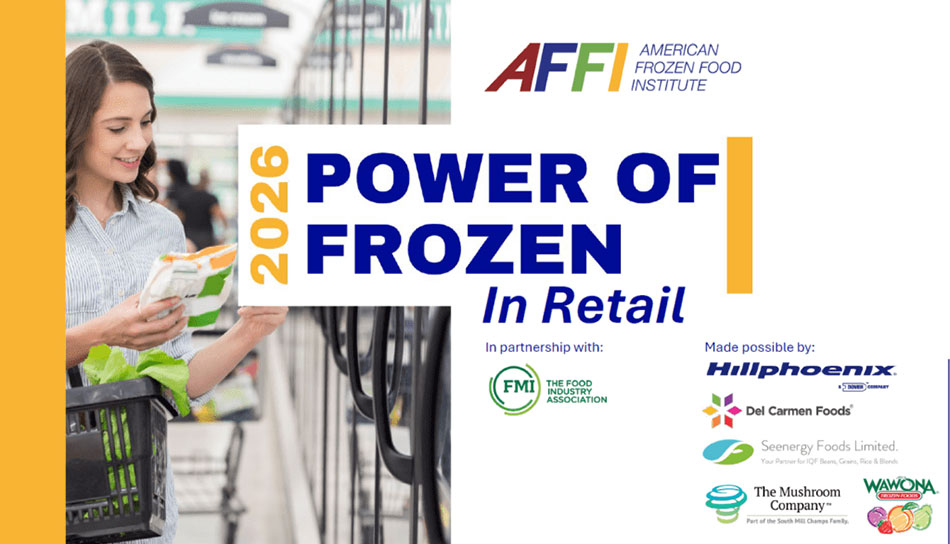
New market data shows frozen food has moved from a backup option to a core element of meal planning for a growing share of American households, according to the fourth edition of the Power of Frozen in Retail report released during the recent AFFI-CON.
The American Frozen Food Institute (AFFI) and FMI – The Food Industry Association released the report, which found that the base of core frozen food consumers is on the rise.
Consumers who use frozen foods daily or every few days now represent 40 percent of shoppers, up from 35 percent in 2019. Close to one-third of shoppers (30 percent) plan to buy more frozen food – the strongest purchase intent measured in the report’s history.
Seventy-seven percent said they now purchase frozen foods with a specific meal or day in mind, up from 71 percent in 2023. 
“The Power of Frozen in Retail report shows that frozen food is not a fallback but a smart strategy for today’s consumers,” said Adrienne Seiling, chief operating officer and head of strategic initiatives with AFFI.
“Consumers are using frozen to explore new cuisines, reduce food waste and put nutritious meals on the table. As the food industry and policymakers alike focus on the future of nutrition in our country, they should take note – it’s time for fresh thinking about frozen.”
The report also found that frozen food is helping families manage economic pressures.
Consumers report increased interest in at-home cooking, meal planning and food waste prevention – needs the frozen category addresses. Thirty-seven percent of consumers use frozen food as a way to reduce food waste.
The top three purchase drivers among shoppers are ease of preparation, price and taste. Ninety-six percent of shoppers believe the frozen aisle carries better-for-you options, and 71 percent report looking for frozen items they have not bought before.
Three in four consumers (76 percent) now combine fresh and frozen ingredients in the same meal, a finding the report characterizes as “frozen AND fresh, not frozen OR fresh.”
The findings align with the 2025-30 Dietary Guidelines for Americans, which calls for increased consumption of fruits, vegetables and nutrient-dense foods.
The report also carries implications for grocery retailers. It identifies merchandising opportunities including dual-temperature cross-merchandising with fresh produce and product displays tied to specific health goals.
 “Shoppers seeking value are willing to pay more for health, convenience, enjoyment and entertainment – which can all be found in the frozen food aisle,” said Andrew Brown, senior manager of industry relations at FMI.
“Food retailers can build loyalty with shoppers by showcasing the ways frozen food options can help families eat well, save time, waste less and provide quality meals that families will enjoy.”
The 2026 Power of Frozen in Retail report was unveiled during AFFI-CON, held Feb. 21-24 in San Diego. The event convened more than 1,700 professionals from across the frozen food supply chain for business development, industry programming and discussion on the category’s future.
The study was conducted by 210 Analytics with a Circana sales data overlay. The national consumer survey was conducted in October 2025 among 1,560 frozen food consumers who carry at least 50 percent responsibility for grocery shopping. The full report is available at AFFI.org/PowerofFrozen.
[RELATED: AFFI Promotes Seiling To COO, Head Of Strategic Initiatives]