
Kroger has a longstanding history and deep roots in Texas, dating back to 1955 when the Ohio-born grocer entered the Houston market with the purchase of grocery company Henke & Pillot, which had been in operation since 1872. Kroger kept the Henke & Pillot name on the stores for about 10 years, replacing it in 1966 with its own banner. 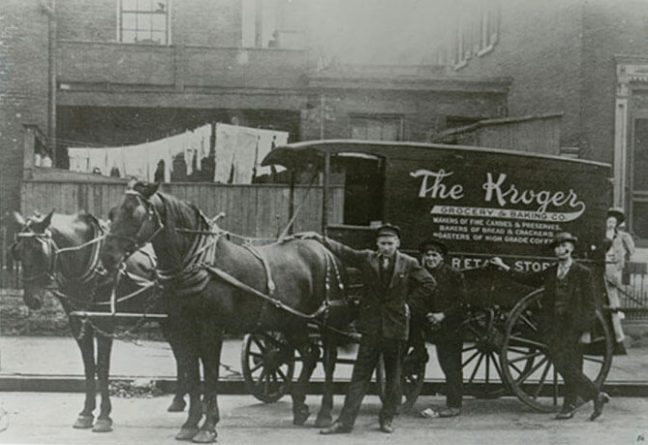
The decision to move into Texas grew out of company leadership recognizing that the Lone Star State was one of the most progressive and fastest-growing areas of the country at the time.
Since that move more than 70 years ago, Kroger Texas has become a prominent feature on the state’s grocery landscape. It has expanded its operations from Houston up to Dallas and beyond, today operating 207 supermarkets and 165 fuel centers in north, east and southeast Texas and southwest Louisiana. And more are on the way.
The company has created thousands of retail roles – and career advancement opportunities – across its Texas operations, with team members today totaling more than 26,000. Thanks to its corporate scale, Kroger can offer team members competitive wages and a strong benefits package, including a pension program for retirement.
These perks are working, too. Team member tenure in the market is “incredible,” noted Rudy DiPietro, president of the Kroger Texas Division, which was created Aug. 1, 2025, when the company combined its Dallas and Houston divisions.
“I can’t tell you how many I’ve met with 40, 50 years plus of tenure, and it feels like everybody’s got 20-plus,” he said. “And we’re welcoming new associates onto our team every day.”
Kroger Texas not only cares about the well-being of its team members but also its communities.
The Zero Hunger | Zero Waste impact plan’s goal is to one day end hunger and food waste in local communities.

“For us, it’s a very meaningful effort,” he said. “It starts at store level, obviously. Our ability to secure the product at store level and get it into the hands of folks that can help solve that food insecurity challenge is the key.
“It’s an interesting thing in our industry. You’re always on this chase to throw less away,” DiPietro continued. “I’m proud of our store teams and the processes we have in place to create an opportunity for an outlet with that product.”
In addition to this overarching goal, Kroger Texas also has a history of stepping in when communities have needs it can meet. It has supplied food, water and volunteers when weather disasters such as hurricanes, floods and winter storms have impacted its markets. Over the years, Kroger has donated 127 million meals in Texas alone.
For customers, Kroger has continued to build stores and fuel centers in their neighborhoods to give them convenient places to shop, and it also rolled out – in 2003 – its Kroger Plus card. Customers who enroll in the program get extra savings at the shelf and discounts on fuel as well as personalized and digital coupons.
These past 70-plus years of operating in the Lone Star State perhaps qualify the Midwest-born grocer to declare itself “Texas proud.”
“We are proud of our history here in Texas,” DiPietro said. “It’s still a customer-first proposition, an associate-first proposition. That’s the way we like to talk about it – we take care of each other so we can take care of our customers and drive our business forward. We honor our history here, we honor tenure and we appreciate the way we’ve been able to build relationships in the communities we serve.
“And we’re going to continue to do that for hopefully another 70 years plus.”
[RELATED: Kroger Consolidates Divisions In Texas With DiPietro At Helm]
 4C Foods Corp.
 Twang Partners
 Associated Wholesale Grocers