
Independent grocers across North Dakota face mounting pressure from several directions, according to John “Jiggs” Dyste, president of the North Dakota Grocers Association.

“Independent grocers are being squeezed by big-box stores and food manufacturers,” Dyste said. “Unfair pricing is the main problem driving consumers to big-box stores.”
The challenges come as North Dakota’s economy undergoes structural transformation, with independent retailers shrinking through consolidation and closures, causing rural communities to lose access to local grocery stores.
North Dakota’s economy has undergone significant shifts over the past 15-20 years. Mining – including gas and oil and their support activities – holds the largest share of the state’s GDP, followed by real estate and manufacturing, with agriculture now in fourth place, according to University of North Dakota economist David Flynn’s presentation at the 2026 Regional Economic Conditions Conference in January.
The state’s GDP declined 2.3 percent in the third quarter of 2024, the largest decline among U.S. states. Current GDP numbers for 2025 show recovery driven mainly by oil and mining, according to Dyste, while the agricultural segment remained weak, particularly impacting rural areas.
Agriculture has experienced a 7.78 percent decline in GDP growth, the worst performance among 19 analyzed sectors, according to Flynn. Total cash receipts from crops were projected to decline 10 percent in 2025, hitting their lowest point since 2022.
Tariff volatility has particularly affected the sector, with truck border traffic into North Dakota down 25 percent in September 2025 compared to September 2024, Flynn reported.
Cropland values, however, continue to rise, increasing 10.55 percent in 2025 to reach a weighted average of $3,534 per acre, marking the fourth consecutive year of double-digit growth, according to November 2025 data from FinancialContent.
North Dakota projects general fund revenues of about $5.07 billion for the 2025-27 biennium, according to the North Dakota Monitor. The Legacy Fund, the state’s reserve fund, sits at more than $12 billion.
The state maintains a business-friendly environment with no new taxes proposed, while Gov. Kelly Armstrong has emphasized property tax reform as a priority.
Population, regional dynamics
The state’s population reached 796,568 as of July 1, 2024, marking growth of 17,474 residents since 2020, according to U.S. Census Bureau estimates. North Dakota has grown more than 18 percent since 2010, ranking among the nation’s fastest-growing states.
Population growth concentrates in eastern and western energy regions. Cass County, home to Fargo, leads with 204,000 residents and 10.2 percent growth since 2020, according to World Population Review. Fargo added 1,925 residents from 2023 to ’24 and 10,299 residents from 2020 to ’24, according to North Dakota Compass. 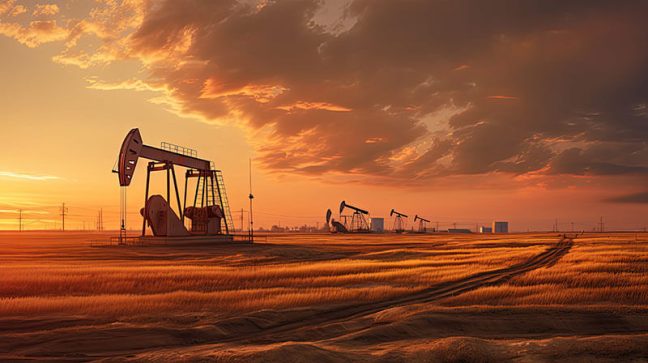
Oil-producing counties in western North Dakota show resilience, with Williams County (Williston) and McKenzie County (Watford City) experiencing growth rates of 3.7 percent and 3.5 percent, respectively, according to McKenzie County reports.
Rural areas face significant population losses. Sioux County and Towner County experienced the steepest declines at more than 8 percent.
Dyste noted that rural stores in the oil and gas region appear to be faring somewhat better than elsewhere in the state, though operators still report year-over-year sales declines.
Medium-sized stores in medium-sized towns face mounting pressure.
“Sales are down in this group. The price gap is driving consumers to the big-box stores and online operations,” Dyste said.
Despite overall population growth, North Dakota faces tight labor conditions with an unemployment rate around 2.6 percent as of 2025, among the lowest in the nation, according to Trading Economics and USAFacts.
Independent sector under pressure
The independent sector continues shrinking through consolidation and closures. A three-store group recently was sold to out-of-state ownership, continuing a trend from 2024 when one owner acquired 11 formerly independent stores.
Independent grocers face pressures on multiple fronts. Labor costs, distribution challenges and competitive pressure from national chains compound difficulties, with Dyste emphasizing unfair competition and supply chain issues as paramount concerns.
Distribution remains critical, with suppliers increasingly unwilling to serve small stores off major routes. The situation has not improved in the past year, Dyste said.
Small rural stores struggle to secure product deliveries as suppliers view routes to remote locations as unprofitable, creating inventory challenges and limiting product selection.
Credit card swipe fees and predatory pricing by manufacturers and big-box stores add to operational costs.
“What we need is a level playing field when it comes to pricing and supply chain,” Dyste said.
He advocates for federal enforcement of the Robinson-Patman Act and addressing anti-trust issues. Big-box retailers including Walmart and Target compete aggressively in larger communities, while Amazon delivery services and online grocery options expand their reach even in rural areas.
To compete, independent grocers must differentiate through service and community engagement.
“Independent grocers have to offer more personal service, be involved in the community and try to price and market their stores as completely as possible,” Dyste said.
Rural grocery crisis
North Dakota has lost 47 rural grocery stores since 2014, leaving just 90 operating across the state, according to the North Dakota Association of Rural Electric Cooperatives. These closures have created expanding food deserts, with some residents now traveling 100-200 miles to larger cities for groceries.
The crisis stems from multiple pressures: competition from discount stores like Dollar General, which can cause a 20-30 percent drop in sales when entering a community, according to InForum; distribution challenges as suppliers refuse to serve small stores off major routes; and the difficulty of achieving economies of scale in sparsely populated areas.
Many communities that lose their local grocery store find it difficult to attract new operators. Proximity to larger cities like Fargo has deterred some developers from establishing stores in smaller communities, as residents can opt to drive for shopping trips.
[RELATED: North Dakota’s Grocers Adapting Amid Economic Shifts]
State support programs
The North Dakota Legislature passed Senate Bill 2228 in April 2025, establishing a Rural Grocery Store Sustainability Grant program with $1 million in funding for 2025-27 to help preserve or reopen rural grocery stores, according to the North Dakota Monitor and Public News Service.
A more substantial pilot program launched in August 2025 with a $12.6 million investment from the Bush Foundation, the North Dakota Monitor reported. The NDAREC is leading this initiative to develop a joint distribution network for rural stores, helping them leverage collective purchasing power and keep more locally produced food in the state.
A $2 million cooperative buying program funded by the legislature two years ago remains “still a work in progress,” Dyste said.
No new programs will launch until the legislature reconvenes in January 2027 – North Dakota’s biennial legislative schedule means no 2026 session.
The state-run Bank of North Dakota continues to offer loan programs for small businesses, providing a resource for grocers seeking financing or expansion capital.
Retail landscape
North Dakota’s grocery retail landscape is dominated by regional and national chains in urban areas, while independent operators serve smaller communities.
Major chains include Albertsons, SpartanNash, Family Fare and Cash Wise Foods, with approximately 37 locations statewide as of September 2025, according to ScrapeHero data.
Aldi operates about three stores in the state (two in Fargo, one in Grand Forks), but expansion plans beyond these locations have not been announced despite the chain’s national growth initiative of 800 new stores by 2028, according to Hot 97.5 FM.
North Dakota’s small, dispersed population creates unique market dynamics. With only three states having fewer people, North Dakota grocers must serve large geographic areas with not many customers, making profitability challenging outside urban centers.
Grocery retail in North America overall is experiencing shifts toward convenience-oriented channels including e-commerce, drive-through and click-and-collect options, as well as value-oriented formats like warehouse and discount chains, according to Euromonitor International’s analysis presented at NRF 2025: Retail’s Big Show.
E-commerce grocery is forecast to increase 5 percent in 2026, while the North American grocery sector overall is expected to grow just 1 percent.
Industry resources
The NDGA serves as the primary trade organization for the state’s retail food industry, providing advocacy, resources and networking opportunities. The association holds an annual convention and addresses workforce challenges through seminars and breakout sessions focused on recruitment, retention and wage pressures.
The 2026 National Rural Grocery Summit will be held in Fargo in May, co-hosted by the University of Minnesota Extension Regional Sustainable Development Partnerships and the North Dakota Association of Rural Electric Cooperatives. This biennial event brings together grocery store owners, community leaders, food suppliers, researchers and policymakers focused on sustaining locally owned rural grocery stores.
Looking ahead
North Dakota’s grocery industry faces a pivotal year in 2026, with agricultural challenges ongoing and energy sector stability dependent on oil prices and production levels.
Dyste outlined a two-pronged strategy for independent grocers’ survival and success.
“First, independent retailers have to make sure that they are giving their customers a reason to shop with them,” he said. “Second, independent retailers need to support efforts to reign in swipe fees and support anti-trust legislation.”
He emphasized the need for collective action: “The North Dakota Grocers Association in partnership with the National Grocers Association need our retailers to get involved and find solutions.”
The success of the Bush Foundation pilot program for rural grocery distribution will be closely watched as a potential model for sustaining small-town stores. State grant programs may provide limited relief, but the fundamental economics of serving sparse rural populations remain challenging.
Population growth in Fargo and other eastern urban areas should support grocery expansion in those markets, while western energy counties may see continued stability if oil prices hold. Rural areas face the most uncertain outlook, with continued store closures likely unless distribution and economic models can be successfully restructured.
The state’s tight labor market will continue to pressure all grocers on wage costs, while competition from e-commerce and big-box retailers shows no signs of abating.