
Independent grocers operate in one of the most demanding areas of retail. Margins are tight, labor is unpredictable and vendor costs can change without warning. Yet many store leaders still rely on month-end reports or spreadsheets that arrive long after the moment to adjust has passed.
That delay makes it harder to lead with confidence. It also limits the decisions that determine growth.
Real-time data changes that. It gives independent grocers the clarity to spot issues early, act on opportunities sooner and guide teams with information that reflects what is happening today. With stronger decision support, clear best practices and integrated information, leaders gain control of both immediate actions and long-term outcomes instead of reacting to surprises.
When information arrives late, costs rise
Most independent operators make decisions with information that is already outdated. By the time reports arrive, the issue has often already affected cash and profit.
- A margin slip that appears two weeks too late. A department misses its target because retail prices lag behind cost changes. The problem is clear in the margin report, but the chance to correct it sooner is gone and the opportunity is missed.
- Inventory that does not match demand. Slow-moving items often go unnoticed until the period ends. Capital gets tied up in products that will not move quickly, while high-demand items run out, costing cash and sending shoppers elsewhere.
- Labor drift becomes expensive. Because labor reports lag actual activity, stores may be over- or short-staffed for days before anyone notices.
These types of labor issues are common and not always indicative of poor management. The issue is the timing of awareness. When data arrives after the window to act has closed, leaders lose control of the outcome. Real-time, integrated data closes that gap and gives leaders decision support when it matters most.
Why real-time tools are changing the game
Grocery moves fast. Store teams need information that moves just as quickly. Real-time tools give leaders a clear view of what is happening today, not what happened weeks ago. This creates stronger decision support because every leader can see the same information, understand what needs attention and act.
Better visibility helps grocers:
- Catch shrink and waste earlier
- Adjust labor before it becomes costly
- Respond quickly to cost and price changes
- Track best sellers and problem items in real time
- Correct issues before they spread
Experience will always matter. Real-time data gives leaders the facts they need to use that experience more confidently and effectively.
Shift from spreadsheets to integrated dashboards
Many grocers still rely on spreadsheets or static PDF reports to guide decisions. These tools can be useful, but they are slow, manual, and difficult for most teams to interpret when conditions shift day to day.
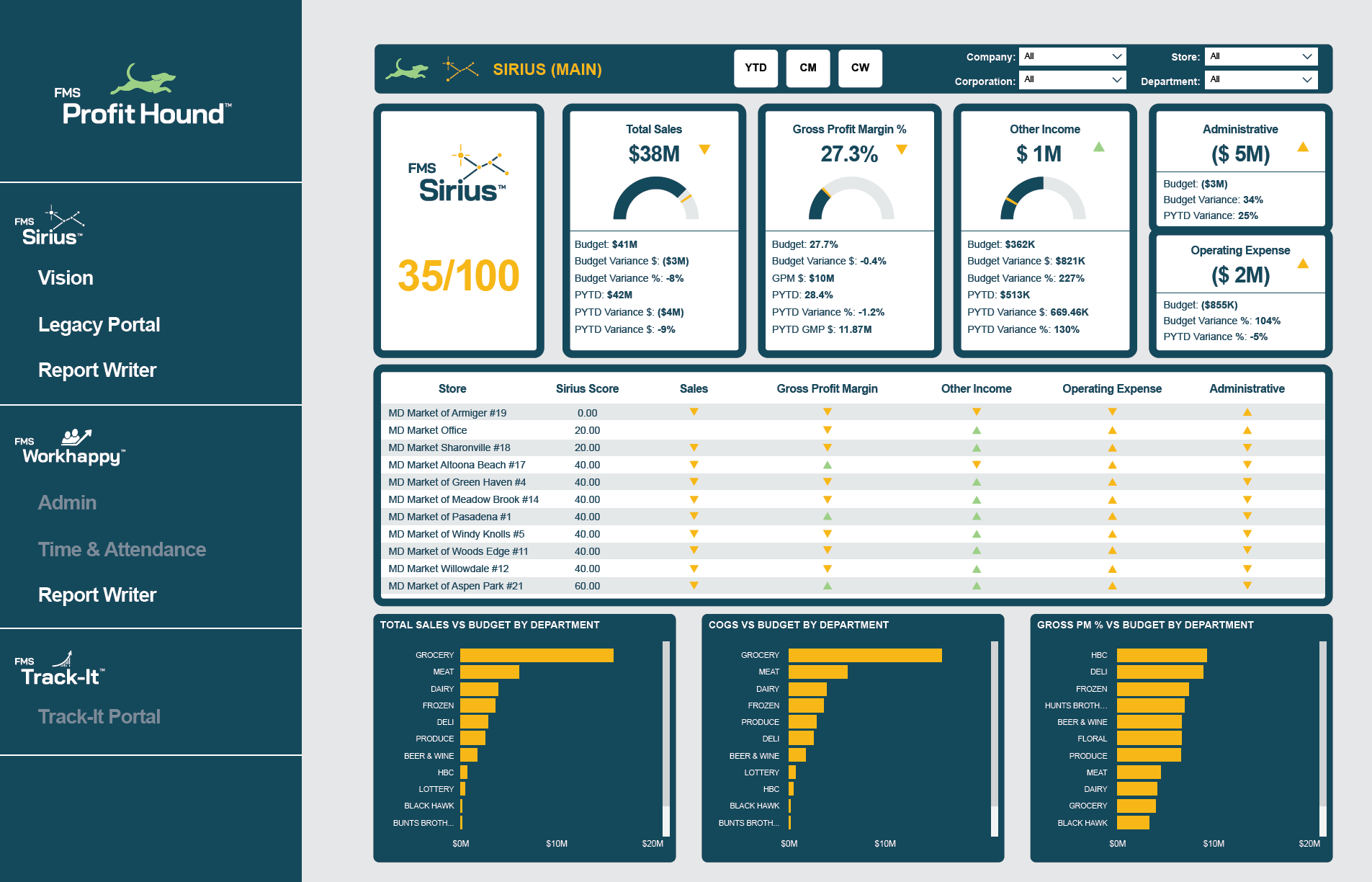
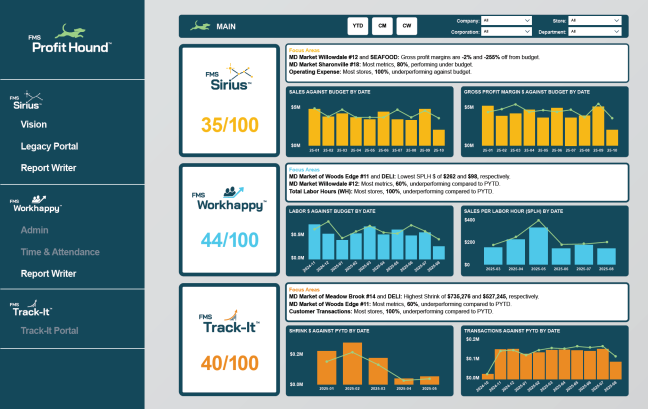
The right dashboards make information easier to see and easier to act on. They bring together data from POS systems, labor systems, financial systems and inventory in a single, integrated view. Strong dashboards allow teams to filter, compare, and understand data quickly without chasing multiple reports.
This unified approach provides stores with a single source for your truth and eliminates the friction of chasing information across multiple preconfigured systems.
This is why independents have been asking for tools like FMS’s Profit Hound — modern systems built for the speed and complexity of today’s grocery operations.
Profit Hound takes the data grocers already use and brings it together in one place. This integration makes the business easier to monitor and strengthens decision support at every level. Leaders can see margin, labor percentage, shrink indicators, mix changes, and key performance signals without searching, allowing them to make accurate, timely decisions.
With everyone seeing the same real-time information, teams stay aligned, move faster, and stay focused on the areas that drive the biggest real-time positive impact.
How grocers can start using real-time data
Independent grocers do not need a major system overhaul to begin using real-time information. Most start small and build from there.
- Identify the most critical metrics – Margin percent, labor percent, shrink, product mix, and top sellers are essential drivers.
- Review these metrics weekly – Shorter feedback cycles allow stores to adjust before problems grow or opportunities are missed.
- Use an integrated dashboard rather than multiple reports – A single source of truth reduces time, errors, and confusion.
- Hold short, data-driven huddles – Ten minutes per week can prevent margin loss and improve consistency.
- Empower managers to understand key metrics – Give department heads clear targets and simple tools so they can learn the numbers on their own and confidently make effective, data-driven decisions.
Better visibility creates better stores
Independent grocers have always been known for resilience, creativity, and a focus on community. What they often lack is access to the fast, accurate information that large chains rely on every day.
Real-time data and integrated systems help level the playing field. They help store teams make better decisions and reduce surprises. They provide clarity when it matters most. Strong integration and effective decision support turn information into action, helping stores protect margins and avoid costly missteps.
Whether an operator uses Profit Hound or another tool, the goal is the same. When better information is applied effectively, it leads to better outcomes.
And better outcomes help independent grocers stay strong in a competitive market.
Learn how integrated data and guided decision support from FMS can help your store operate with more clarity and control at FMSsolutions.com.
About the author
Rachael Gideo is the senior director of solutions engineering at FMS Solutions, where she leverages over 13 years of accounting experience to drive strategic innovation and operational excellence. She holds a master of accounting from the University of Alabama at Birmingham and has built a diverse career spanning multiple industries, with a specialized focus on grocery retail over the past six years. Gideo’s expertise encompasses traditional accounting, budgeting and advanced analytical solutions, making her a trusted leader in financial strategy and performance optimization.
