
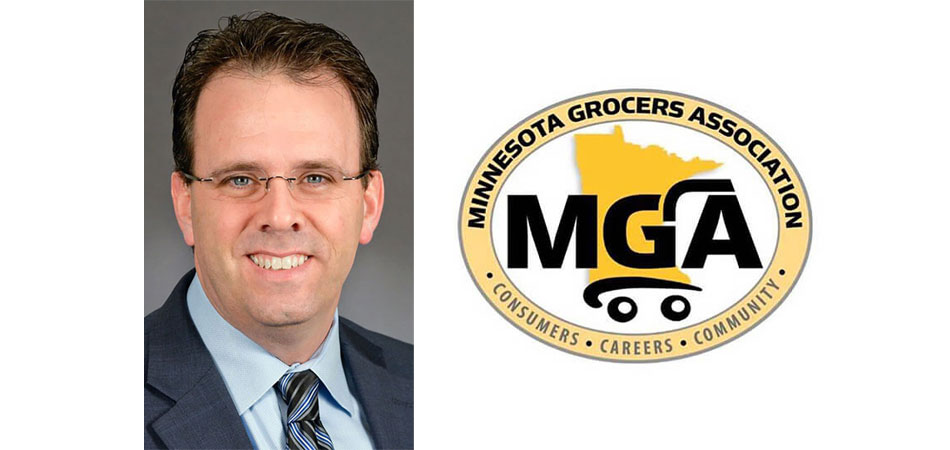
Minnesota maintains one of the nation’s strongest independent grocery networks, but increased government mandates driving up costs, stagnant population growth and a shrinking workforce are creating significant headwinds for retailers across the state, according to Patrick Garofalo, president of the Minnesota Grocers Association.
“There’s a lot of pressure on those individual stores,” he said.
“We’re doing good, but we certainly want to make sure that we’re building a future, that we can be positive.”
The most immediate challenge facing grocers is Minnesota’s paid family leave mandate, which took effect Jan. 1.
“It’s really transitioning to what is, I think it’s safe to say, one of the most expensive paid family leave mandates in the nation,” Garofalo said.
“All employers across Minnesota are going to need more employees to do the same amount of work, because we’ll be paying out over a billion dollars to people to not work.
“Whether that’s a good thing or a bad thing is a matter of opinion, but it doesn’t change the fact that every employer in the state is going to have to have more employees to get the same amount of work done.”
The mandate adds to previous legislation passed in 2023 and 2024, including sick time requirements. Property taxes also are rising sharply.
“Minnesota’s property tax system disproportionately hurts commercial property versus residential property,” Garofalo said. “So whenever a property tax levy is increased, it falls disproportionately onto commercial properties.”
Independent advantages
Despite pressures, independent grocers maintain competitive advantages over national chains.
“Every dollar that gets spent at an independent grocer stays in the community, as opposed to getting wired to Bentonville, Arkansas,” Garofalo said. “The reason why our independent stores beat the big box retailers has to do with quality and service.”
Quality, customized assortments and strong customer relationships set independents apart, he said.
“Every community is stronger when it works together, and locally owned grocery stores are just part of that.”
The association’s membership is growing, with more independent retailers in 2025 than in 2024. However, the industry shows mixed trends.
“We see some that are consolidating; we see some that are expanding. We see some that are struggling, but we see some that are prospering,” Garofalo said.
“It’s clear there’s two separate economies. Upper income and wealthy individuals, they have one economy. And for people that are living paycheck to paycheck, affordability remains a chief concern.”
Succession planning varies across the state. Some stores have transferred to family or key employees, others have joined larger chains, and some have closed.
“The grocery store business is capital intensive, labor intensive and has low margins, as everyone knows,” Garofalo said.
Legislative outlook
Minnesota’s closely divided legislature – the House tied 67-67 and the Senate at 34-33 – makes significant policy changes unlikely in 2026.
“Right now in Minnesota, nothing becomes law unless it’s got Republican and Democratic support,” Garofalo said.
The association hopes for tax conformity with federal cuts and common-sense reforms to sick time and paid leave mandates but has “very low expectations for really anything happening,” he said.
Population, workforce challenges
Minnesota’s demographic trends pose long-term concerns. The state is losing more residents to out-migration than it gains, with younger residents leaving for college and not returning.
“As a culture, Americans are just becoming less tolerant of cold weather,” Garofalo said. “Another factor is cost. Minnesota tends to be a high cost, high service state, and while those costs have stayed high, our public services – whether it’s education, public safety, transportation –they haven’t really met the high-quality threshold.
“So people are paying Cadillac-level prices, and they’re getting a sub-compact car in terms of service.”
To address workforce challenges, the association offers the Carts to Careers program, now in its fifth year, which provides grants to members for onboarding costs and professional development training.
“These are really investments in employees,” Garofalo said. “It’s making it easier to hire people, the onboarding and training costs, and then it’s making investments in existing employees, whether it’s certification or training.”
Federal policy impacts
Two federal issues top Garofalo’s concerns: tariffs and hemp regulation.
Tariff volatility has affected imported food prices and Minnesota’s agricultural exports, particularly soybeans.
“I respect the fact that the president raised these tariffs to try to negotiate better trade deals. And certainly, I want better trade deals, but I would rather not wreck our economy in the short term,” Garofalo said.
A provision in recent government funding legislation redefined hemp, potentially devastating Minnesota’s hemp beverage industry.
“Minnesota has been one of the hubs of this activity. These products provide a safe, regulated environment and provide good margins to our members,” Garofalo said. “Instead, [it’s] blanket prohibition and wiping that stuff out. It’s just going to push it into the black market.”
The association also supports federal credit card swipe fee reform.
Looking ahead
Garofalo anticipates tariffs subsiding in 2026, which should ease affordability pressures. Federal tax provisions eliminating taxes on overtime and tips could boost discretionary income for some workers, and potential resolution of international conflicts could improve consumer confidence.
“Minnesota has one of the strongest independent grocery networks in the nation. And that just shows that people really do love their Minnesota-based independent grocery stores,” Garofalo said.
“It’s something that we want to, in addition to protect, we want to expand, as we [continue] with technological innovation and really adapting quicker than the near-trillion-dollar big box industry.”