
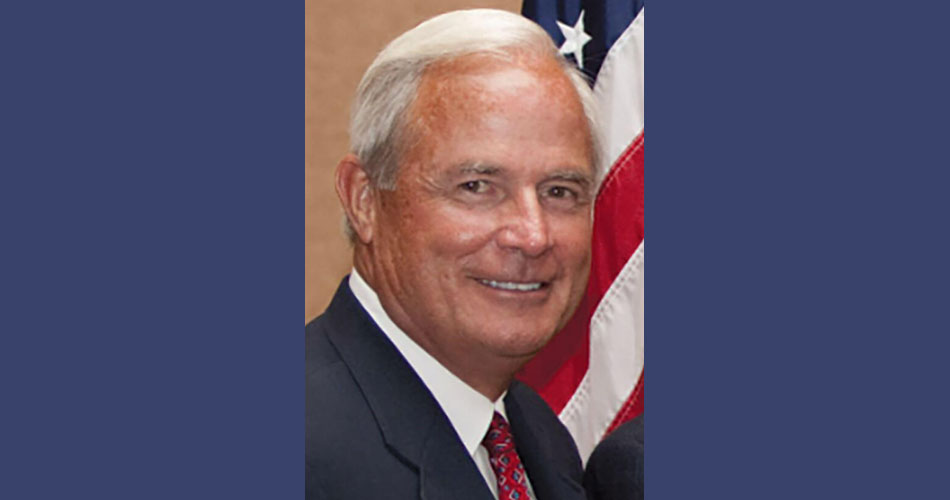
The Shelby Report of the Midwest recently caught up with Jon McCormick, president and CEO of the Retail Grocers Association of Greater Kansas City, for the latest updates on the grocery industry in Kansas.
How is the economy in the state?
Unemployment is lower than the national average. That helps our independent retailers in many ways.
Still, the consumer has been focusing on private label items, which are less expensive with really great quality. That, however, affects sales numbers. This is good for the consumer and not a bad thing for the retailer.
Statewide, Kansas has improved the economic outlook by 7 percentage points. The governor’s office has been aggressive on stabilizing and promoting business. The GDP was 2.5 percent better than last year.
Is the state economy feeling the impact of tariffs? If so, in what way?
Prices have been increasing on the manufacturer’s side and flow down to the shelf price in our members’ stores.
Our member stores keep their margins at a constant level and on some items, they keep the price and, consequently, the margin lower than normal in consideration of their customers’ budgets. The recent lifting of tariffs on staples will filter down into more stable pricing.
How would you characterize the overall health of the grocery industry in the state?
Independent grocers have always been under pressure from competition. The proliferation of Dollar Generals, for example, even though they don’t do a huge business, take a slice out of the “marketing pie” in the town or county the grocers are in.
Today’s Kansas grocers are holding their own. Their innovation and creativity in offering fresh foods and great service is serving them well.
What about the health of the independent grocers in particular?
Independents nationwide share the same environment of tough competition and the need to stay up on focusing on fresh foods and service.
Is the state losing grocers? If so, what type and where?
The independent grocers that are doing business in rural towns are holding their own.
When the first Walmart outside of Arkansas opened on Nov. 1, 1970, in Leavenworth, it created a situation [where] as they built more, a town with three stores went to one when Walmart opened.
That era of multiple closings in towns has since passed. The best grocers remain.
Can you talk about the Kansas Healthy Food Initiative – its purpose and any success it has had since its inception?
KHFI has funded over 75 projects in 45 Kansas counties, investing more than $5.3 million in grants and loans. More than 259,000 residents have benefited, with a special focus on low-income and rural areas.
Around 84 percent of funded projects are in low-income communities; nearly 29 percent served are BIPOC residents. These investments have helped keep rural grocery stores open and enabled local retailers to expand fresh produce offerings.
Between the KHFI and the Rural Grocery Initiative out of Kansas State [University], the small rural grocer has had a better chance of continuing to serve their customers in small towns across Kansas.
What are the greatest challenges facing grocers in the state? Labor, inflation, retail crime, other?
The easiest answer is all of the above. Retail crime is less of a concern in small-town Kansas. When you get into the urban core of cities in Kansas, the environment for theft changes.
The population increase drives this aspect – there are more people and therefore more theft. Finding people to work has been climbing up the list of challenges.
I think government regulations, taxes, new requirement demands like refrigerant guidelines are among the bigger issues. Then there are the credit card fees charged to the retailer, which are out of control.
The retailer has no way to negotiate with another company, and Visa/Mastercard fees just keep climbing. Electricity is among the higher expenses in the store below credit card fees and banking. Rate hikes are expected for 2026.
What resources does the association have available to its members to help them face these challenges? And can you give your thoughts on the new Midwest Retail & Grocery Alliance and what it will mean to grocers in Kansas?
RGA has members on both sides of the state line. Of course, we have been in the capitols of both states – Jeff City and Topeka – protecting against bad legislation and furthering good legislation for the grocers, like no sales tax on food, improved selection on beer in the store. Also, we have been selling money orders and processing coupons for our retailers since 1973. That has helped them save on costs of those items for over 50 years.
The Retail Grocers Association Greater Kansas City (and Kansas Food Dealers) and the Missouri Grocers Association (MGA) established a joint venture on Nov. 1, 2025 – the Midwest Retail and Grocery Alliance.
The main purpose of the alliance is to not only help our two associations keep up with the changing and demanding times but to also offer to other state associations the same improved services that comes with collaborating together on our unique service offerings.
Simply put, E Pluribus Unum. “Out of many, One” … Like our 50 states in the U.S., the state associations will keep their presence in each corresponding state but joining the one alliance, MRGA, will help them increase that presence with their respective legislative bodies. There will be many improvements in any state association that should join the Midwest Retail and Grocery Alliance.
[RELATED: MGA, RGA Unite To Form Midwest Retail And Grocery Alliance]
What was some of the grocery-related legislation this year? Bills the association supported and/or opposed? What legislation are you looking at in 2026?
We are hoping that SNAP allocations will be handled in a judicious manner. Grocers do not want their SNAP recipients trading off key items in their household because they have been cut down on their allocation.
We are happy that zero sales tax on food goes into effect on Jan. 1. RGA worked with the governor for over a year to help make that happen.
Anything else you would like to add about the grocery industry in your state or about your association?
RGA was founded in 1895. The preamble to RGA’s constitution could be written for 2025. Very much like our founding fathers and the U.S. Constitution, they were worried about the future.
They spoke of uniting the industry, fostering social and fraternal feelings among proprietors, to disseminate information of mutual interest, to guard against and protect each other against fraud and adulterations in goods, to influence by proper means legislation for the betterment of the trades, to protect against fraudulent customers and observe the Sabbath.
Truly, this 1895 preamble could work in 2025’s mission statement for RGA and any other state association.