
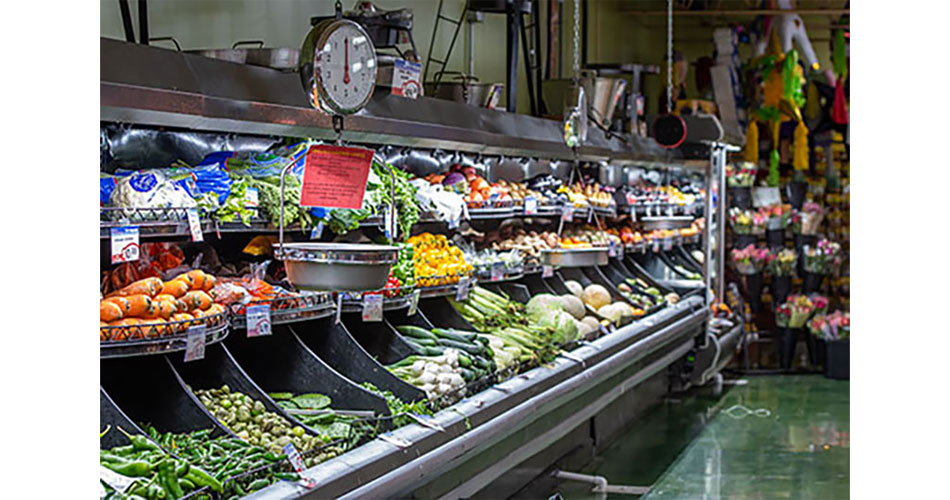
The grocery landscape across Kansas tells two stories: one of aggressive growth in metropolitan corridors where national chains are planting flags and another of persistent struggle in rural communities where the independent store remains threatened by economics and changing demographics.
Kansas State University’s Rural Grocery Initiative shared a post from KCUR News of an independent grocer recalling better days for rural Kansas towns: “This town was booming years and years ago: three grocery stores, an ice cream parlor and a movie theater. It was big,” said Scott Lozier, who helps run Axtell Community Grocery in Marshall County.
That nostalgia reflects hard numbers. Kansas lost 105 rural grocery stores between 2008-18, according to the K-State Rural Grocery Initiative, and just half of those communities managed to attract another grocer to fill the void.
While rural Kansas grapples with food access, the state’s urban and suburban markets are experiencing significant activity from national retailers.
Aldi, the German discount grocer, continues its nationwide expansion with Kansas firmly in its sights. The chain operates about 35 stores in the greater Kansas City area and opened a new location in southern Overland Park at the Southglen shopping center.
The company announced plans to open 800 new stores nationwide by 2028 as part of its aggressive growth strategy.
In what marks a significant homecoming, Dillons – the Kroger-owned banner that once dominated Kansas City metro grocery shopping – announced plans to return to Johnson County after more than a decade away, according to The Kansas City Star.
The new store, planned for Olathe at College and Sunnybrook boulevards, represents the beginning of what company officials describe as a broader expansion strategy for the Kansas City market.
The metropolitan area also welcomed Farm Fresh Market to Red Bridge in early 2024, creating jobs in a community that had seen limited grocery options.
Urban closures signal deeper issues
Not all news in metropolitan Kansas has been positive. Two prominent community-focused grocery operations closed down in 2025, leaving food deserts in their wake.
The Merc Co+op in Kansas City, Kansas, announced it will close Dec. 30 after five years at 501 Minnesota Ave., according to The Beacon. The community-owned store, which opened with hopes of anchoring neighborhood revitalization, fell victim to failed development promises.
The collapse of a planned $25 million Reardon Convention Center project and a $145 million Minnesota Avenue Triangle mixed-use development left the co-op without the foot traffic and neighborhood density needed to survive.
Across the state line, Sun Fresh at Prospect and Linwood in Kansas City, Missouri, closed in August despite nearly $18 million in taxpayer investment over a decade, The Beacon reported.
The nonprofit operator cited weekly security costs of $5,000 to $6,000, persistent infrastructure problems including sewer issues and crime concerns that kept customers away.
Both closures expand food deserts, leaving thousands of residents without convenient grocery access.
Industry strengthens advocacy voice
Kansas grocers gained a stronger voice in October when the Missouri Grocers Association and the Retail Grocers Association of Greater Kansas City united to form the Midwest Retail and Grocery Alliance. The new organization combines decades of experience to represent independent grocers, retailers and suppliers throughout Missouri and Kansas. 
“By joining forces, we’re creating a stronger, more unified organization that can better serve our members and represent the industry at every level,” said Dan Shaul, executive state director of the Missouri Grocers Association.
Jon McCormick, president and CEO of the Retail Grocers Association of Greater Kansas City, emphasized the practical benefits: “Our shared mission has always been to help businesses succeed in an ever-changing marketplace. As MRGA, we can do that more effectively – through unified leadership, combined expertise and a louder collective voice.”
The alliance will provide expanded member programs and resources, stronger advocacy and legislative representation locally, statewide and in Washington, D.C., more networking and educational opportunities, and streamlined communication.
[RELATED: MGA, RGA Unite To Form Midwest Retail And Grocery Alliance]
Legislative wins, missed opportunities
Kansas grocers and shoppers celebrated a significant victory Jan. 1, when the final phase of Gov. Laura Kelly’s “Axe the Food Tax” initiative took effect, reducing the state sales tax on food and food ingredients from 2 percent to zero, according to the Kansas Department of Revenue. The average Kansas family of four is expected to save more than $500 annually, though local city and county sales taxes on groceries remain in place.
The tax elimination applies to food, food ingredients and certain prepared foods but excludes alcoholic beverages, tobacco and most restaurant-prepared foods.
Meanwhile, a proposal that could have provided tax incentives specifically for rural grocery development remains stalled.
Senate Bill 159, the Kansas Rural Grocery Store Development Incentive Act, was introduced in the 2023-24 legislative session to provide tax incentives for grocery businesses in rural areas but has not advanced beyond committee referral, according to Kansas Legislature records. The bill was referred to the Committee on Federal and State Affairs but saw no further action. With the legislature adjourned until January 2026, any movement on rural grocery incentives will have to wait.
Support systems keep some stores afloat
Without dedicated state tax incentives, Kansas has relied on other programs to support struggling rural grocers.
The Kansas Healthy Food Initiative, partnering with K-State’s Rural Grocery Initiative, has awarded $5.3 million in loans and grants for 75 projects across 45 counties since launching in 2018, according to the initiative.
The program targets food retailers in underserved communities, helping keep local stores open in areas where food insecurity affects an estimated 11.4 percent of residents statewide – lower than the national rate of about 14 percent, according to USDA Economic Research Service data.
In Axtell, population 400, Lozier and his fellow community investors are proof that the model can work. The store partners regularly with the local school for events featuring Axtell’s record-breaking football team and supports volunteer firefighters and the American Legion. Community members pitch in when truck deliveries arrive, stocking shelves alongside the paid staff.
“They want the young families to keep coming. They want to get bigger,” Lozier said of his fellow investors, reflecting a sentiment common in rural Kansas communities fighting to maintain essential services.
K-State’s Rural Grocery Initiative continues to provide technical assistance, research and resources to support locally owned rural stores. The program offers a Rural Grocery Toolkit and hosts biennial national rural grocery summits. In 2023, the initiative received a $175,000 USDA Rural Cooperative Development grant to focus on elevating awareness of the cooperative ownership model as a viable solution for rural food access, according to K-State’s Center for Engagement and Community Development.
Industry headwinds
Kansas grocers, like their counterparts nationwide, face mounting challenges beyond store location economics. Industry representatives report that 30-35 percent of business at many stores comes from Supplemental Nutrition Assistance Program recipients and concerns about potential federal funding reductions have some retailers cutting back on orders, according to KCUR News. In Kansas and Missouri combined, about 843,000 people receive SNAP food assistance.
The U.S. Department of Agriculture announced it will stop collecting and releasing food insecurity statistics after October, citing that the numbers had become “overly politicized,” according to the Food Research and Action Center. The decision comes amid federal funding cuts for food and nutrition safety net programs nationwide.
As Kansas grocers look toward 2026, they face a market defined by stark contrasts: metropolitan growth concentrated among large national chains, persistent challenges in urban food deserts and ongoing struggles to maintain grocery access in rural communities where a single store often represents the difference between a community that thrives and one that withers.
The question for state policymakers when they reconvene in January will be whether programs like the Rural Grocery Store Development Incentive Act finally advance – or whether Kansas will continue to rely solely on grants, loans and community determination to keep rural grocery stores alive.